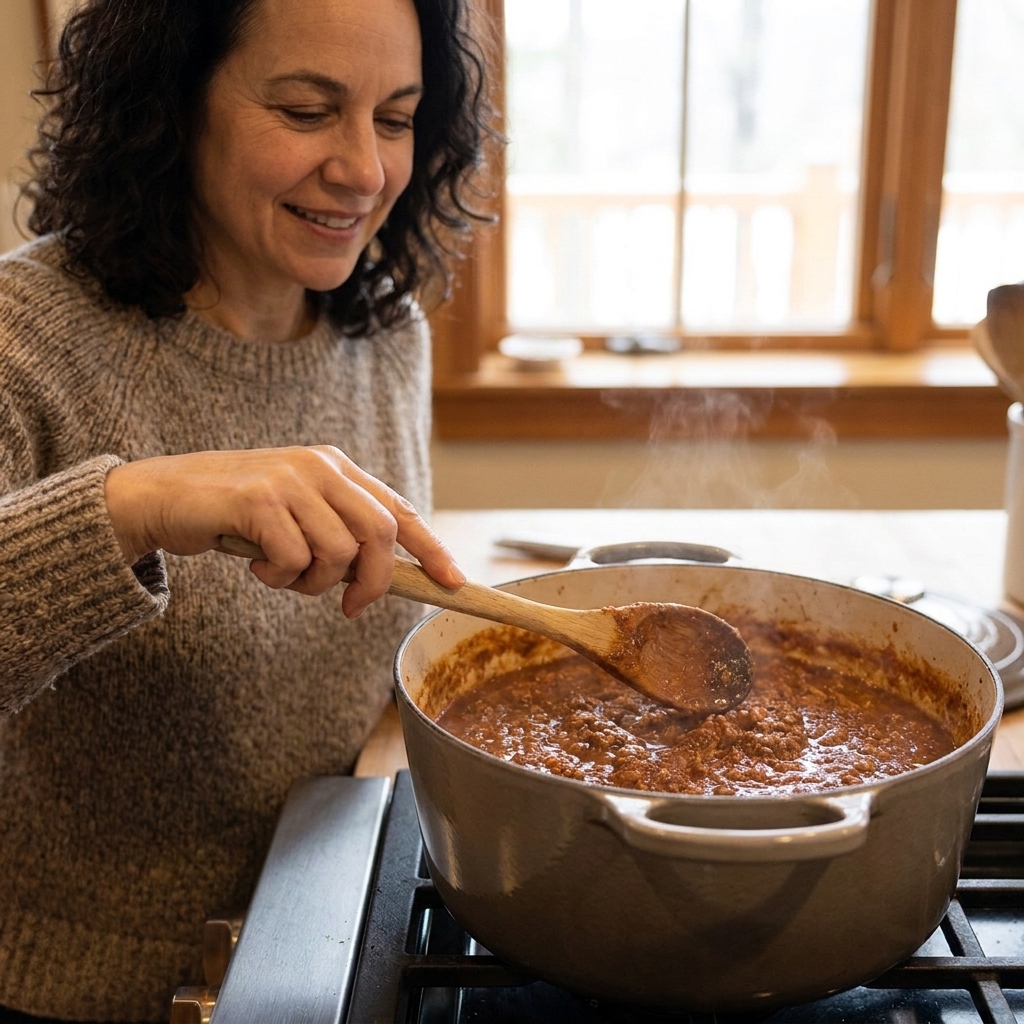
If you’ve ever tasted a true ragù alla Bolognese in Bologna, you know it is not a loud, tomato-heavy “spaghetti sauce.” It’s gentle, patient, and unbelievably deep, the kind of flavor that makes it seem like the kitchen has been working all day. The hands-on work is simple. The magic is the low simmer and the way the sauce quietly takes its time.
This is the sauce my family reaches for when we want something that feels like Sunday, even on a regular weeknight.
Let’s make it the traditional way: a proper soffritto, a mix of meats, wine, a little tomato, and that signature finish with milk. Low heat, long time, and the kind of aroma that makes everyone wander into the kitchen asking, “Is it ready yet?”
What makes it Bolognese
In Bologna, ragù is a meat sauce first. Tomato supports the meat rather than dominating it. The flavor comes from three big ideas:
- Soffritto done slowly: onion, carrot, and celery softened until sweet, not browned.
- Meat cooked dry before liquid: you want the meat to sizzle and take on color so it tastes roasted, not boiled.
- Time and gentle heat: the sauce should barely burble, like a sleepy little “plop…plop.”
And yes, the milk matters. It mellows the sauce, helps the meat turn tender, and brings that rounded, silky finish that makes the whole pot taste expensive.
Ingredients
This is a classic Bologna-style ingredient list that keeps you close to the real spirit of the dish without needing anything fancy. Like most beloved regional foods, there is variation from kitchen to kitchen, especially with wine choice and how much tomato shows up.
For a big pot (about 6 servings)
- Olive oil, 2 to 3 tablespoons
- Butter, 2 tablespoons
- Onion, 1 medium, very finely diced
- Carrot, 1 medium, very finely diced
- Celery, 1 rib, very finely diced
- Ground beef (or minced beef), 12 ounces (340 g), 80 to 85% lean is ideal
- Ground pork, 8 ounces (225 g)
- Pancetta, 3 to 4 ounces (85 to 115 g), finely minced (optional but very traditional)
- Dry white wine, 1 cup (240 ml) (red wine is also used in some homes, see FAQ)
- Tomato paste, 2 tablespoons
- Crushed tomatoes or passata, 1 cup (240 ml) (or up to 1 1/2 cups, 360 ml, for a slightly redder ragù)
- Whole milk, 1 cup (240 ml), plus a little more as needed
- Water or light stock, 1 to 2 cups (240 to 480 ml) as needed for the long simmer
- Salt and black pepper
- Nutmeg, a tiny pinch (optional, but classic with milk)
A note on tomato: Some very traditional approaches use mostly tomato paste or concentrate, while others add a small amount of passata. This version keeps tomato modest and meat-forward, with flexibility if you prefer just a touch more color.
A note on garlic and herbs: Many Italian American meat sauces start with garlic and lots of herbs. Traditional Bolognese does not need much of either. If you love garlic, save it for another sauce. Here, the soffritto is the heart.

Equipment
- A heavy pot or Dutch oven: stable heat makes a calmer simmer.
- A wooden spoon: perfect for scraping the bottom and stirring gently.
- Patience: truly, this is the main tool.
Step by step
Read through once, then cook with confidence. This sauce rewards calm energy.
1) Start the soffritto (10 to 15 minutes)
Warm the olive oil and butter in a heavy pot over medium-low heat. Add onion, carrot, and celery with a pinch of salt. Cook slowly, stirring often, until the vegetables are soft and sweet. You are looking for translucent onion and a gentle, buttery aroma, not browning.
Cook’s cue: If the vegetables start to color fast, your heat is too high. Turn it down and add a tiny splash of water to slow things down.
2) Cook the pancetta, then the meat (10 to 15 minutes)
Add pancetta (if using) and let it melt and sizzle for a few minutes. Then add the ground beef and pork. Break it up, season with salt and pepper, and cook until the meat has lost its raw look and begins to brown.
This part is important: let the moisture cook off so the meat can actually sizzle. That sizzling is flavor.
3) Add wine and let it evaporate (5 to 8 minutes)
Pour in the wine and scrape the bottom of the pot. Simmer until the wine smell is no longer sharp and boozy. You want it mellow, almost sweet.
4) Tomato goes in quietly (2 minutes)
Stir in the tomato paste and cook it for a minute to wake it up. Add the crushed tomatoes or passata. This is not meant to taste like a tomato-forward jar sauce. It should still look like a meat pot with a little tomato support.
5) The milk step (10 minutes)
Pour in the milk and stir. Let it simmer gently until it’s mostly absorbed into the sauce. Add a tiny pinch of nutmeg if you like.
Why milk now? It helps the meat turn tender and brings a softer, rounder finish. You can add a small splash again near the end if the sauce tastes a bit sharp after a long simmer.
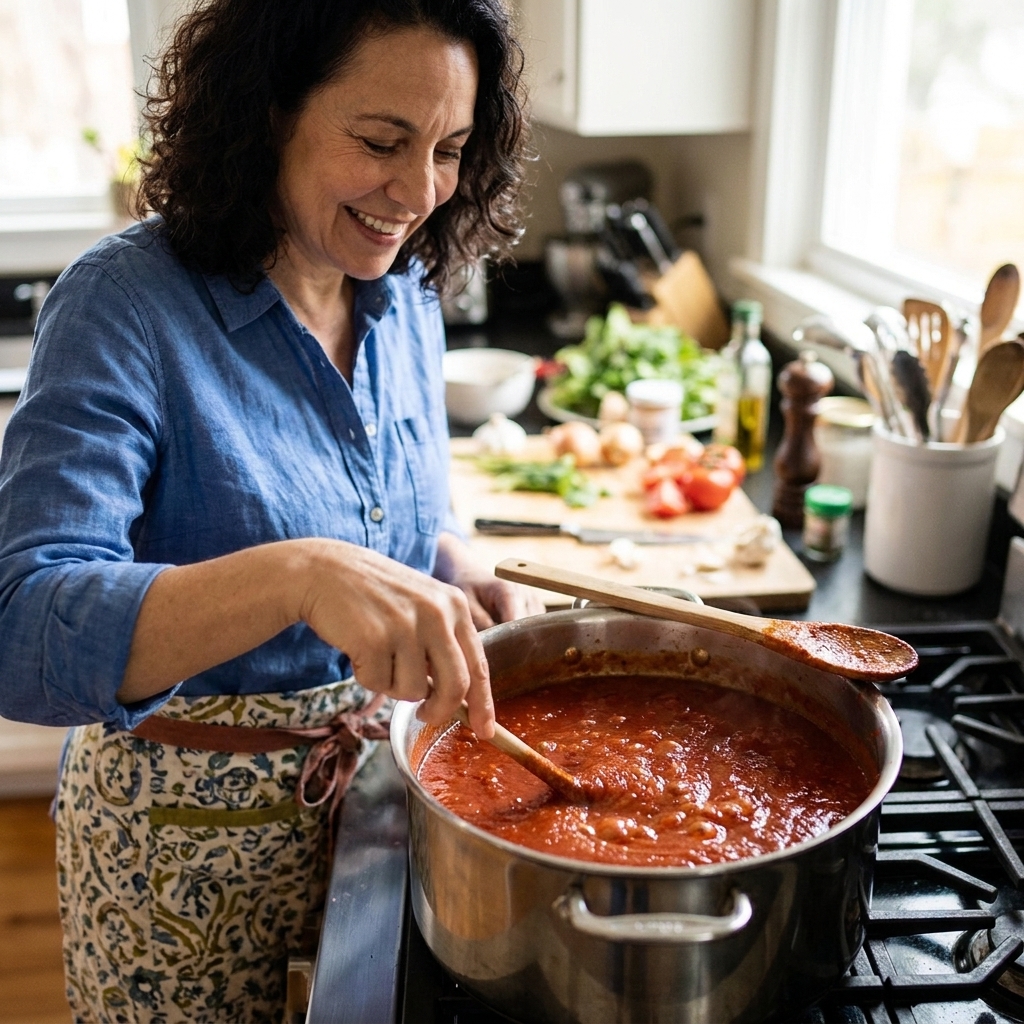
6) Low and slow (2 1/2 to 4 hours)
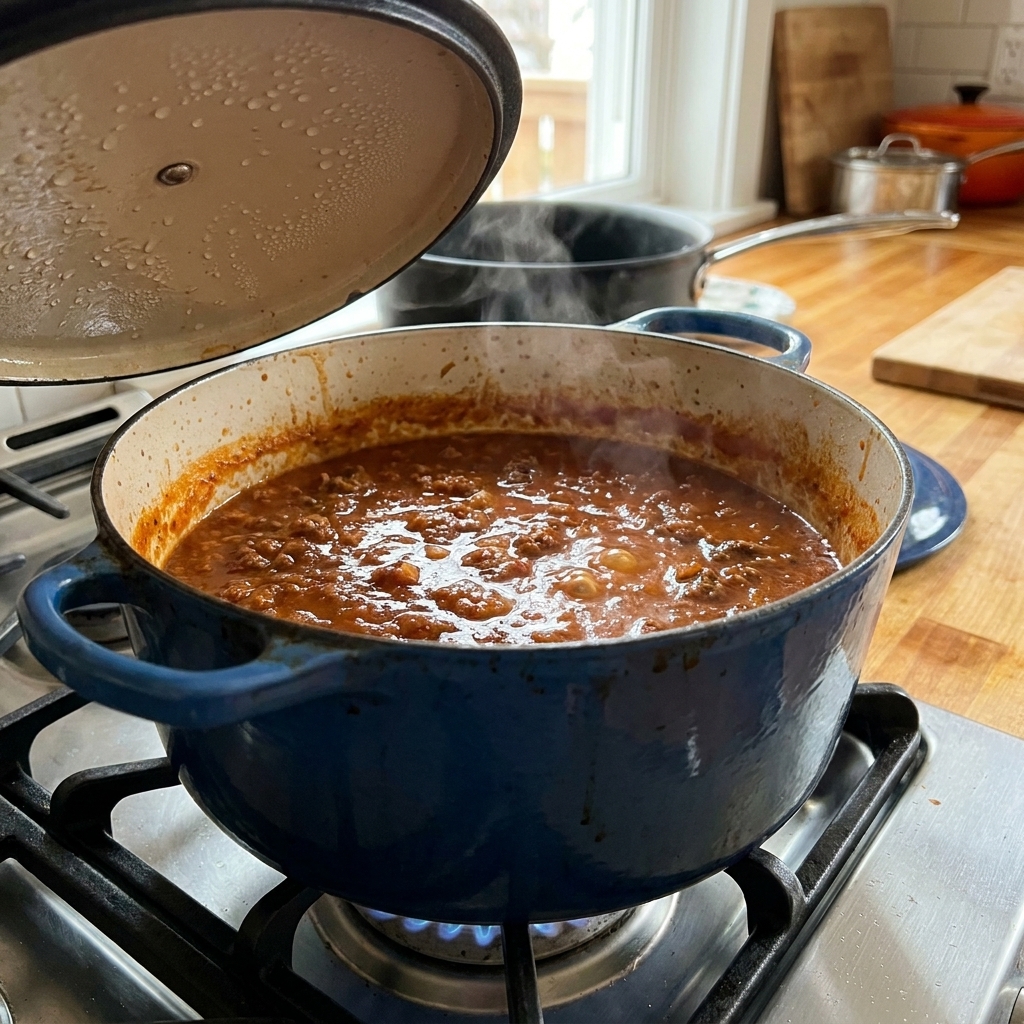
Reduce heat to the lowest setting that still gives you an occasional bubble. Partially cover the pot. Let it cook for at least 2 1/2 hours, ideally closer to 3 or 4.
As it simmers, add small splashes of water or a light stock when it looks dry. Water is perfectly traditional. If you use stock, choose something gentle (chicken or light beef), and use it with a light hand. Ragù should be rich and cohesive, not soupy, but it should never scorch at the bottom.
Cook’s cue: If you drag a spoon through the pot, the sauce should slowly close the line behind it. Not instantly, not never.
Timing and texture
Ragù alla Bolognese is done when it tastes calm and unified. The meat should be tender and fully integrated with the soffritto and tomato, and the fat should look glossy, not greasy.
- Too watery: uncover and simmer a bit longer, stirring more often.
- Too thick or sticking: add a splash of water or stock and lower the heat.
- Tastes sharp: simmer longer, then add a few tablespoons of milk and let it melt in.
- Tastes flat: add salt. Ragù needs enough salt to taste truly meaty.
Pasta to use
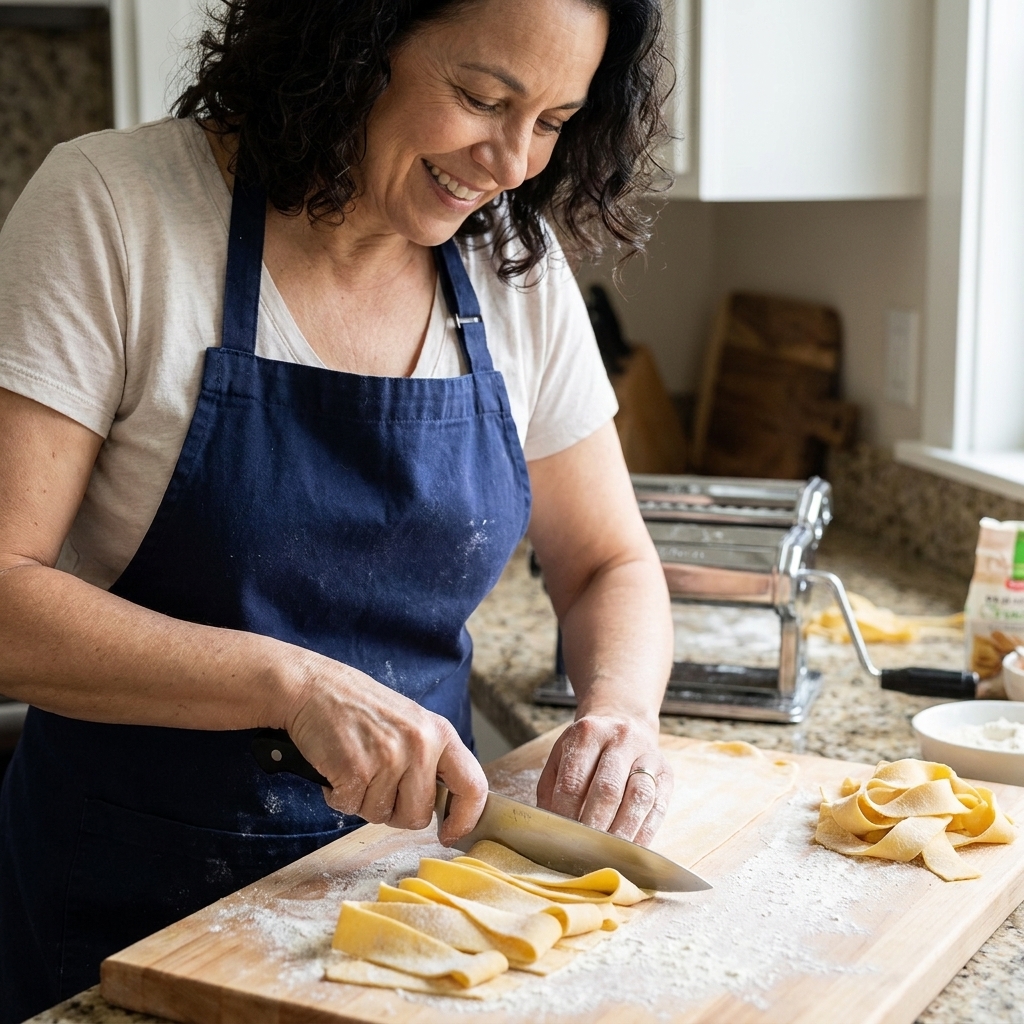
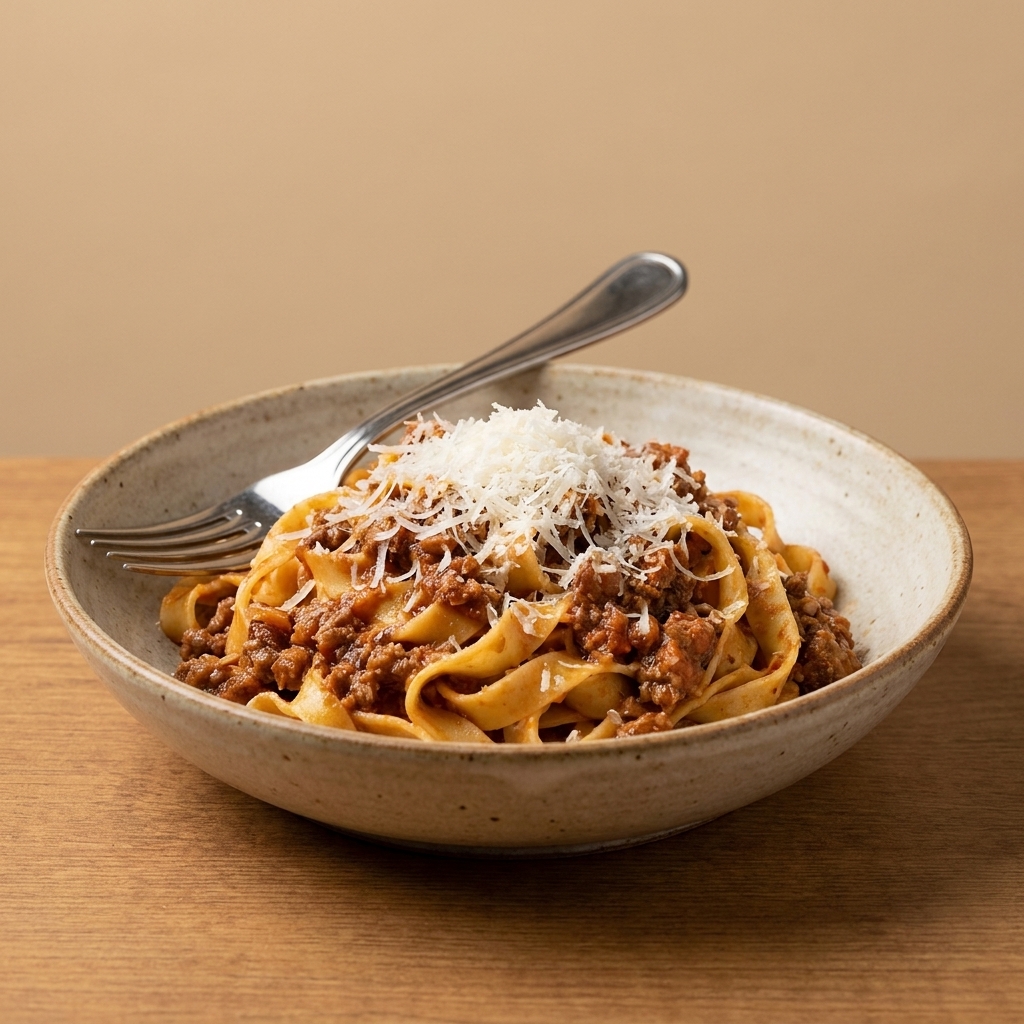
In Bologna, the classic pairing is tagliatelle al ragù, not spaghetti. Wide, eggy pasta holds the sauce beautifully.
Best pairings
- Tagliatelle: the gold standard.
- Pappardelle: luxurious and hearty.
- Rigatoni or mezze maniche: excellent for catching bits of meat.
- Lasagna alla Bolognese: layered with béchamel, not ricotta, in the traditional style.
If spaghetti is what you have, use it. I am a firm believer in feeding people with what’s in the pantry. Just know that a wider shape is closer to the spirit of Bologna.
How much pasta
For this pot, plan on 1 to 1 1/4 pounds (450 to 560 g) pasta for 6 hungry servings, depending on how saucy you like the bowl.
How to dress it
Warm a serving bowl. Toss hot pasta with a ladle of ragù and a small splash of pasta water until glossy. Then spoon a little extra ragù on top. Finish with Parmigiano-Reggiano.
Common mistakes
Cooking too hot
If it’s boiling like a pot of soup, it will reduce too fast and taste harsh. Turn it down. Ragù should be a slow conversation, not a shout.
Not cooking off the wine
If the sauce tastes winey or bitter, it probably needed more evaporation time. Next time, reduce the wine longer before adding tomato.
Using too much tomato
It turns into a different sauce, delicious in its own way, but not the classic meat-forward ragù. Keep tomato modest and let meat lead.
Skipping the soffritto or chopping it too big
Large chunks never melt into the sauce. Dice small. The vegetables should disappear into sweetness.
Draining every drop of fat
A little fat carries flavor. If it looks excessively greasy, skim lightly. Do not strip it completely.
Make ahead and store
Ragù is one of those gifts you can give your future self.
- Make ahead: It’s even better the next day. Cool, refrigerate overnight, then reheat gently.
- Fridge: 3 to 4 days in an airtight container.
- Freezer: 2 to 3 months. Freeze in flat bags or portioned containers for easy weeknight use.
- Reheating: Low heat, splash of water or broth, and stir until silky again.
More ways to serve
- Lasagna alla Bolognese with béchamel and Parmigiano-Reggiano
- Polenta with ragù spooned over the top
- Stuffed shells with a light layer of ragù beneath (not traditional, but very cozy)
FAQ
Can I use red wine instead of white?
Yes. Both show up in real kitchens. White wine is a common choice when you want a gentler, lighter background note. If you use red, choose something dry and not heavily oaked.
Do I have to use pancetta?
No, but it adds a wonderful savory backbone. If you skip it, consider using a bit more butter for richness.
Why is there milk in the sauce?
Milk helps tenderize the meat and gives the ragù a smoother, more mellow finish. It is one of the details that makes the sauce taste like Bologna rather than generic meat sauce.
Can I make it in a slow cooker?
Yes, but do the soffritto, meat browning, and wine reduction on the stove first. Then transfer and cook on low for 6 to 8 hours. If the sauce tastes a little sharp at the end, stir in a small splash of milk and let it warm through.
Is ragù alla Bolognese gluten-free?
The sauce itself is typically gluten-free, but always check your broth (if using) and tomato products. Serve with gluten-free pasta or polenta if needed.
Sunday-dinner tip
If you want your ragù to taste like it’s been simmering in a house full of people, do this: when it’s finished, turn off the heat and let it sit for 15 minutes before serving. The sauce relaxes. The flavors settle. And you get that unmistakable “everything is going to be okay” bowl of pasta.