Some of my favorite pasta nights started with nothing but a ball of dough, a wooden rolling pin, and a kitchen table that definitely got floured beyond recognition. You do not need a pasta machine to make gorgeous, tender noodles. What you need is a little patience and a few reliable sensory cues: dough that feels like your earlobe, flour used with a light hand, and a sheet thin enough to let light blur through it.
This is the traditional rolling pin method I learned at home, the one that turns fresh pasta into an afternoon ritual and a weeknight skill all at once.
What you need
You can absolutely do this with the basics. If you have one good knife and a rolling pin, you are in business.
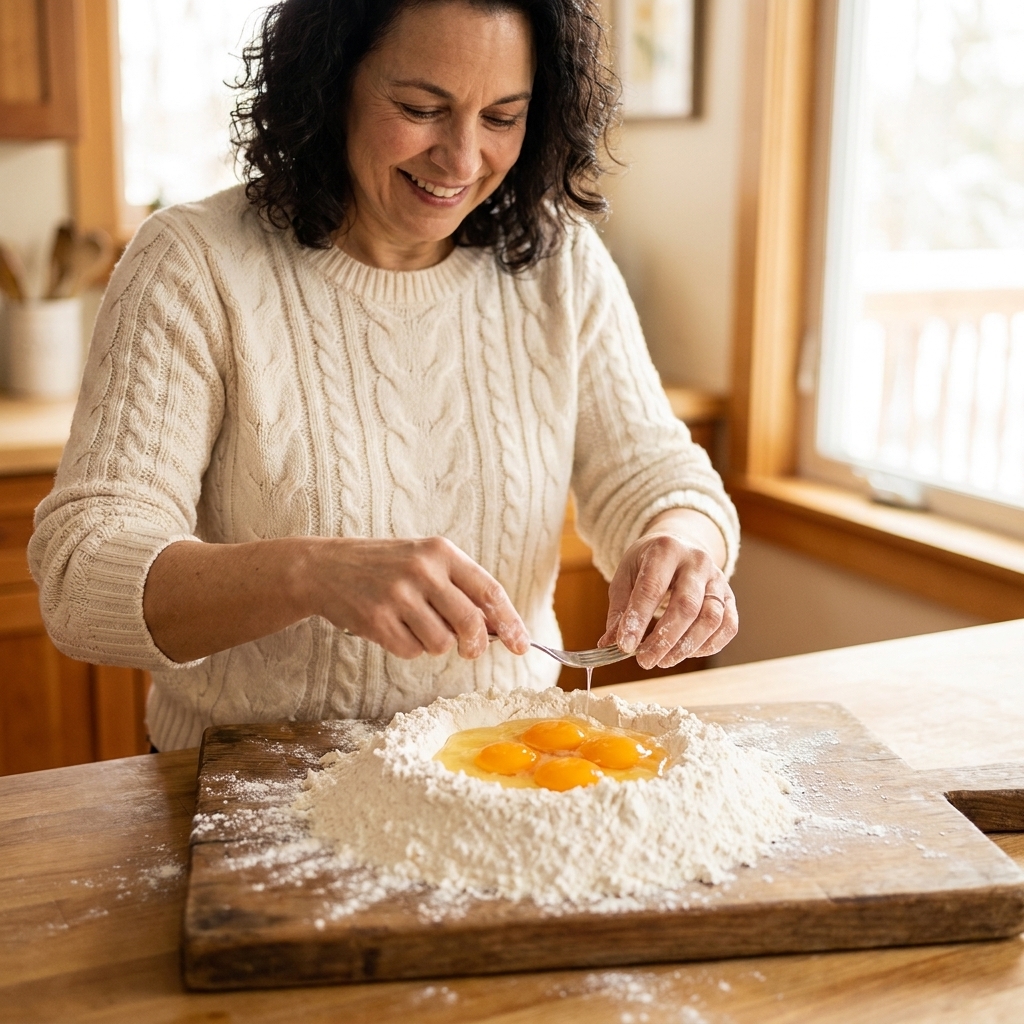
- Pasta dough (rested): 1 batch of egg pasta dough or semolina dough
- Rolling pin: any rolling pin works, but a long wooden pin makes it easier
- Bench scraper (optional but helpful): for lifting and tidying edges
- Sharp knife: chef’s knife or a long slicing knife
- Flour for dusting: semola rimacinata (finely milled semolina) or all-purpose flour
- Clean kitchen towel or plastic wrap: to cover dough while you work
- Tray or sheet pan: for holding cut pasta
- Drying space: a floured tray, a clean tablecloth, or the backs of chairs for longer strands
My little nonna tip: Keep a small bowl of flour for your hands and a second bowl for the table. It stops you from dumping too much flour “just in case.” Too much bench flour can work into the dough, dry the surface, and dull that tender bite. Before cooking, brush or shake off any excess flour so the water stays clear and the sauce clings like it should.
Pick your dough
You can roll either by hand. The difference is feel.
- Egg pasta dough (flour plus eggs): smooth, silky, rolls thin easily. Perfect for tagliatelle, fettuccine, pappardelle, and lasagna sheets
- Semolina dough (semola rimacinata plus water): springier and more elastic. It is the traditional choice for shapes like orecchiette and cavatelli, which are usually formed rather than sheet-rolled. You can roll it into sheets too, especially with a good rest, but it generally likes a slightly thicker roll and is less ideal for ultra-thin, egg-style sheets.
If you are new to hand rolling, start with egg dough. It is more forgiving when you are learning thickness and tension.
Rest the dough
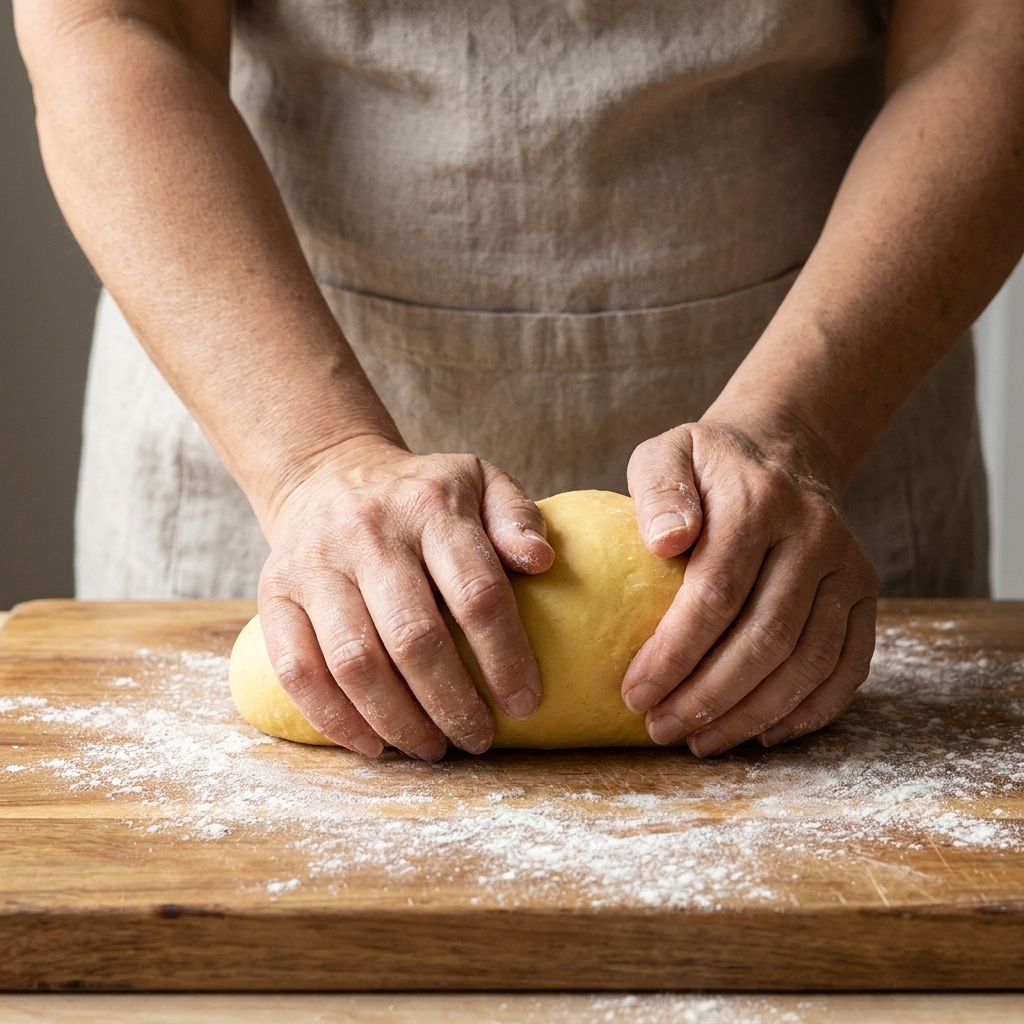
If there is one thing that makes hand rolling feel effortless, it is a proper rest. Resting lets the flour hydrate and the gluten relax, so the dough stops fighting you and starts stretching.
- Minimum rest: 30 minutes at room temperature, tightly wrapped
- Even better: 1 to 2 hours if your kitchen is cool
- Fridge rest: up to 24 hours, then bring to room temp for 30 to 60 minutes before rolling
How to tell it is ready: press a fingertip into the dough. It should indent easily and slowly spring back, not snap right back like a rubber ball.
Quick climate note: In a dry kitchen, dough can feel tighter and may need an extra splash of moisture and a longer rest. In a humid kitchen, use less bench flour and give your cut pasta a little more air time so it does not stick.
Set up
Clear a generous work area. Hand rolling is a wide, sweeping project, and you want room to rotate the dough without folding it in a panic.
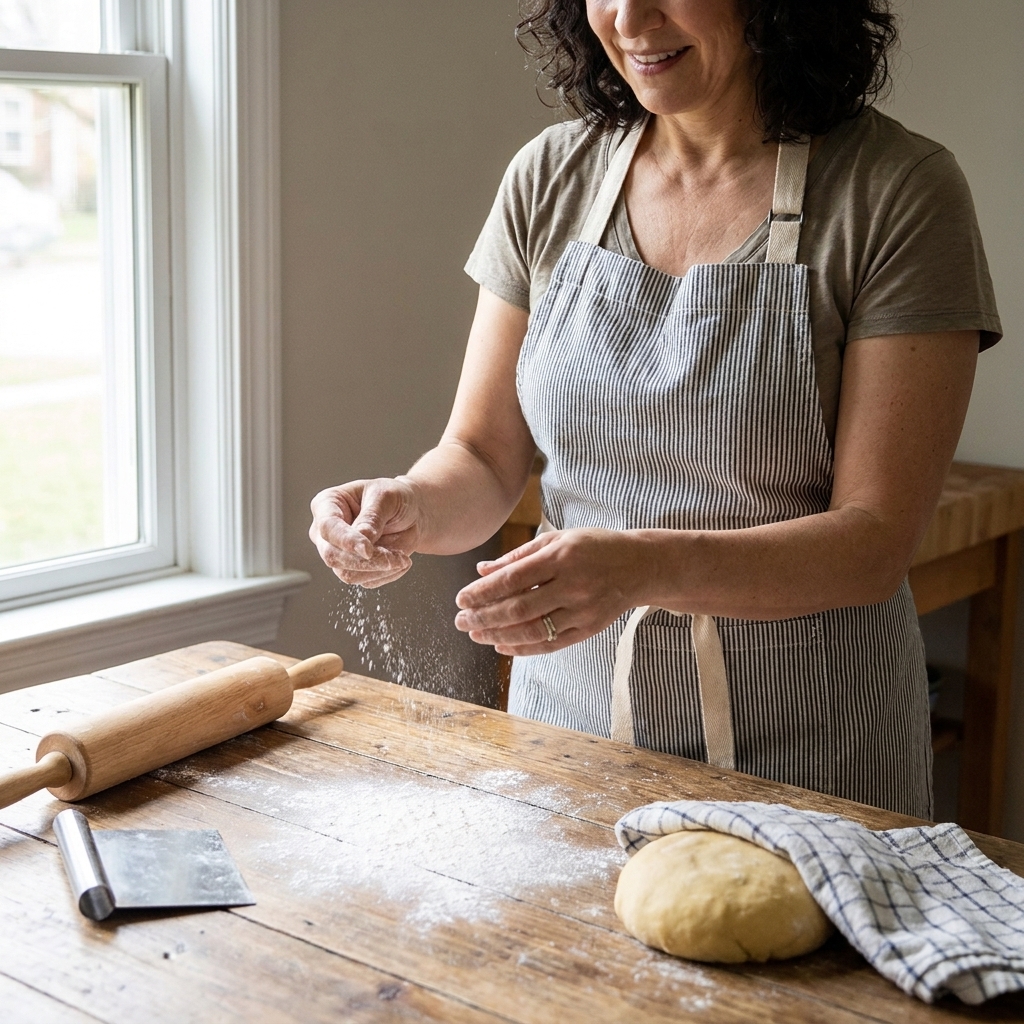
- Lightly flour the surface, then rub it in with your palm so you do not have a thick, dusty layer.
- Keep the dough you are not rolling covered so it does not form a dry skin.
- Have your tray ready with a light dusting of flour or semola for the cut pasta.
How to roll by hand
This is the method I use for long noodles and lasagna sheets. The rhythm matters as much as the pressure.
1) Portion the dough
Cut your dough into 4 pieces. Work with one piece at a time and keep the rest wrapped. Smaller pieces roll thinner more easily and are much less likely to stick.
2) Flatten, then roll
Press the piece into a thick disk with your palm. If the edges crack, the dough is a touch dry. Sprinkle or mist a few drops of water over the surface, knead briefly to distribute it, then let the dough rest for 10 minutes so the moisture evens out.
3) Roll from the center
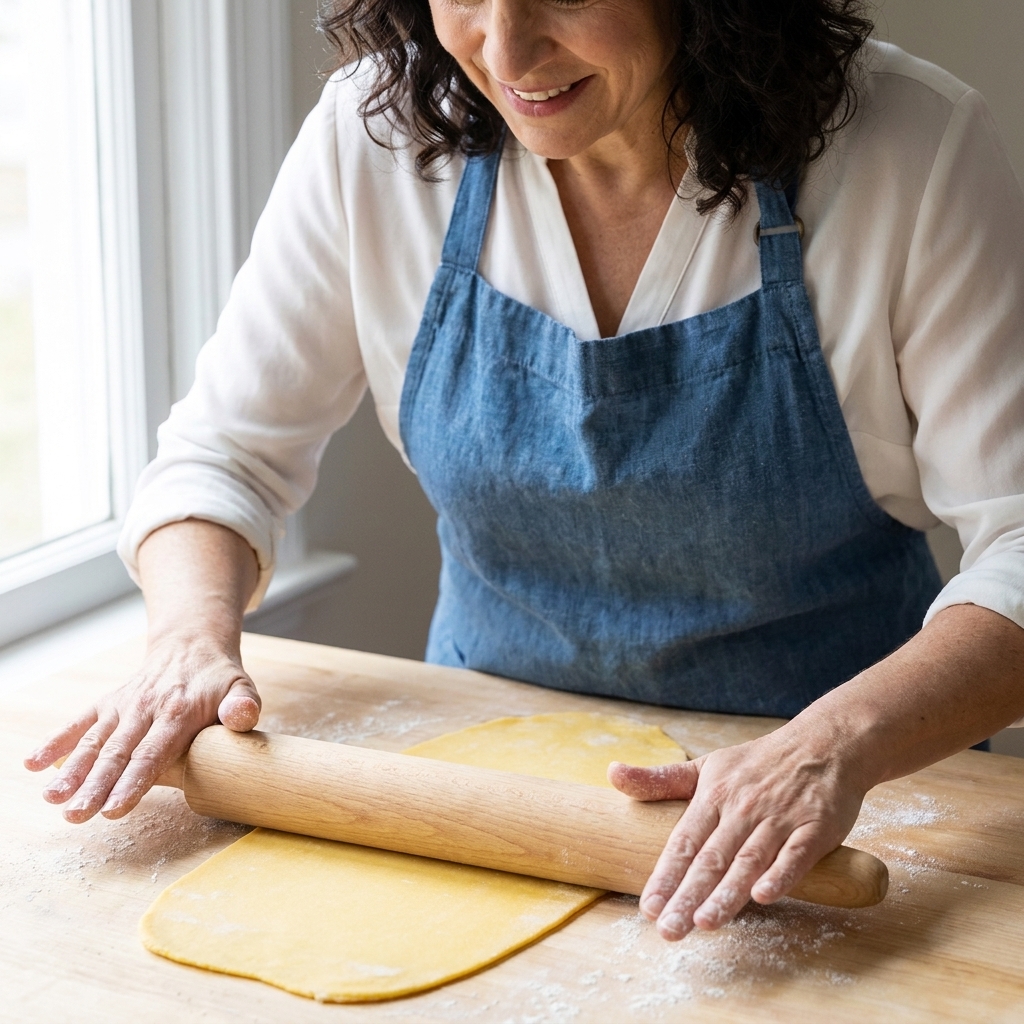
Place your rolling pin in the middle and roll away from you, then back toward you. Rotate the dough a quarter turn every few passes. You are aiming for an even oval or rectangle, not a perfect circle.
Sensory cue: As the dough thins, the rolling pin sound changes. It goes from a soft thud to a light, almost whispery drag across the table.
4) Flip and dust as needed
If you can lift the sheet easily, do not add flour. If it starts to cling, dust the table very lightly, lift the dough with the backs of your hands, and lay it back down. Flour is a tool, not a blanket.
5) Use the pin to stretch
Once it is fairly thin, you can lift the dough and let gravity help. Drape it over the rolling pin for a second, then lay it down and keep rolling. This encourages an even thickness without tearing.
6) Stop at the right thinness
For ribbons like tagliatelle and fettuccine, I roll until the sheet is about 1 mm thick. For lasagna, you can go a hair thicker, about 1.5 mm.
Quick check: Hold the sheet up to light. You should see a soft shadow of your fingers through it. If you can clearly read text through it, it is very thin. That can be lovely if you are experienced and gentle, but for a first try, err slightly thicker so it does not tear in the pot.
How to cut ribbons
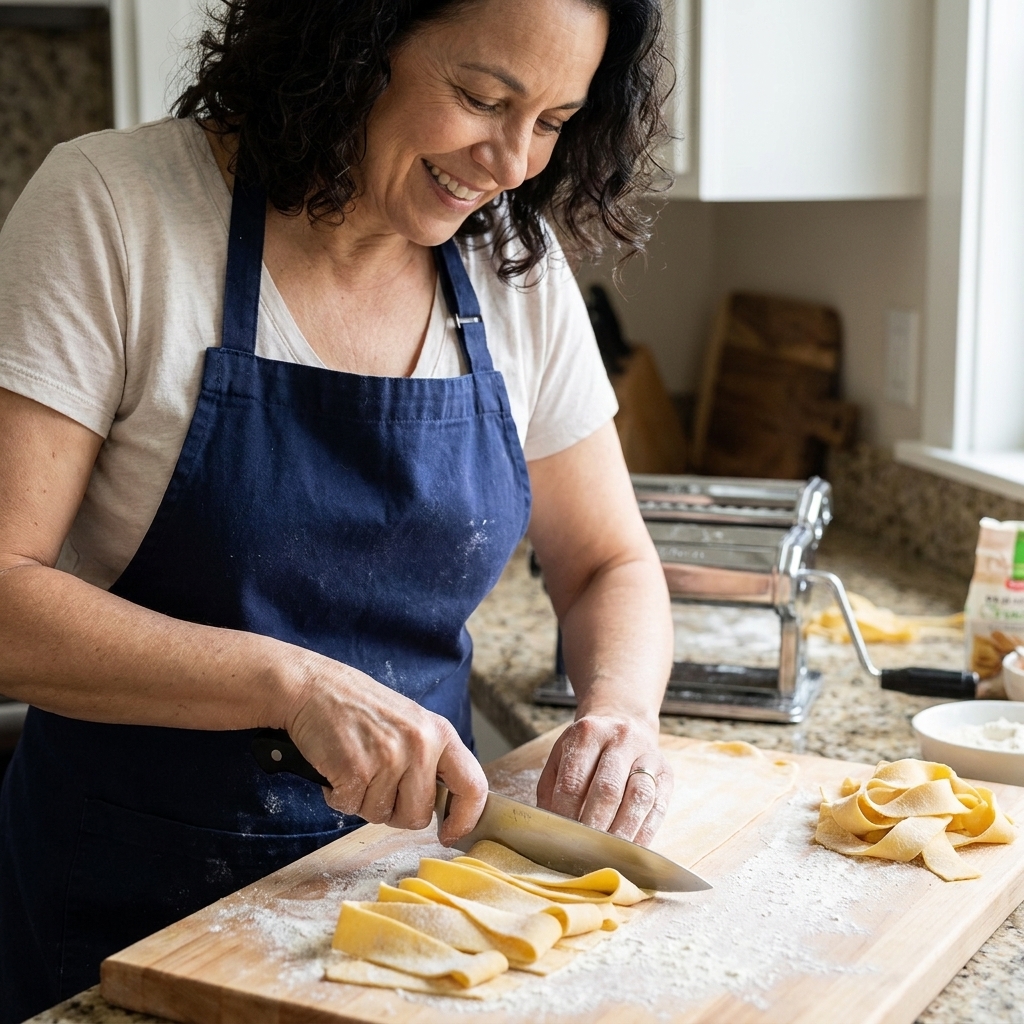
Cutting by hand is surprisingly satisfying. The trick is to dry the sheet just a little so it slices cleanly instead of sealing back together.
1) Let it sit 5 to 10 minutes
Lay it on the table or a clean cloth. You want the surface to feel slightly leathery, not tacky. If your kitchen is humid, it might take 12 to 15 minutes.
2) Dust and fold
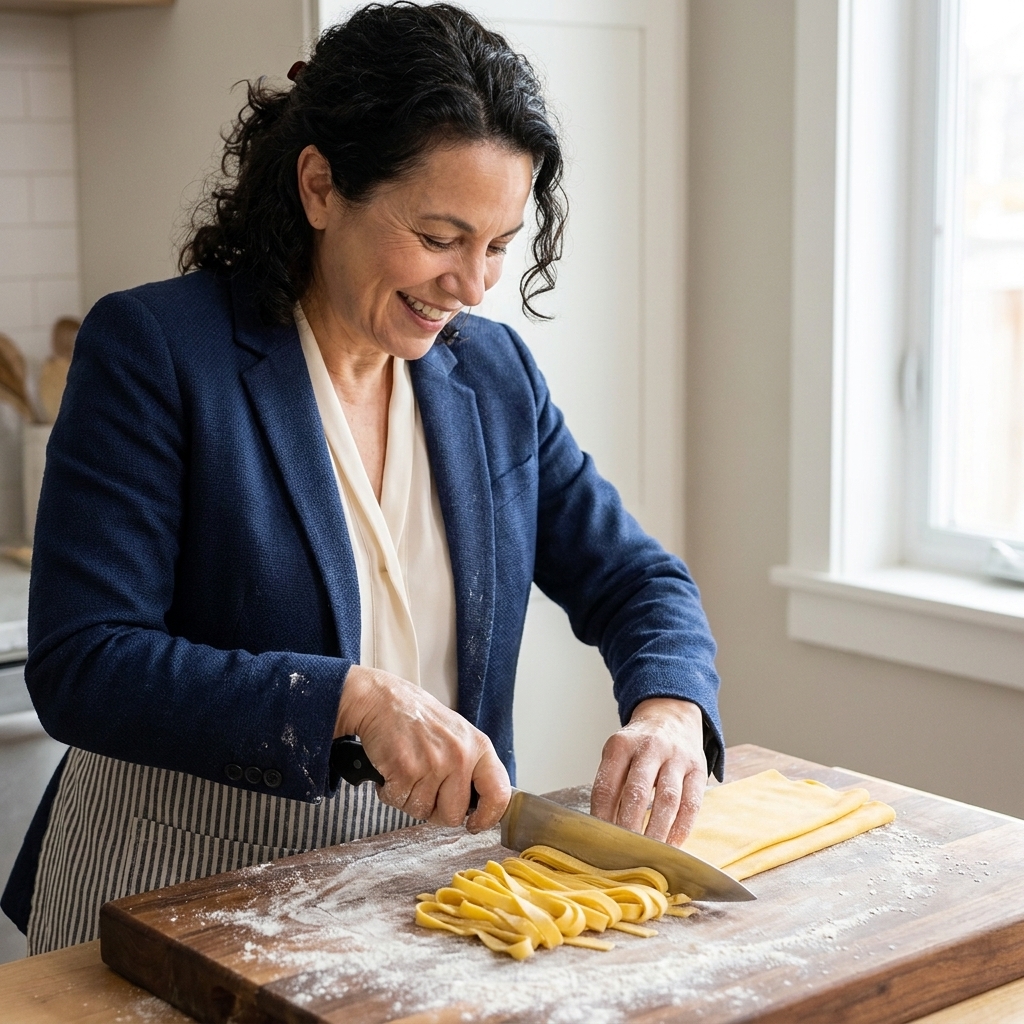
Dust the sheet with a whisper of flour. Fold it loosely like an accordion, or roll it into a gentle log. Do not press it tight, or the noodles will fuse.
3) Slice to width
- Tagliatelle: about 6 to 8 mm
- Fettuccine: about 8 to 10 mm
- Pappardelle: about 2 to 3 cm
Use a confident, straight-down motion with a sharp knife. Avoid dragging the blade, which can pull and distort the folds.
4) Unfurl and fluff
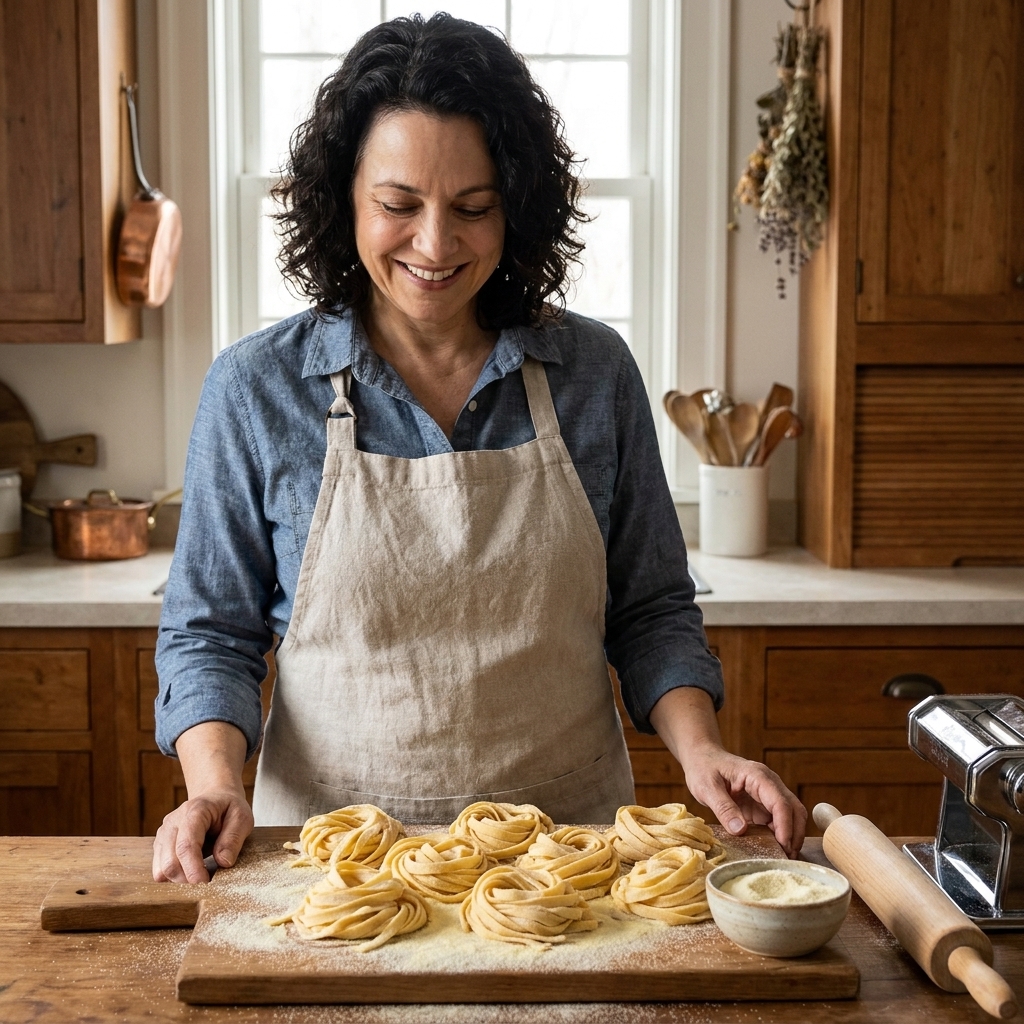
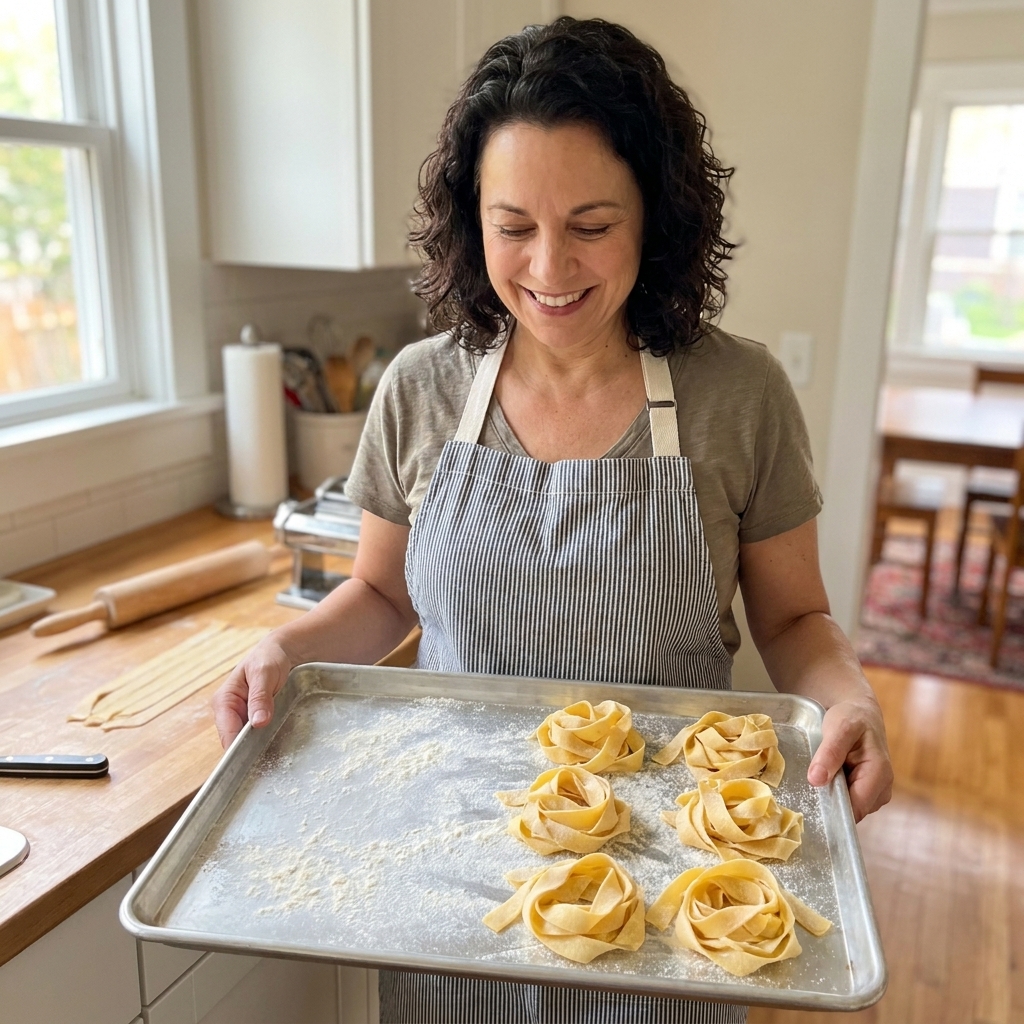
Pick up a small bundle, shake it gently, and lay it in loose nests on a floured tray. If you see sticky spots, dust your fingers and separate the strands right away. It is easier now than later.
One more small habit that helps: Before the nests go on the tray, give them a quick shake or a light brush to remove loose flour. Less excess flour means less gummy foam in the pot and better sauce cling.
Lasagna sheets
For lasagna, I like to roll the dough into long sheets, then trim them to fit the pan.
- Roll to about 1 to 1.5 mm thick.
- Trim ragged edges with a knife to make clean rectangles.
- Cut to match your baking dish, leaving a little extra since fresh pasta can relax and swell a bit as it cooks.
Do you need to pre-boil fresh lasagna sheets? It depends on how thin you rolled and how saucy your lasagna is. If your sauce is generous and loose, you can often layer fresh sheets straight in. If your sauce is thick or your sheets are on the thicker side, blanch them 30 to 45 seconds, then lay flat on a towel before layering.
Drying and storing
Fresh pasta is happiest when it is cooked soon after cutting, but you have options.
Same day
- Let ribbons dry 15 to 30 minutes in nests on a floured tray.
- Keep them uncovered if your kitchen is not too dry, or lightly cover with a towel if you worry about over-drying.
Freeze
- Arrange nests on a tray and freeze until firm, about 45 to 60 minutes.
- Transfer to a freezer bag.
- For best quality, use within 1 to 2 months.
- Cook from frozen, do not thaw.
If you dry on chair backs: use a freshly cleaned surface or drape a clean cloth first, keep it away from drafts, and be realistic about pets, kids, and curious elbows.
Little clue it is over-dried: If the pasta cracks when you bend a strand, you waited too long at room temperature. It will still cook, but it can break into shorter pieces in the pot.
Cooking fresh pasta
Fresh pasta cooks fast. The biggest mistake is walking away.
- Use a big pot of water and salt it well. It should taste pleasantly salty, like the sea.
- Fresh ribbons often cook in 2 to 4 minutes, depending on thickness.
- Start tasting early. You want tender with a little bite, not mushy.
- Save a mug of pasta water. It is your secret sauce thickener and silk-maker.
When you toss the pasta with sauce, add a splash of pasta water and keep tossing until the sauce clings. If your sauce looks glossy and hugs each strand, you nailed it.
Troubleshooting
The dough shrinks back
- Cause: gluten is tight
- Fix: cover and rest 10 to 20 minutes, then roll again
The sheet sticks
- Cause: too much surface moisture or not enough dusting
- Fix: lift gently with a bench scraper, dust lightly, and flip. Use flour sparingly.
The dough tears
- Cause: rolled too thin too fast, or dough is dry
- Fix: roll more gradually. Patch small tears by pinching and rolling over them. If the whole dough feels dry, sprinkle a few drops of water, knead briefly, and rest.
Noodles stick after cutting
- Cause: sheet was too moist, or folds were too tight
- Fix: let the sheet air-dry 5 to 10 minutes before cutting, dust lightly, and fluff immediately after slicing
Pasta tastes tough
- Cause: dough is on the dry side, overworked, or too much flour got worked in during rolling
- Fix: use less bench flour next time, stop kneading as soon as the dough is smooth and cohesive, and let the dough rest so it relaxes before you force it thinner
Shapes to try
Once you can roll a sheet, you can make so many classics.
- Tagliatelle: the all-purpose ribbon, dreamy with ragù or mushroom sauce
- Fettuccine: slightly wider, perfect with butter and Parmigiano or creamy sauces
- Pappardelle: wide ribbons that love bold sauces like braised meats
- Maltagliati: “badly cut” pasta, rustic little diamonds and scraps from trimming sheets
- Lasagna sheets: the coziest payoff for an afternoon of rolling
FAQ
Best rolling pin for pasta?
A long wooden rolling pin is classic because it helps you roll evenly across a wide sheet. But any rolling pin works. If yours is short, just rotate the dough more often and roll in smaller sections.
How thin should I roll?
For ribbons, aim for about 1 mm thick. For lasagna, 1 to 1.5 mm is great. The “hold it up to the light” test is more useful than perfection.
Can I roll on a countertop?
Yes. Stone can feel cooler and may need a touch more flour. Just make sure the surface is clean and dry, and avoid heavy flouring that gets worked into the dough.
How do I keep dough from drying out?
Keep the unrolled dough wrapped, and if your kitchen is dry, cover your rolled sheet with a towel while you finish rolling the next piece. Work in smaller batches.
Do I need to dry cut pasta before boiling?
Not for long. A short rest, 10 to 20 minutes, helps it hold its shape and reduces sticking. If you are cooking immediately, just dust lightly, separate the strands well, and brush off excess flour before the pasta hits the water.
One last nudge
Your first hand-rolled sheet might be a little wobbly, and your ribbons might be more “rustic” than restaurant-perfect. That is exactly how it should be. Fresh pasta made by hand has personality. And once you taste noodles you rolled yourself, with sauce clinging to every curve, you will understand why so many Italian kitchens never bothered with a machine.
If you want, tell me what shape you are making and what sauce you love. I will help you match thickness, cut, and cooking time so it comes out just right.