If you have ever made a big Sunday pot of sauce and thought, “I want this on a random Tuesday too,” you are my kind of person. The good news is that most homemade Italian pasta sauces freeze beautifully. The trick is treating your sauce with the same care you gave it on the stove: cool it quickly, pack it well, label it clearly, and reheat it gently so it tastes like you just made it.
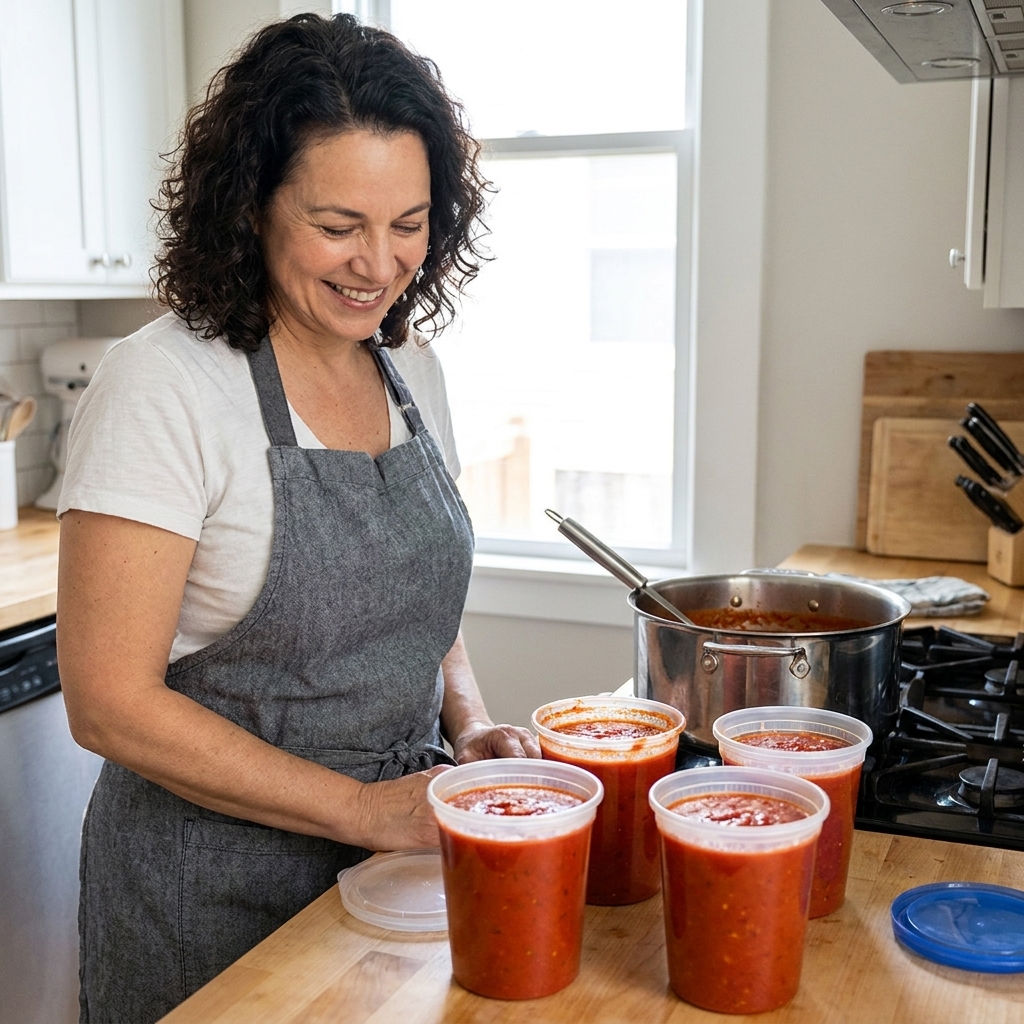
First things first: cooling sauce safely
Before we talk containers and freezer tricks, let’s talk about the step that protects both flavor and food safety: cooling.
How to cool sauce fast (without watering it down)
- Get it out of the pot. A deep, heavy pot holds heat for a long time. Pour the sauce into a wide, shallow pan or a couple of smaller bowls so it cools faster.
- Stir to release steam. Give it a stir every few minutes. You will literally feel the heat leaving.
- Ice bath for big batches. Set the pan or sauce container in a larger bowl of ice water and stir occasionally until it is no longer hot. Keep water out of the sauce.
- Do not let it linger on the counter. Cool it quickly to lukewarm (not steaming), then get it into the fridge or freezer promptly.
- Refrigerate within 2 hours. That is the general safety window for cooked food sitting out. If your kitchen is above 90°F/32°C, make it within 1 hour.
Once the sauce is cooled to lukewarm or cooler, you can portion and refrigerate or freeze.
Choosing containers that protect flavor
Sauces pick up freezer smells fast, and freezer burn is real. A snug seal matters.
My favorite options for pasta sauces
- Freezer-safe deli containers: stackable, portion-friendly, and easy to label.
- Wide-mouth glass jars: great for fridge storage and some freezer use, but only freeze in jars labeled freezer-safe and leave plenty of headspace.
- Heavy-duty freezer bags: perfect for flat freezing. They thaw fast and store like little sauce “files.”
- Silicone freezer trays: ideal for pesto, soffritto bases, or small portions. Pop out cubes and store in a bag.
Headspace rules (so lids do not pop)
Liquid expands when it freezes. Leave room at the top:
- Tomato sauces and ragù: about 1 inch of headspace in rigid containers.
- Glass jars: aim for at least 1 to 1 1/2 inches of headspace, and stick to wide-mouth jars.
- Brothy or very thin sauces: a little more, especially in jars.
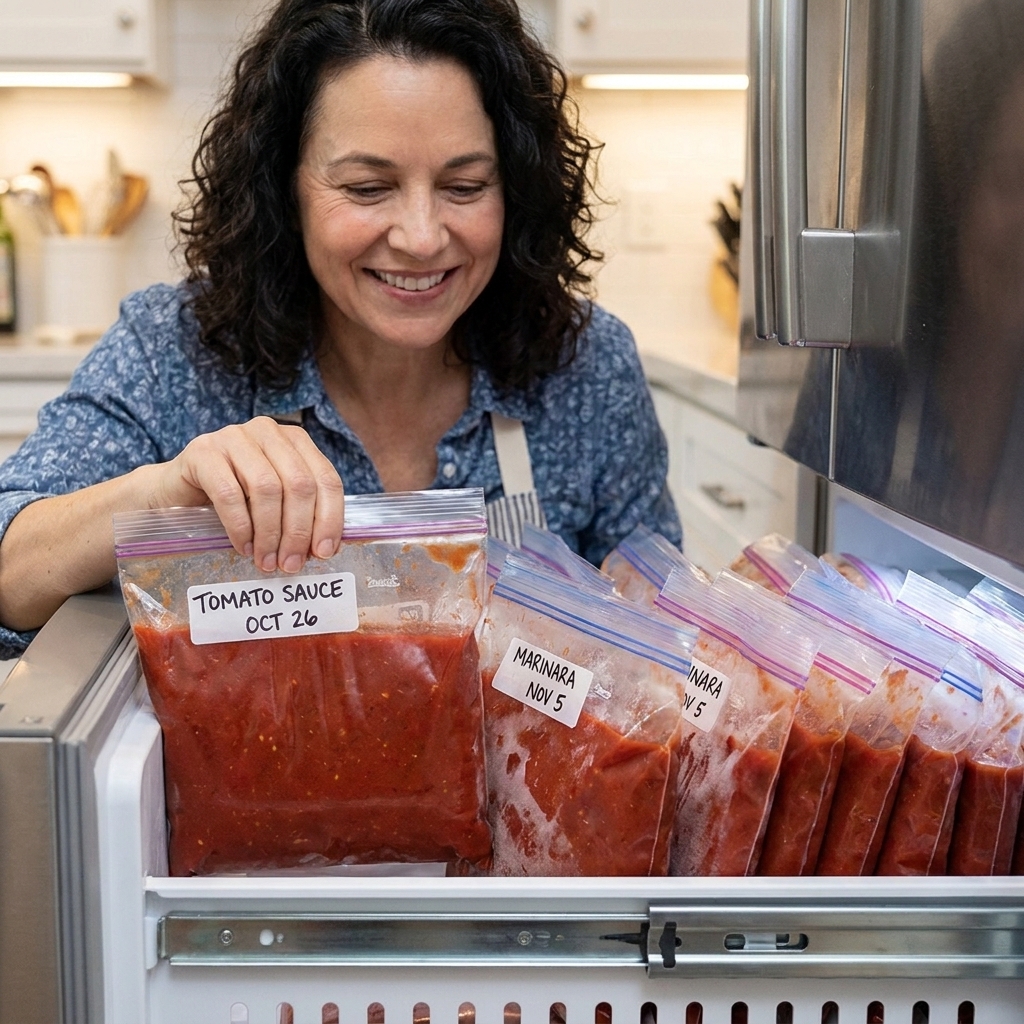
- Freezer bags: press out air, seal, then lay flat on a sheet pan until frozen solid.
Storage timeline: fridge vs freezer
Here is the practical rhythm I use at home. These are common-sense guidelines for quality and safety, assuming the sauce was cooked properly and cooled promptly. When you are dealing with meat or seafood, some authorities recommend shorter refrigerator windows depending on ingredients and handling, so when in doubt, err on the sooner side.
In the refrigerator
- Most tomato-based sauces: 3 to 4 days
- Meat sauces (ragù, meatballs in sauce): 3 to 4 days
- Cream sauces: 2 to 3 days (they are more delicate)
- Seafood sauces: 1 to 2 days (best sooner)
- Pesto: 3 to 5 days if well covered and topped with a thin layer of oil
In the freezer (best quality window)
For best results, keep your freezer at 0°F/-18°C. Frozen food can stay safe indefinitely if it stays frozen, but flavor and texture are best in these windows:
- Tomato sauces (marinara, arrabbiata, pomodoro): up to 3 months for best flavor, often fine up to 6 months
- Meat ragù: 3 to 4 months for best quality
- Vegetable-based sauces: about 2 to 3 months (some vegetables soften more)
- Pesto: 3 months (color and aroma fade over time)
- Cream and cheese sauces: freezing is possible, but texture can change. If you do freeze them, use within 1 to 2 months and plan to re-emulsify gently when reheating.
How to freeze sauce for the best reheat
Freezing is not hard, but a few small habits make a big difference.
1) Portion like you actually eat
I like to freeze sauce in:
- 1 cup portions for quick dinners for two
- 2 cup portions for family pasta night
- 1/4 cup portions for flavor boosters (pesto, soffritto, pan juices)
If you are not sure, think of about 3/4 to 1 1/2 cups sauce per pound of pasta, depending on the style and shape. For a lightly sauced dish, stay on the lower end. For baked pasta or extra saucy bowls, go higher.
2) Label like future-you will thank you
- Name of sauce
- Date
- Any notes that matter (spicy, contains pork, extra basil, etc.)
3) Freeze quickly for better texture
Spread bags flat, do not overcrowd the freezer, and avoid putting a huge warm container straight in. Hot sauce can raise the freezer temperature and slow freezing for everything nearby. The faster it freezes, the better the final texture.
One more small thing that helps: let sauce cool uncovered for a few minutes so steam can escape, then cover for storage so condensation does not drip back in and thin it out.
Sauce-by-sauce tips
Tomato sauces (marinara, pomodoro, arrabbiata)
These are the freezer champions. They reheat beautifully and often taste even more mellow after resting.
- Best practice: freeze plain, then add delicate herbs (fresh basil, parsley) when reheating.
- Texture tip: if it thickens too much after thawing, loosen with a splash of pasta water, not plain water.
Meat sauces (ragù alla bolognese, Neapolitan-style meat ragù)
Ragù freezes extremely well because the fat helps protect flavor.
- Skim or not? If your ragù has a heavy fat cap, you can skim a little before freezing to avoid a greasy reheat. I usually leave it, then adjust after warming.
- Reheat gently: low heat helps keep the meat tender.
Cream sauces (alfredo-style, panna e funghi, vodka cream)
Cream can split when frozen and reheated, so manage expectations. You can still do it, especially for busy weeknights, but handle it gently.
- Best practice: slightly under-reduce before freezing. Reduce to your final thickness when reheating.
- Fix a split sauce: warm slowly, whisk constantly, and add a splash of cream or a spoonful of pasta water to help it come back together.
- Avoid boiling: once it is hot and silky, stop.
Pesto (basil pesto, arugula pesto, parsley pesto)
Pesto is all about bright aroma, so oxygen is the enemy.
- Freeze in small portions: ice cube trays are perfect.
- Protect the color: press plastic wrap directly on the surface, or top with a thin layer of olive oil before sealing.
- Cheese choice: you can freeze pesto with cheese, but for the brightest flavor, some cooks add the grated cheese when serving. Either works, just be consistent.

Thawing: the safest, tastiest methods
Best: thaw overnight in the fridge
This is the gentlest method and keeps your sauce at a safe temperature the whole time. Move the container to the refrigerator the night before, then reheat when you are ready.
Fast: thaw in a cold-water bath
If your sauce is in a sealed bag or watertight container, submerge it in cold water and change the water every 30 minutes until pliable. Then reheat right away.
Direct from frozen: totally doable for many sauces
Tomato sauce and ragù can go straight into a saucepan over low heat. Add a small splash of water at the beginning to prevent scorching, cover, and stir as it melts.
What I do not recommend
- Thawing on the counter. It is too easy for the outside to warm up too long while the center stays frozen.
- Repeated thaw and refreeze. It hurts texture and raises food safety concerns. Portion smaller instead.
Reheating without losing that “just simmered” flavor
Reheating is not just warming. It is a chance to bring back aroma, balance, and texture.
On the stovetop (my favorite)
- Tomato sauce: warm over medium-low until it gently bubbles, then lower the heat. Taste and adjust salt. Add a drizzle of olive oil at the end for a fresh finish.
- Ragù: low heat, covered, with occasional stirring. If it seems tight, loosen with a few spoonfuls of water or broth, then finish with pasta water when you toss with pasta.
- Cream sauce: low heat only. Stir often. The moment you see steam and the sauce is silky, pull it back.
In the microwave (yes, you can, just do it wisely)
Microwaves heat unevenly, so use short bursts and stir in between.
- Use a microwave-safe bowl with a loose cover.
- Heat 45 to 60 seconds at a time, stirring well.
- For tomato sauces, a splash of water helps prevent hot spots.
- For cream sauces, add a tiny splash of milk or cream before heating and stir often.
The pasta-water trick (non-negotiable in my kitchen)
When you reheat sauce for pasta, save a mug of starchy pasta water. It helps sauce cling, smooths out reheated texture, and makes everything taste cohesive again.
Food safety checkpoints
Italian cooking should feel comforting, not stressful. These simple checks keep you in the safe zone.
- Reheat until steaming hot. For extra clarity, especially with meat or seafood sauces, aim for 165°F/74°C throughout.
- Do not store sauce in the pot. It cools too slowly and can sit warm too long.
- When in doubt, throw it out. If it smells sour or “off,” if you see mold, or if it has been in the fridge longer than you can remember, let it go.
Common problems (and how to fix them)
“My sauce tastes flat after freezing.”
- Add a pinch of salt, then taste again.
- Warm a clove of smashed garlic in olive oil for 30 seconds, then stir the oil into the sauce.
- Finish with fresh herbs or a small knob of butter for roundness.
“My tomato sauce is watery after thawing.”
- Simmer uncovered for a few minutes to reduce.
- Do not add extra water. Use pasta water only at the very end, and only if needed.
“My cream sauce split.”
- Lower the heat immediately.
- Whisk in a spoonful of cream, milk, or pasta water.
- If it is stubborn, whisk in a tiny amount of cornstarch slurry (a teaspoon of water mixed with a pinch of cornstarch), then warm gently until it smooths.
“My pesto turned dark.”
- It is usually oxidation, not spoilage.
- Stir well, then brighten with a squeeze of lemon and a drizzle of olive oil.
- Next time, press plastic wrap directly on the surface and freeze in smaller portions.
Quick FAQ
Can I freeze sauce with pasta already mixed in?
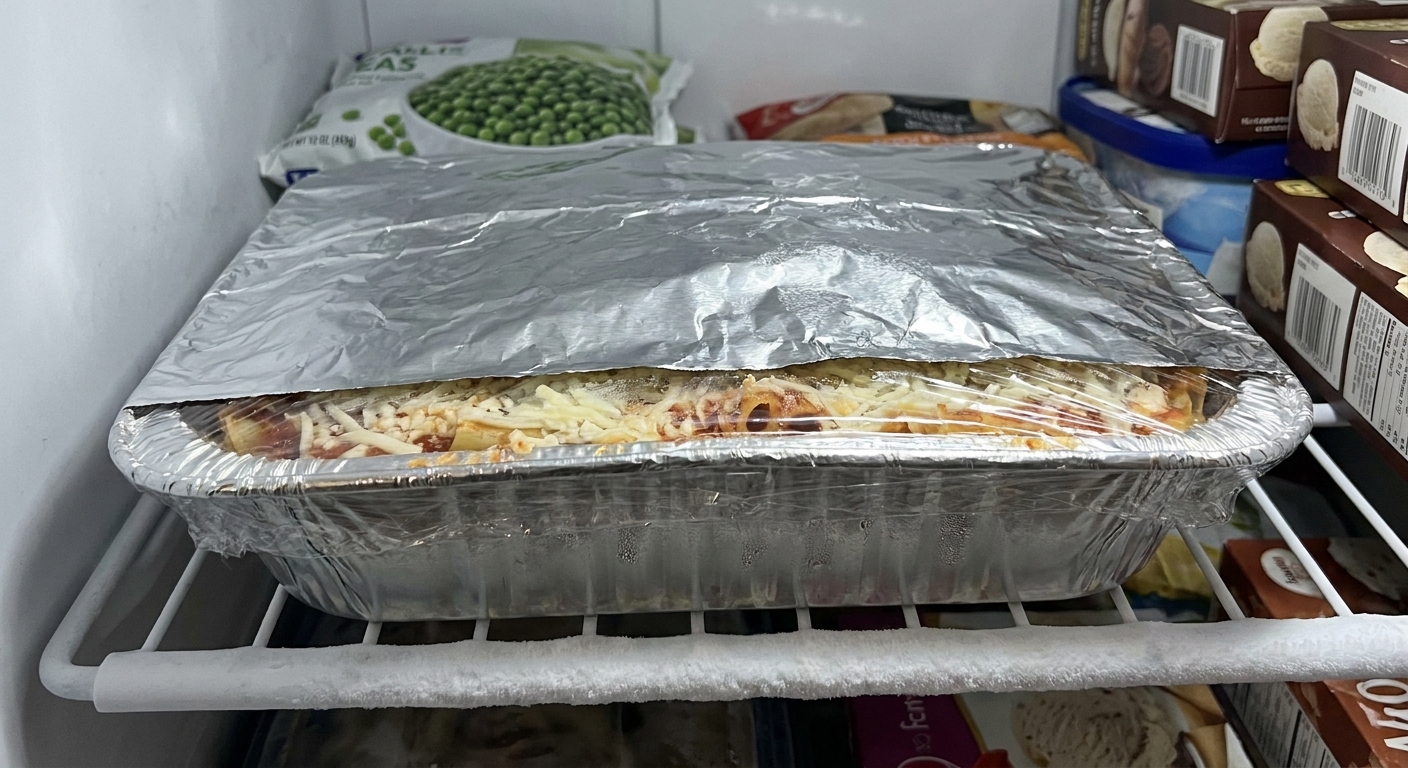
You can, but I prefer freezing sauce separately. Pasta can go soft and absorb sauce, especially long noodles. If you want a full freezer meal, baked dishes like lasagna and baked ziti hold up much better than sauced spaghetti.
Can I freeze sauce in glass jars?
Yes, if the jar is freezer-safe, you leave generous headspace, and you never freeze a hot jar. Let the sauce cool first. Wide-mouth jars are safer than narrow-neck jars for freezing.
Should I add cheese before freezing?
For tomato sauces and ragù, I usually add cheese when serving, not before freezing, for the freshest flavor. For pesto, either is fine. For cream sauces, cheese can make splitting more likely if overheated, so keep the reheat gentle.
How do I know if frozen sauce is still good?
If it stayed frozen at 0°F/-18°C, it can remain safe for a very long time, but quality drops. If you see heavy freezer burn, gray patches, or it smells stale after thawing, it is time to make a fresh batch.
My “Sunday sauce” freezer routine
If you want a simple system, here is what I do after a big sauce day:
- Cool the sauce quickly in shallow containers.
- Portion into 1 and 2 cup containers, plus a few small portions for quick lunches.
- Label with sauce name and date.
- Freeze containers without stacking until solid, then stack neatly.
- Plan one easy weeknight meal around it, like spaghetti al pomodoro, penne with ragù, or a quick baked pasta.
That is it. A little organization now, and future-you gets a bowl of pasta that tastes like you cared all day, even if you only had 20 minutes.