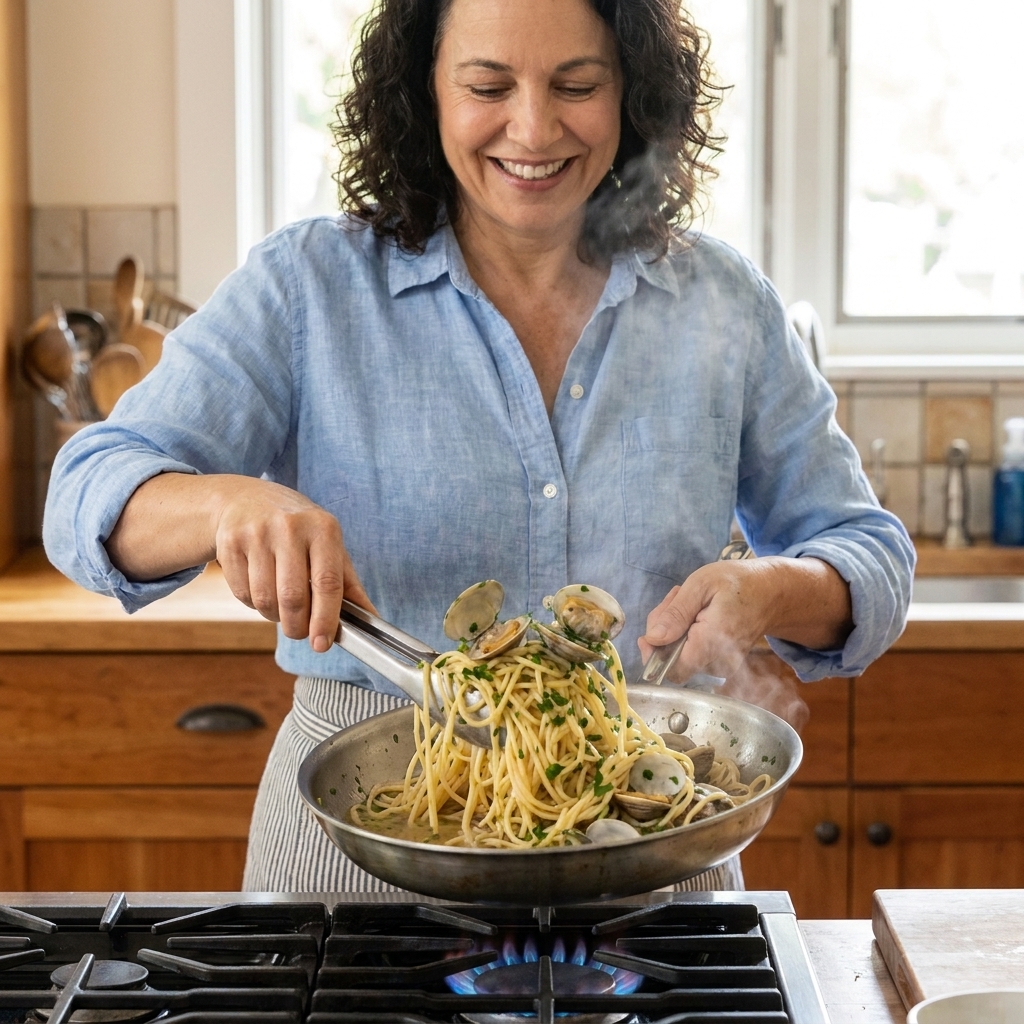
Spaghetti alle vongole is one of those dishes that tastes like a seaside vacation, even if you are cooking in a tiny weeknight kitchen. The secret is not fancy technique. It is good clams, a gentle hand with the garlic, and letting the clam juices and olive oil turn into their own glossy sauce.
This is the white version, in bianco. No tomatoes, no cream, no heavy distractions. Just briny, clean flavor with parsley and a splash of wine to lift it all up.
What makes it authentic
Different families do it differently, but the heart of an authentic vongole in bianco is always the same.
- Fresh clams that open in the pan and release their natural juices.
- Olive oil and garlic cooked gently so it smells sweet and toasty, not sharp or burnt.
- Dry white wine for brightness and a little perfume.
- Parsley added at the end so it stays green and fresh.
- Pasta water to help emulsify the sauce so it clings to every strand.
You will sometimes see a pinch of peperoncino (crushed red pepper). I love it here, but keep it subtle. The clams should still be the loudest voice in the room.
Choosing clams (and how many)
For spaghetti alle vongole, you want small, sweet clams if you can find them. In Italy, that is often vongole veraci. Here, good options are:
- Littleneck clams: widely available, reliable, great for this dish.
- Manila clams: a little sweeter and very tender.
- Middle neck: fine if that is what you have, just expect bigger bites.
How much: plan on about 1 pound (450 g) clams per 2 servings, or 2 pounds (900 g) for 4 servings. If you want it extra briny and abundant, go heavier.
Quick freshness check
- Clams should smell like the ocean, not fishy.
- Shells should be closed, or close when you tap them.
- Discard any clams with cracked shells.
- Buy them the day you plan to cook if possible.
How to purge clams
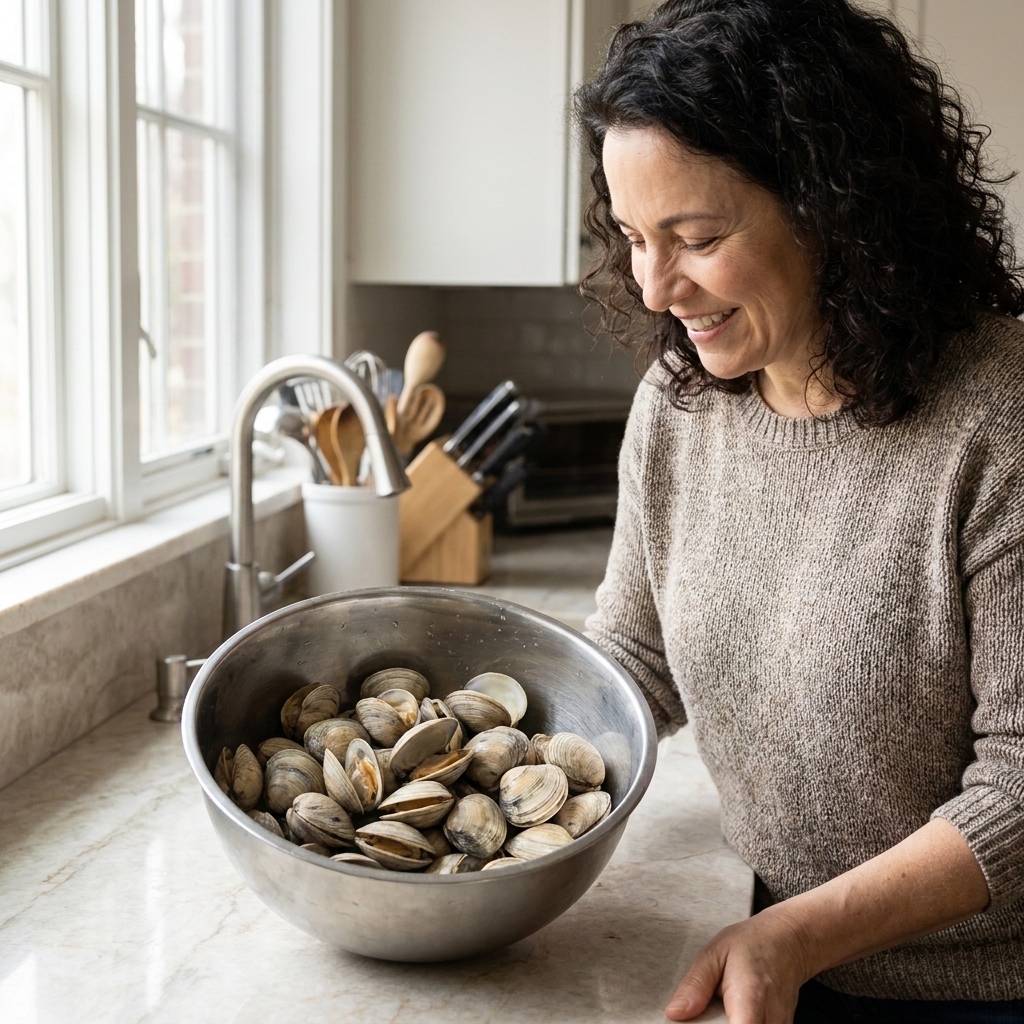
I learned this the hard way: you can do everything right, and one bite of grit ruins the magic. Purging is simple. It just needs time.
Step-by-step purging
- Rinse the clams under cold water, scrubbing the shells. If you are using mussels too, remove any beard. Clams usually will not have one.
- Make a saltwater bath: aim for water that tastes like seawater. A good target is about 30 to 35 grams salt per 1 liter water (roughly 1 ounce per quart). Stir until fully dissolved and use enough to cover the clams.
- Soak clams for 30 to 60 minutes in the refrigerator. If you see a lot of sand in the bottom, lift the clams out, refresh the salted water, and soak another 20 to 30 minutes.
- Lift, do not pour: lift clams out of the bowl so you do not dump the sand right back on top of them.
Little Clara tip: I like to set the bowl in the sink and drape a clean kitchen towel over it. It keeps things dark and quiet, and it saves you from little splashes when the clams start to breathe.
If your clams are still sandy after purging, do one more short soak in fresh salted water. Do not stretch it for hours. You want them clean, not exhausted.
Ingredients (for 4 servings)
- Spaghetti, 12 ounces (340 g)
- Fresh clams, 2 pounds (900 g), purged
- Extra virgin olive oil, 1/4 cup (60 ml), plus more to finish
- Garlic, 4 to 6 cloves, thinly sliced
- Dry white wine, 1/2 cup (120 ml)
- Flat-leaf parsley, 1 packed cup, finely chopped (stems included if tender)
- Crushed red pepper, a pinch (optional)
- Unsalted butter, 1 tablespoon (optional, for a silkier finish)
- Salt for pasta water
- Black pepper, to taste
- Lemon, a small squeeze at the end (optional, but lovely)
About salt: clams bring their own salinity. Salt your pasta water well, but go easy salting the sauce until you taste it at the end.

Classic spaghetti alle vongole
This dish moves fast once the pan is hot, so have everything ready: garlic sliced, parsley chopped, wine measured, clams purged. Then you can cook with confidence.
1) Start the pasta
Bring a large pot of water to a boil. Salt it generously. Add spaghetti and cook until just shy of al dente (usually 1 to 2 minutes less than the box suggests). Reserve 1 1/2 cups of pasta water before draining.
2) Wake up the garlic in olive oil
While pasta cooks, warm olive oil in a large sauté pan over medium-low heat. Add sliced garlic (and crushed red pepper, if using). Cook gently until the garlic smells sweet and fragrant and turns the palest golden at the edges, 2 to 4 minutes.
Sensory cue: if it starts to smell sharp or toasted like burnt bread, your heat is too high. Pull the pan off the burner for a moment and lower the heat.
3) Steam the clams with wine
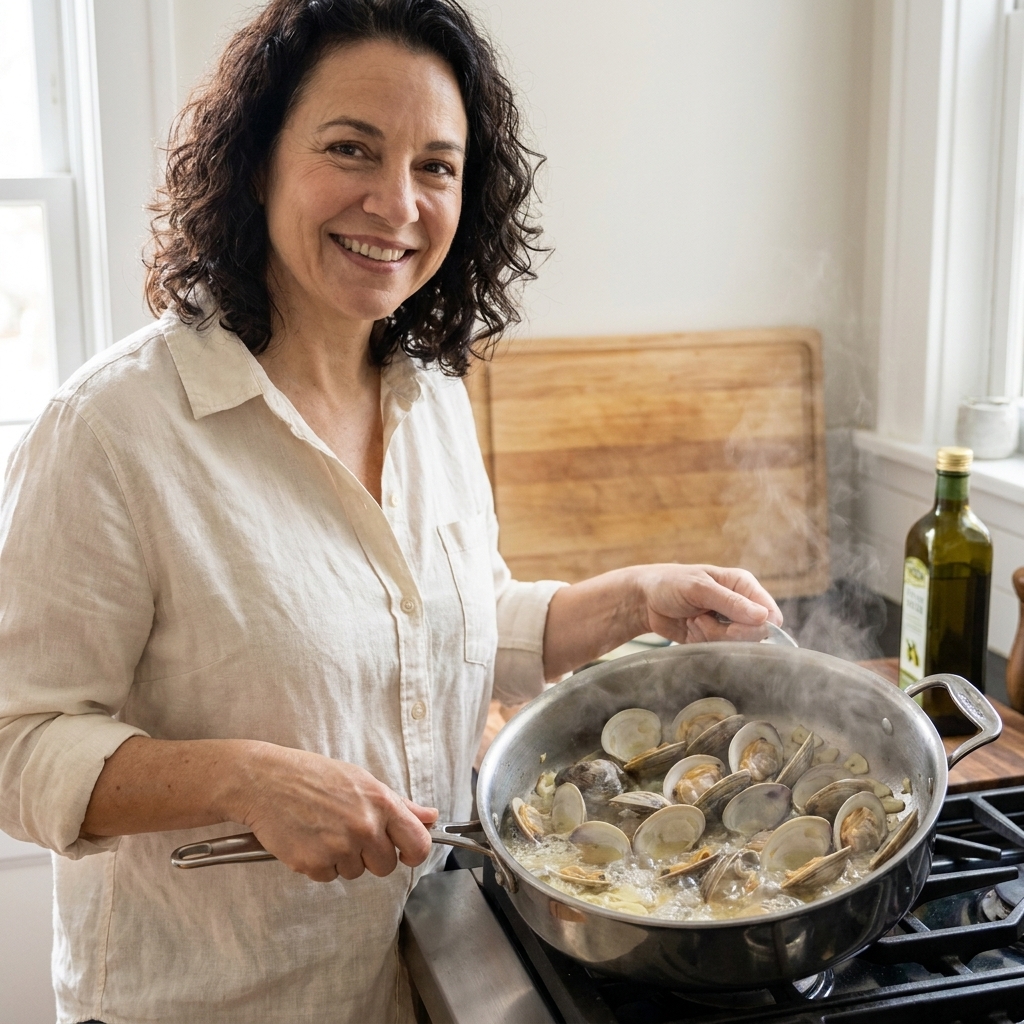
Turn heat to medium-high. Add clams and pour in the white wine. Cover with a lid and steam, shaking the pan once or twice, until clams open, 4 to 7 minutes.
As they cook, the clams will give off plenty of liquid. Let that happen before you even think about adding salt.
- As clams open, transfer them to a bowl so they do not overcook.
- If a few are stubborn, give them a little more time, but do not let the open ones sit in the heat.
- If any clams stay shut after a few extra minutes, generally discard them. When in doubt, throw it out.
4) Strain the clam liquid
Pour the liquid left in the pan through a fine-mesh strainer into a measuring cup or bowl. If you do not have a fine strainer, line a regular strainer with a paper towel. This catches any last sandy bits.
Wipe the pan quickly if there is visible grit, then return the strained clam liquid to the pan.
5) Build the sauce and emulsify
Bring the strained clam liquid to a lively simmer. Add about 1/2 cup pasta water. Let it bubble for 30 seconds, then add the drained spaghetti.
Toss and stir vigorously for about 1 minute. You are looking for the sauce to turn glossy and clingy, not watery. Add more pasta water a splash at a time as needed.
6) Finish with clams and parsley
Return the clams (and any juices collected in the bowl) to the pan. Add most of the chopped parsley and toss for 30 seconds, just to warm everything through.
Turn off the heat. Add a small drizzle of extra virgin olive oil. If you like a silkier finish, swirl in 1 tablespoon butter. Taste, then adjust with black pepper and, only if needed, a tiny pinch of salt.
Serve immediately with the remaining parsley on top. A little squeeze of lemon right at the table is gorgeous, but keep it subtle.
Common mistakes
Overcooking the clams
Once they open, they are done. Keep pulling them out as you go. Tough clams are usually clams that stayed in the hot pan too long.
Burning the garlic
Garlic should smell warm and sweet, never harsh. Use medium-low heat at first and let the oil do the work.
A watery sauce
You need starch and motion. Toss hard, add pasta water in small splashes, and keep the pan at a simmer while you emulsify.
Grit in the final dish
Purge clams and strain the cooking liquid. Two small steps, huge payoff.
Adding cheese
I know, I know. We love Parmigiano. But with clams, cheese tends to mute the clean sea flavor. If you want something creamy, use the butter trick or just more olive oil.
Make it your own
- With bottarga: grate a whisper of bottarga over the top for an intense, salty finish.
- With cherry tomatoes: if you want the almost red version, add a handful of halved cherry tomatoes after the garlic, before the clams.
- More heat: add peperoncino to the oil, but keep it balanced.
- No wine: you can use a splash of clam juice or seafood stock plus a squeeze of lemon. It is different, but still delicious.
Serving and timing
This is one of those pastas that does not like to wait around. The sauce is at its best the moment it turns glossy and coats the spaghetti.
- Serve with: a simple arugula salad with lemon and olive oil, or sautéed broccoli rabe.
- Drink with: a crisp Italian white like Vermentino, Falanghina, or Pinot Grigio.
- Bring to the table: extra chopped parsley, lemon wedges, and black pepper.
Storage and leftovers
Seafood pasta is always best fresh, but if you have leftovers:
- Store in an airtight container in the refrigerator up to 1 day.
- Reheat gently in a pan with a small splash of water. Keep the heat low so the clams do not turn rubbery.
- Do not freeze. The clams will suffer.
FAQ
Can I use canned clams?
You can, especially for a weeknight shortcut, but it will not taste the same as fresh. Use the clam liquid from the can, strain it, and add it to the pan with the wine (or in place of it). Keep the canned clams for the very end, just to warm through.
Do I need to soak clams in cornmeal?
No. A saltwater purge is enough. Cornmeal is an old trick some families use, but it can make the water murky and it is not necessary if your clams are fresh and you strain the cooking liquid.
Why did some clams not open?
Sometimes a clam is simply dead before cooking. If it stays shut after steaming a few extra minutes, it is best to discard it. When in doubt, throw it out.
What if my sauce tastes too salty?
Add a splash of unsalted pasta water and a drizzle of olive oil, then toss again. Avoid adding more salt until the very end, and always taste after the clams go back in.
Can I make it with linguine?
Absolutely. Linguine is classic here too. Use the same method and timing.