There are nights when the fridge is basically a lightbulb and a lonely lemon, and you still want a bowl of pasta that tastes like someone took care of you. That is exactly what spaghetti all'aglio, olio e peperoncino is for: garlic, good olive oil, a little heat, and the one ingredient most people forget to use on purpose, starchy pasta water.
If you have spaghetti, olive oil, garlic, and dried chili flakes, you are close to dinner. Call it about 10 minutes once the water is boiling and more like 15 to 20 minutes total for most weeknights. Either way, it is not “sad pantry pasta.” It is glossy, properly tangled spaghetti that clings to the sauce and perfumes the whole kitchen.
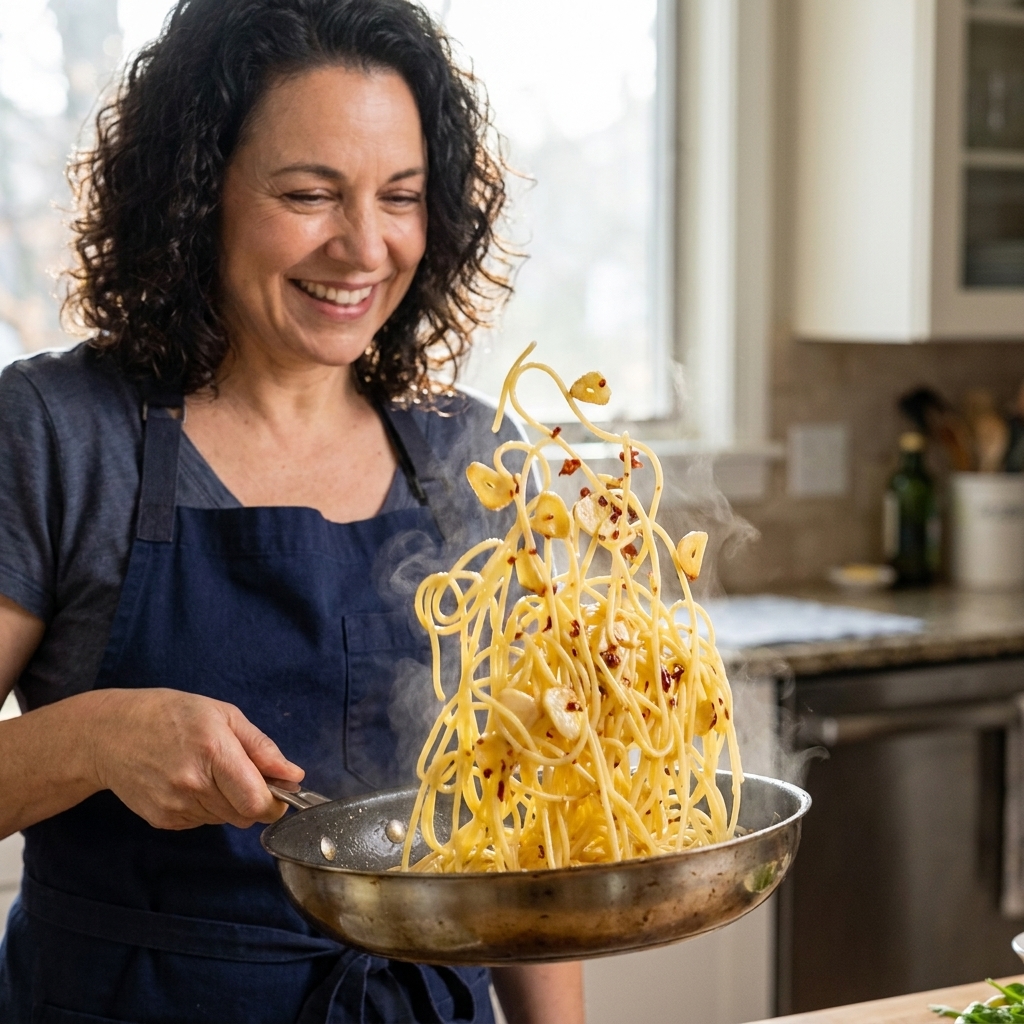
Why it works
This dish is famous because it is simple, but it is not just “oil on noodles.” The magic is the emulsion, when olive oil and pasta water combine into something silky that coats every strand.
- Garlic gently toasted, never pushed into bitterness
- Peperoncino for warmth, not a mouth-on-fire situation unless you want it
- Pasta water to bind and thicken the sauce
- Timing, because everything happens fast once the garlic hits the oil
Ingredients (serves 2)
- 200 g spaghetti (about 7 oz)
- 4 to 6 garlic cloves, thinly sliced (or 3 cloves if you are garlic-shy)
- 5 to 6 tablespoons extra virgin olive oil, plus more to finish if you like
- 1/2 to 1 teaspoon crushed red pepper flakes (or to taste)
- Kosher salt for the pasta water
- Optional but lovely: chopped parsley, lemon zest, toasted breadcrumbs
About salt: “Salty like the sea” is the vibe, but if you want a baseline, aim for roughly 1 to 2 tablespoons kosher salt per 4 quarts of water. You are seasoning the pasta and the sauce.
About cheese: In the strict traditional version, cheese is often omitted. The classic is perfect as-is, but you are the one doing the dishes. If a little grated Parmigiano or Pecorino makes you happy, do it. Just know it will shift the flavor from clean and peppery to richer and more rounded.
10-minute method
1) Start the pasta water
Get a pot going with plenty of water and salt it generously. You want it pleasantly salty, because the pasta water is part of your sauce.
Drop in the spaghetti and set a timer for 2 minutes less than the package says. You will finish cooking it in the pan.
2) Slice the garlic and warm the oil
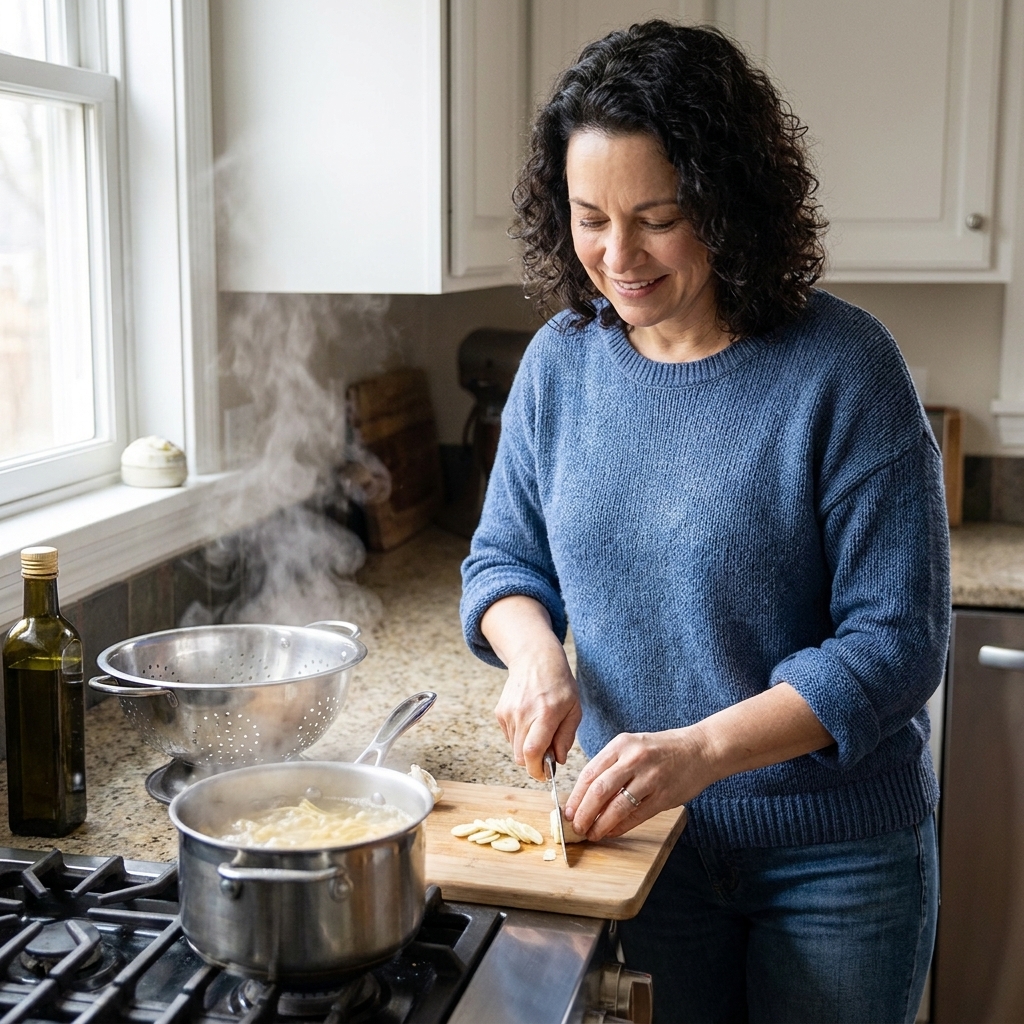
While the pasta cooks, slice the garlic thin. Not minced. Thin slices toast more evenly and taste sweet and mellow when treated kindly.
In a large skillet, add the olive oil and garlic over medium-low heat. You are looking for a soft sizzle, not a fry. Keep the pasta water at a steady boil while you work, and try to have the skillet ready right around when the pasta is almost al dente.
Sensory cue: When the garlic is ready, your kitchen will smell warm and nutty, and the slices will turn pale gold around the edges.
If the garlic is ready early: Take the skillet off the heat. Let it wait safely instead of over-browning while the pasta catches up.
3) Bloom the chili
As soon as the garlic is lightly golden, add the red pepper flakes and stir for 10 to 20 seconds. This wakes up the chili in the oil.
Do not let the garlic go brown. If it starts to darken fast, take the pan off the heat for a moment. Carryover heat is real.
4) Add pasta water, then pasta, then toss
Before draining, scoop out about 1 cup of pasta water.
Add 1/2 cup pasta water to the skillet. It will bubble and look like it is doing something dramatic. That is exactly what you want.
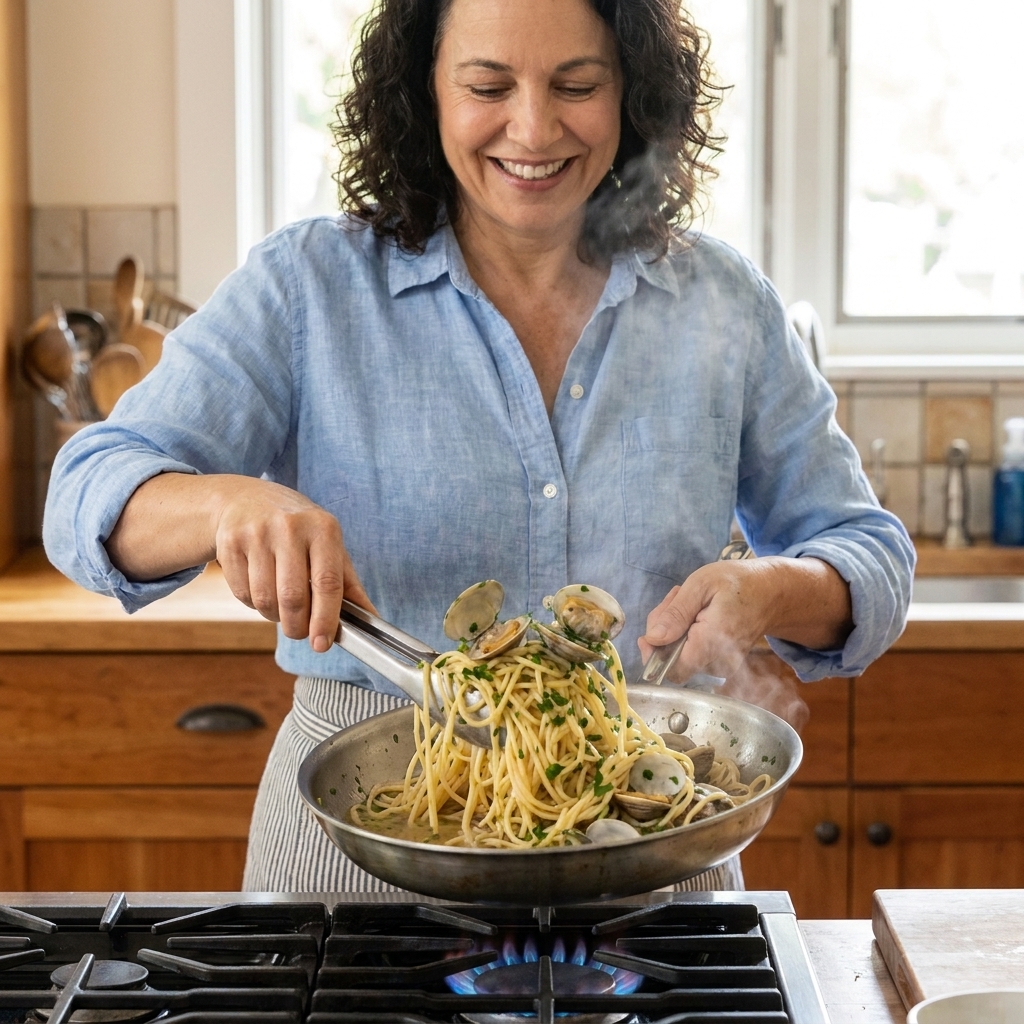
Transfer the spaghetti straight into the skillet (tongs are perfect). Toss constantly for 1 to 2 minutes, adding splashes from the remaining reserved pasta water as needed until the sauce turns silky and clings.
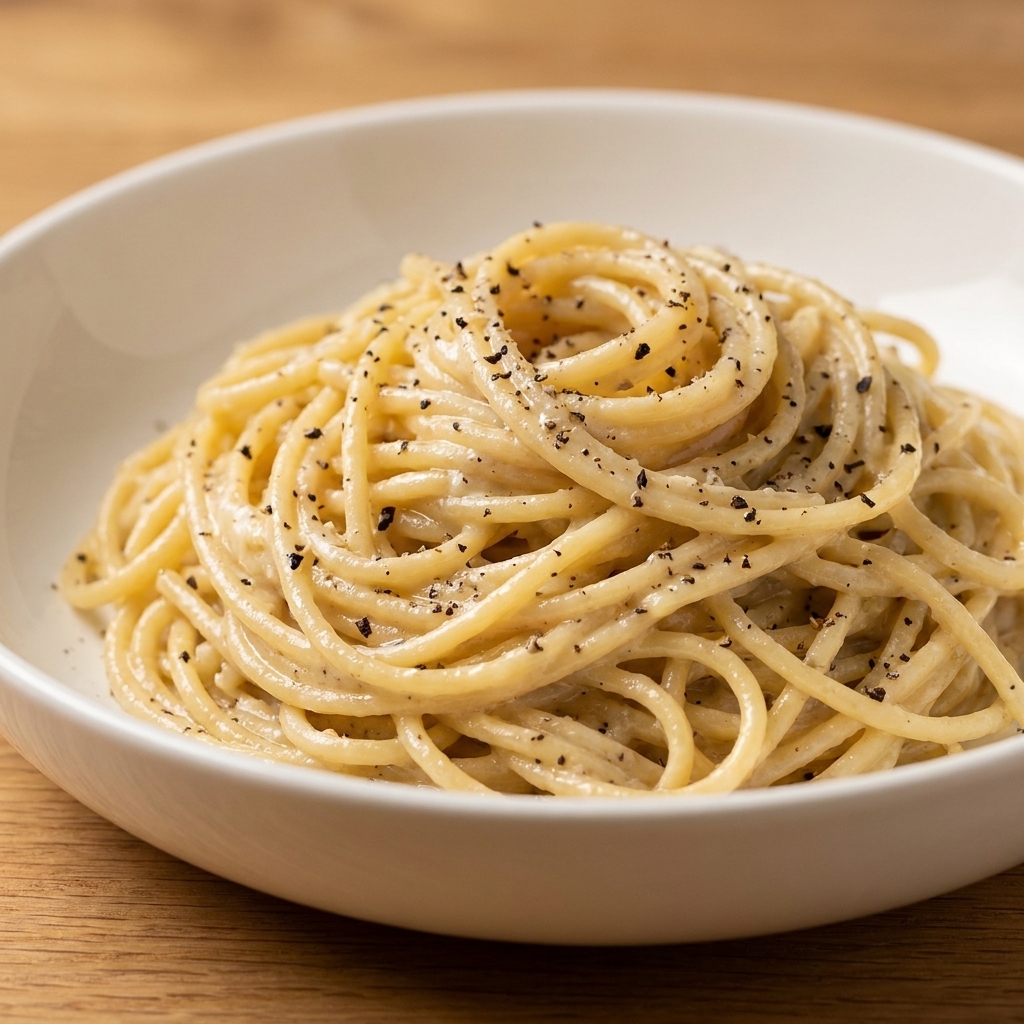
Sensory cue: The sauce should look glossy and slightly creamy, not oily and separated. When you drag tongs through the pan, you should see a thin, shiny trail that quickly fills back in.
5) Finish and serve
Taste for salt and heat. If you want, add chopped parsley or a little lemon zest right at the end. Serve hot, in warm bowls if you can.
Best timing note: This pasta is at its peak right now. Reheating can dull the garlic and loosen the emulsion, so make only what you want to eat.
Clara’s tricks
Emulsify, do not drown
Aglio e olio is not about drowning pasta. It is about binding oil with starchy water. Start with 5 to 6 tablespoons for two portions. The pasta water does the rest.
Skip the colander
Tongs or a pasta fork let you move pasta straight from pot to skillet, keeping more starch on the noodles and keeping your pasta water right where you need it.
Control the heat
Garlic goes from “golden and sweet” to “bitter” in a blink. If you ever smell sharp, acrid garlic, it is too hot. Lower the heat, add a splash of pasta water, and keep going.
Slice, do not mince
Minced garlic can burn before the pasta is ready. Thin slices toast gently and are easier to control.
Easy variations
- Add anchovy: Melt 1 anchovy fillet into the oil with the garlic for a deeper, savory backbone. It usually will not taste fishy, it just tastes more like itself.
- Add lemon: Finish with lemon zest and a squeeze of juice for brightness.
- Add parsley: Classic and fresh, especially if you went heavier on the chili.
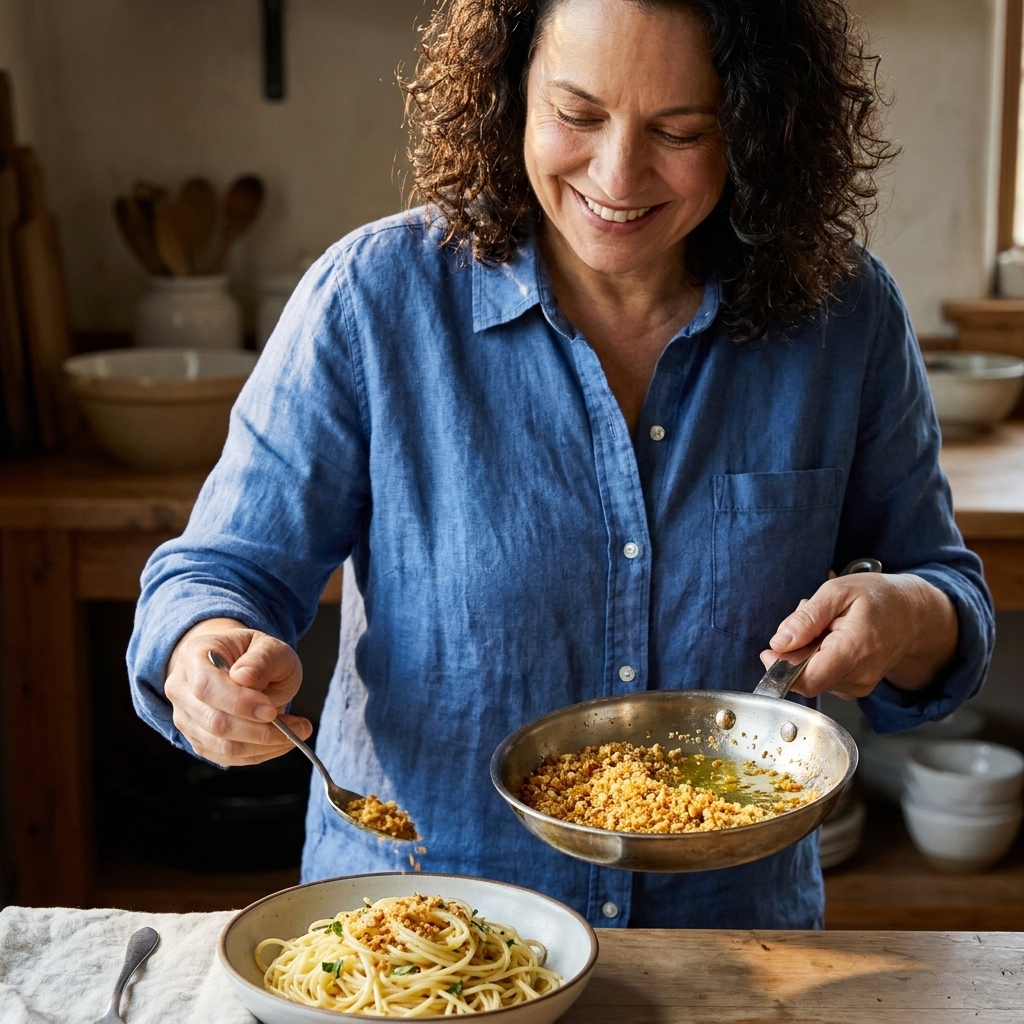
- Add toasted breadcrumbs: A Southern Italian move sometimes called “poor man’s cheese.” Toast breadcrumbs in olive oil until golden and sprinkle on top.
- Add sautéed greens: Wilted spinach or broccoli rabe turns this into a fuller meal without losing the pantry-pasta soul.
Common mistakes
The garlic tastes bitter
It browned. Start over if it is truly burnt, because burnt garlic will flavor the whole dish. Next time, lower the heat and slice instead of mincing. If you are running behind on pasta, pull the pan off the heat so the garlic does not keep cooking.
The pasta looks oily
You need more starch and more agitation. Add a few tablespoons of pasta water and toss vigorously until the sauce turns silky. A wider skillet helps.
It tastes flat
Usually it needs salt. Add a pinch and toss again. If salt is right, a touch of lemon zest or parsley can wake everything up.
It is too spicy
Add more pasta, a splash more oil, or a squeeze of lemon. Next time, start with 1/2 teaspoon chili flakes and build from there.
FAQ
Can I make it without peperoncino?
Yes. It becomes spaghetti aglio e olio, still delicious. I would add parsley or lemon zest for a little extra life.
Can I use grated garlic?
You can, but it burns easily and can turn harsh. If you grate it, keep the heat very low and add pasta water sooner to protect it.
What pasta shape works best?
Spaghetti is classic, but linguine and spaghettini are great. In a pinch, even short pasta works, just toss aggressively so the sauce gets into all the curves.
Is it okay to add cheese?
It is not typical in the strict traditional version, but it is your dinner. If you do, add it off the heat so it melts gently instead of clumping.
Serving idea
When I make this on a Tuesday, I put a big salad on the table and call it a night. If you want something heartier, top with a fried egg or serve alongside sautéed shrimp. But honestly, a warm bowl of this pasta, eaten the minute it is glossy and steaming, is the whole point.
If you try it, pay attention to that moment when oil and pasta water turn into a silky sauce. Once you feel it happen, you will be able to make aglio, olio e peperoncino from memory forever, which is the most comforting kind of kitchen skill.