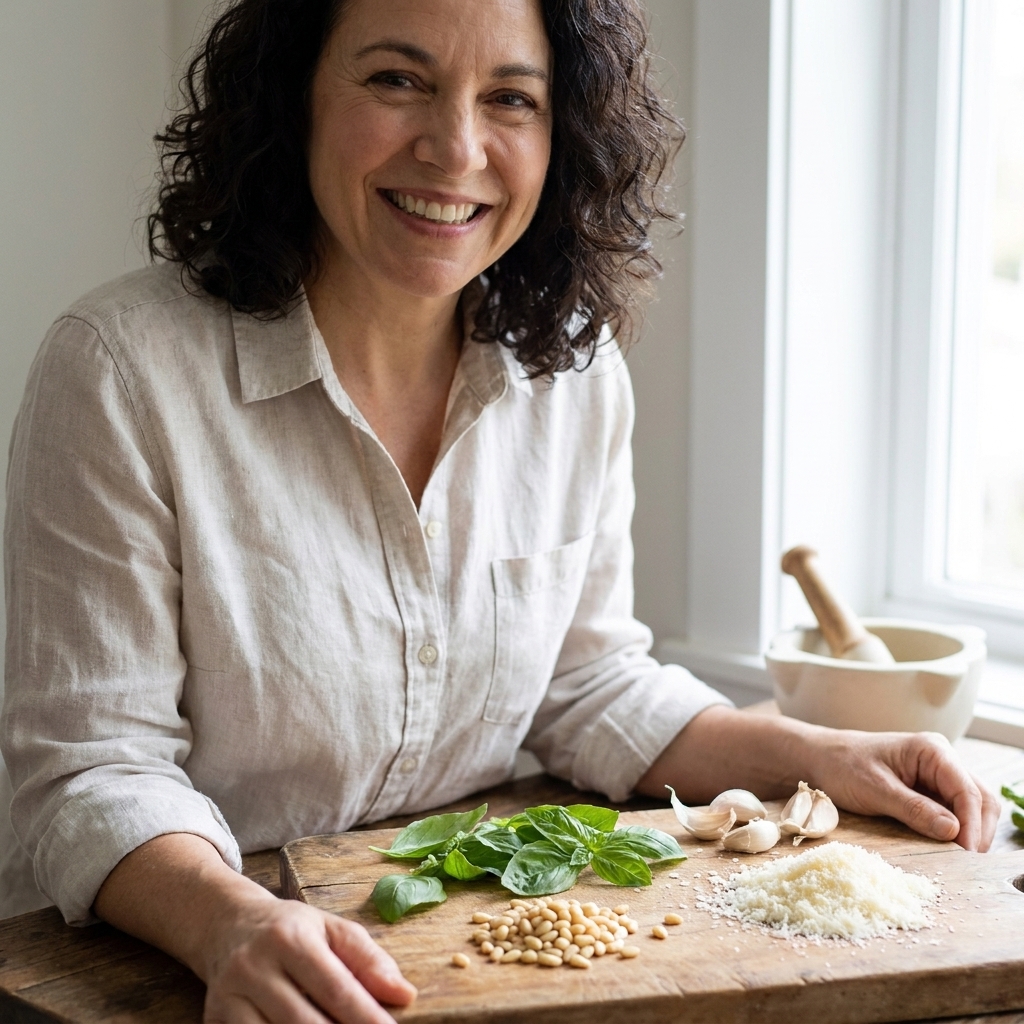
If you have ever tasted a truly great pesto in Liguria, you know it is not just “basil sauce.” It is perfume and velvet at the same time. When you make pesto alla Genovese in a mortar and pestle, the basil stays sweet and vivid, the garlic turns creamy instead of sharp, and the whole thing becomes a sauce that feels alive.
I learned this method the way I learned most things in the kitchen. Slowly, with someone older than me saying, “Listen to it. Smell it. Do not rush it.” So let’s do it together, one patient step at a time.
What makes it Genovese
Pesto alla Genovese comes from Genoa and the Ligurian coast, where the local basil is prized for its perfume. The classic flavor is a balance of:
- Sweet basil (young, tender leaves)
- Pine nuts for richness
- Garlic, used carefully so it supports instead of dominates
- Parmigiano Reggiano plus Pecorino for depth and gentle tang
- Extra virgin olive oil to bind and make it glossy
- Salt to help break down the basil and wake everything up
In a food processor, speed and friction can warm and bruise the basil, which can dull the aroma and darken the color. The mortar and pestle keep things cooler and more controlled, so the sauce tastes greener, rounder, and more aromatic.
Ingredients (classic ratio)
This makes about 1 cup pesto, enough for roughly 12 ounces (340 g) pasta. Mortar size, basil density, and how silky you like it will shift the yield a little, so treat the oil amount as a range.
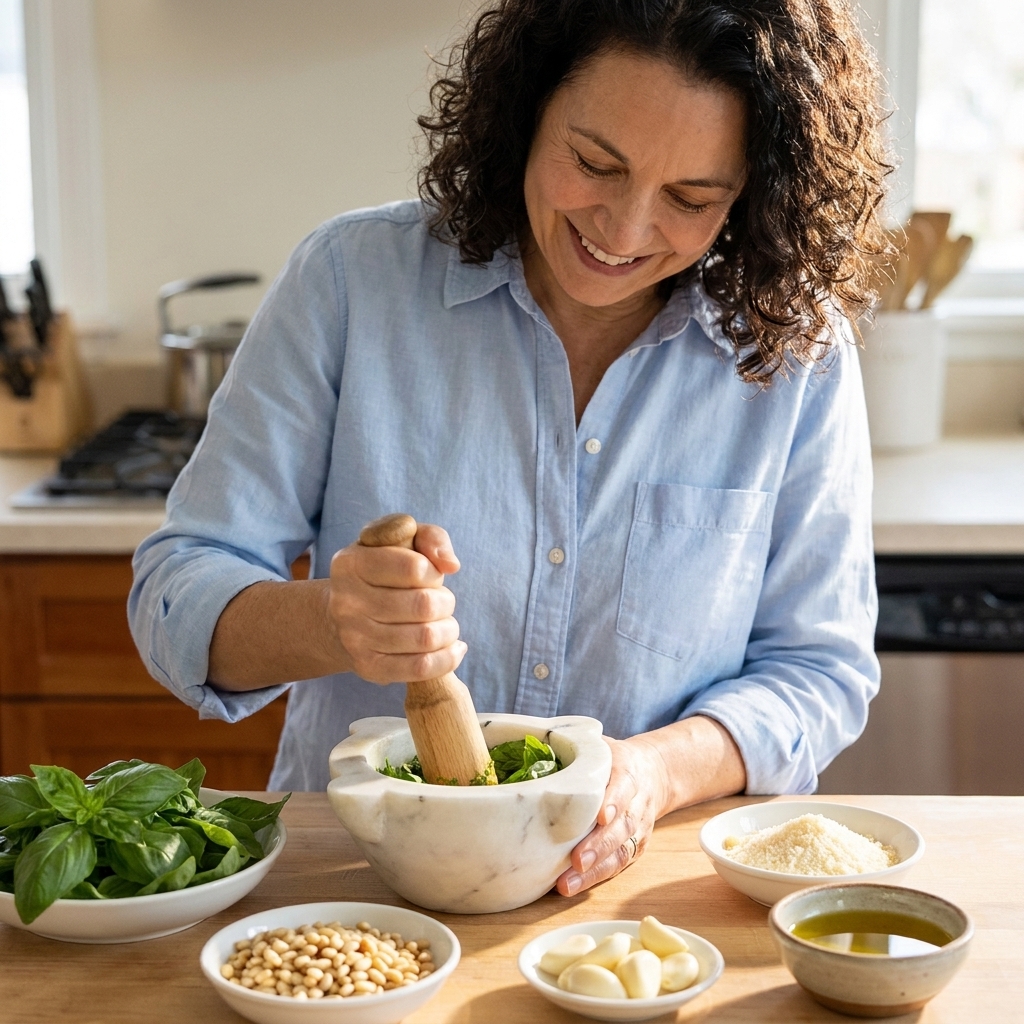
- 2 packed cups (about 50 to 60 g) fresh basil leaves, washed and dried very well
- 1 small garlic clove (or 2 very small cloves), germ removed if present
- 2 tablespoons pine nuts
- 1/2 teaspoon fine sea salt, plus more to taste
- 1/2 cup (120 ml) extra virgin olive oil, plus a splash more if needed
- 1/3 cup (30 g) Parmigiano Reggiano, finely grated
- 2 tablespoons (10 to 12 g) Pecorino Sardo or Pecorino Romano, finely grated
Clara’s tip: Pesto is only as good as the basil. Choose small to medium leaves that smell like summer. If your basil smells a little minty or medicinal, use it for salad instead.
Tools you need
- Mortar and pestle (marble is traditional, but any sturdy one works)
- Microplane or fine grater for the cheeses
- Small bowl for oil
- Rubber spatula to scrape every bit out (pesto likes to cling)
If your mortar is small, you can work in batches. The key is not size. It is gentleness and patience. If your kitchen is hot, chilling the mortar for a few minutes helps keep the basil bright.

Step by step
1) Start with garlic and salt
Add the garlic clove and salt to the mortar. Crush and grind until you have a smooth paste with no big garlic chunks.
Sensory cue: The garlic should smell round and sweet, not harsh and eye-watering.
2) Add pine nuts and make a paste
Add the pine nuts. Pound and grind again until the mixture turns pale and thick, like a soft nut butter. This paste is the base that helps the basil emulsify later.
3) Add basil gradually
Add a small handful of basil leaves. Use a gentle pounding motion, then switch to a circular grinding motion against the sides of the mortar. Keep adding basil in handfuls, working it down each time. Work steadily and do not linger once the basil is broken down.
Sensory cue: The basil should turn into a moist, bright green pulp. You should smell basil instantly, like you just rubbed a leaf between your fingers.
4) Stir in the cheeses
Once the basil is fully broken down, add the Parmigiano and Pecorino. Mix and grind just enough to combine. The pesto will thicken and lighten slightly in color.
5) Stream in olive oil until glossy
Pour in the olive oil slowly, stirring as you go. You want a sauce that is cohesive and silky, not oily and separated. Stop when it looks spoonable and shiny. If you prefer a looser pesto, add a little more oil.
Texture goal: It should fall off a spoon in a slow, thick ribbon.
6) Taste and adjust
Taste it straight. Then taste it again imagining it on pasta. Add a pinch more salt if needed, or a splash more oil if it feels too stiff.
Tossing with pasta
This is where many home cooks accidentally dull pesto. Pesto hates direct heat. Treat it like a fresh dressing.
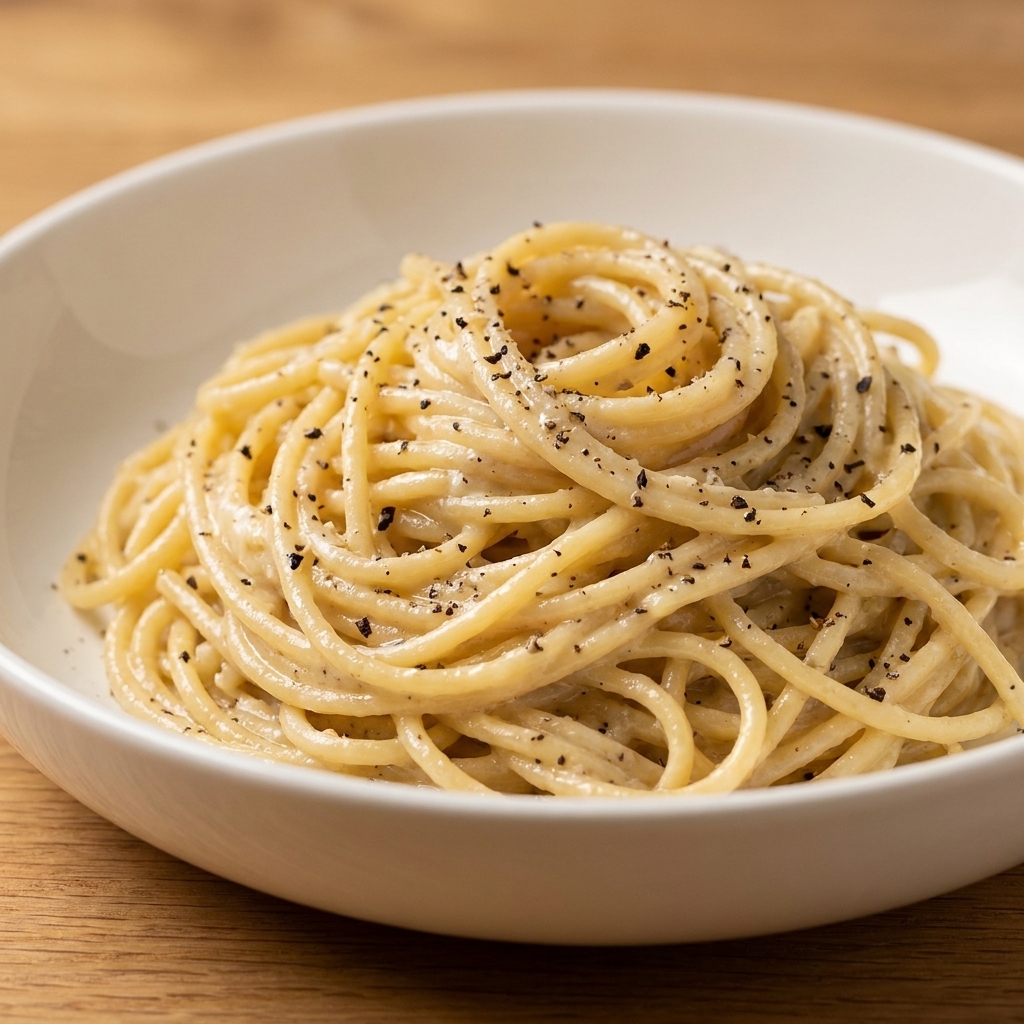
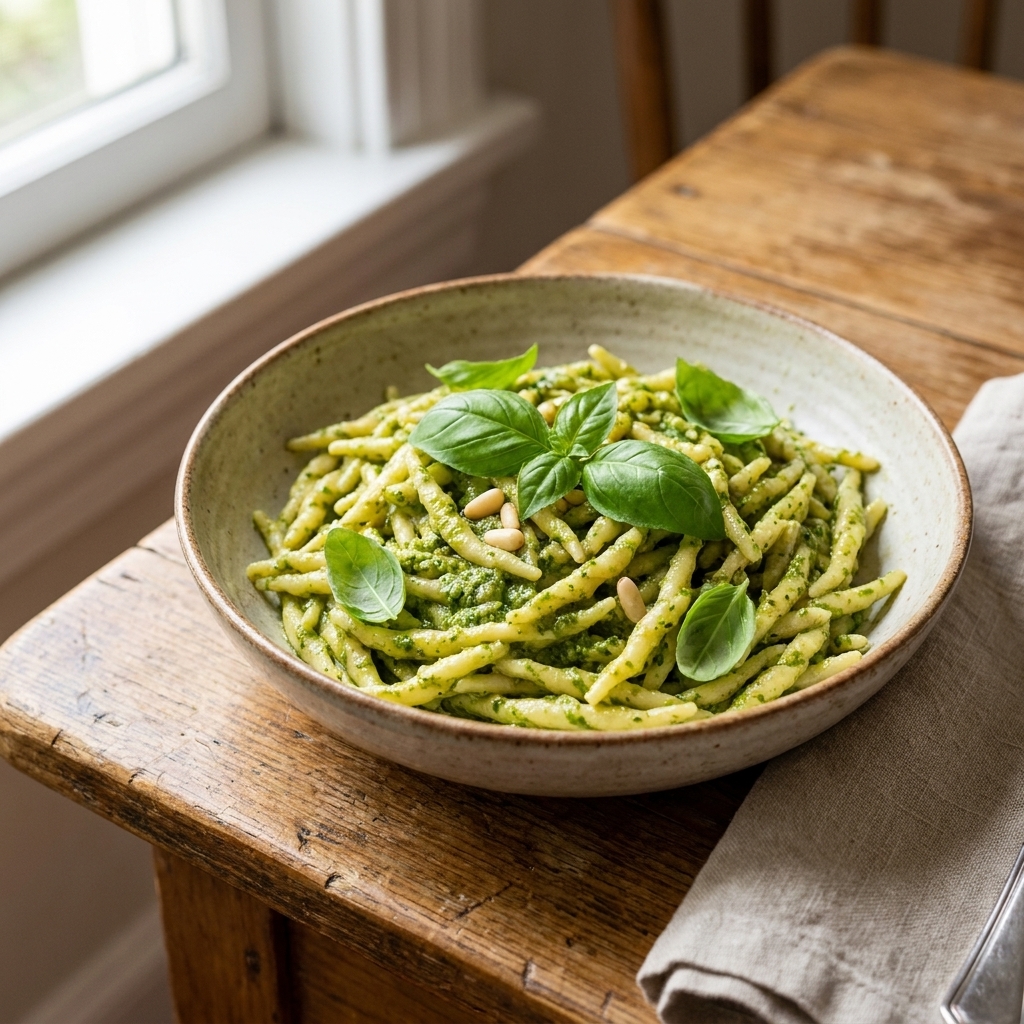
- Cook pasta until al dente. Trofie and trenette are traditional in Liguria, but linguine, spaghetti, or short shapes work too.
- Save pasta water. Scoop out 1 cup before draining.
- Warm your bowl with hot water, then dry it.
- Add pesto to the bowl, then loosen with a splash of warm pasta water. Stir until creamy.
- Add pasta and toss, adding more pasta water a tablespoon at a time until the sauce coats every strand.
Classic Ligurian touch: Add a few boiled potatoes and green beans to the pot with the pasta during the last minutes of cooking, then toss everything with pesto. It is humble and completely perfect.
Common mistakes
Pesto tastes bitter
- Cause: Basil that is older or stressed, bruising from overworking, or an olive oil that reads peppery or bitter in this application.
- Fix: Use younger basil leaves, grind more gently, and choose a mild, fruity olive oil for pesto.
Pesto is too thick
- Cause: Too much cheese, not enough oil, or basil not fully broken down.
- Fix: Add olive oil a teaspoon at a time. When tossing with pasta, loosen with warm pasta water.
Pesto tastes too garlicky
- Cause: A large clove or especially strong garlic.
- Fix: Next time use one small clove and, if there is a green germ, remove it. For today, add a bit more basil and a spoonful of Parmigiano to rebalance.
Pesto looks dark
- Cause: Wet basil, oxidation, or the pesto sat exposed to air.
- Fix: Dry basil very well. When storing, smooth the top and cover with a thin layer of olive oil.
Storage
Refrigerator
Store pesto in a small jar or container, packed down with minimal air pockets. Smooth the surface and pour a thin layer of olive oil over the top. Refrigerate for up to 3 days for best flavor.
Freezer
Pesto freezes beautifully. Spoon into an ice cube tray, freeze, then pop cubes into a freezer bag. Freeze for up to 3 months. It will still be safe after that, but the aroma and color can fade with time. Thaw overnight in the fridge.
Freeze with or without cheese?
You can, and I often do for convenience. If you want the absolute freshest taste, freeze the basil, garlic, nuts, salt, and oil mixture, then stir in the cheeses after thawing.
Variations
Classic is classic for a reason, but real Italian home cooking also adapts to what the pantry gives you.
- Walnuts instead of pine nuts: More rustic and slightly tannic. Use a little less (about 1 1/2 tablespoons).
- Less garlic: Totally acceptable. Pesto should not taste like garlic paste.
- All Parmigiano: If Pecorino is too sharp for you, replace it with Parmigiano. You will lose a little bite, but it will still be delicious.
- Nut-free swap: If you cannot do nuts, sunflower seeds give a similar richness. Toast them lightly and use the same amount.
- Dairy-free option: Skip the cheeses and add a little extra pine nuts (or sunflower seeds) plus a touch more salt. It is not traditional, but it is still a beautiful basil sauce.
What I would not change for pesto alla Genovese is the basil. If you want to use parsley, arugula, or sun-dried tomatoes, make those sauces their own thing and let pesto be pesto.
FAQ
Do I need a marble mortar?
No. Marble stays nice and cool and has good weight, but any sturdy mortar and pestle can make beautiful pesto. What matters most is working in small additions and grinding patiently.
Should I wash basil?
Yes, if it is sandy or gritty. Wash gently, then dry extremely well. I lay leaves on a clean towel and pat dry, then air-dry a few minutes. Water dilutes pesto and can darken it.
Can I blanch basil to keep it green?
You can, but it changes the flavor. Traditional mortar pesto relies on fresh basil’s natural sweetness. If you are making pesto far ahead for a party, a quick blanch can help color, but for the best aroma, keep it raw and make it fresh.
What pasta is best?
Trofie and trenette are the most traditional. At home I reach for linguine, spaghetti, or even a short shape like fusilli that catches sauce in the twists.
One last note
Pesto made by hand is not about perfection. It is about paying attention. When you smell basil bloom under the pestle and you see the sauce turn glossy green, you will understand why Ligurians have protected this tradition for generations.
If you make it, toss it with pasta the same day, pour a glass of something crisp, and bring it to the table like you mean it. That is the whole point.