Carbonara is one of those dishes that looks almost too simple on paper, and then humbles you the first time you make it. A few core ingredients, no cream, no garlic, no peas, no shortcuts. And yet when it is done the Roman way, the sauce turns into this satiny cloak that hugs every strand of pasta. Not runny, not scrambled, not clumpy. Just glossy, rich, and peppery.
The secret is not a hidden ingredient. It is technique: using guanciale fat, starchy pasta water, and gentle heat to emulsify eggs and Pecorino Romano into a creamy sauce. I am going to walk you through exactly how to do it, with the sensory cues I use at home so you can feel confident at the stove.
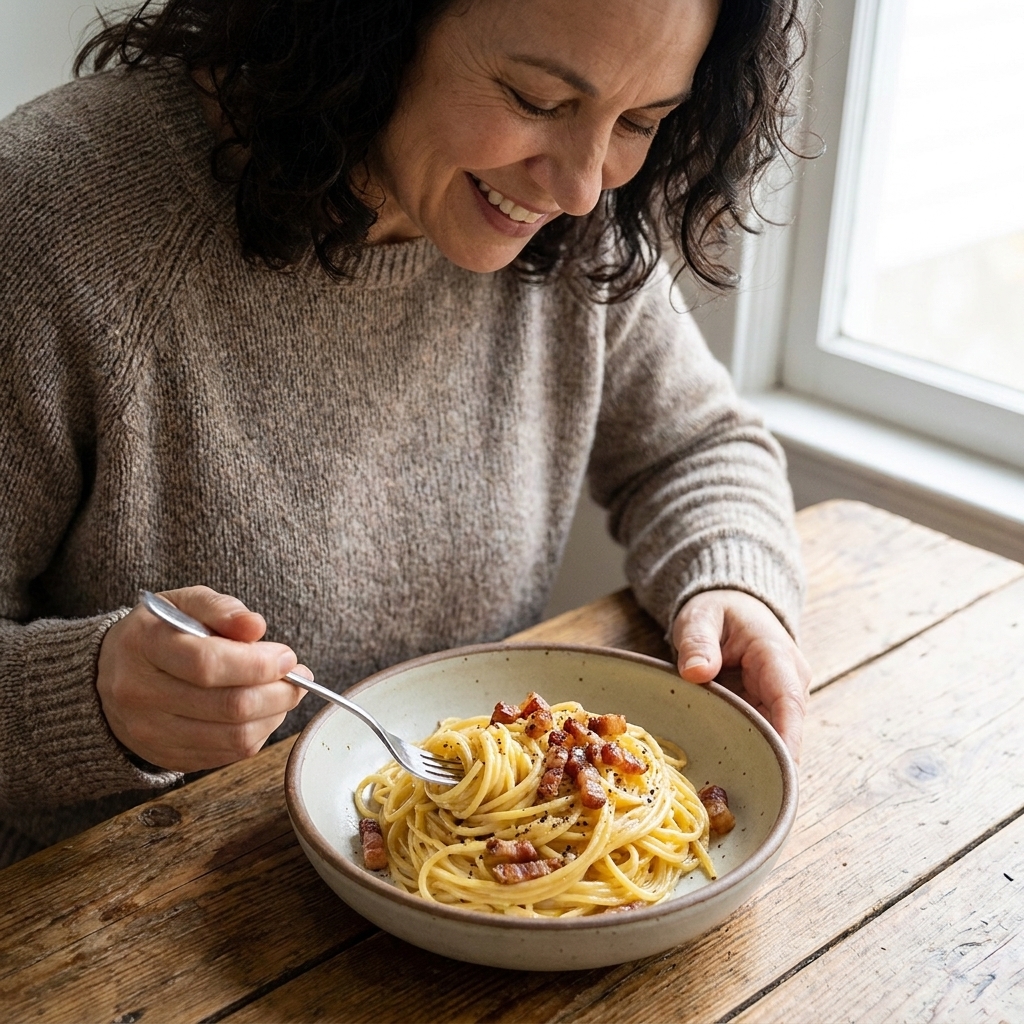
Why it is creamy without cream
Traditional carbonara gets its creaminess from an emulsion, meaning a stable mix of fat and water held together by proteins and agitation. In this case, you are combining:
- Guanciale fat (rendered pork fat that brings flavor and richness)
- Starchy pasta water (the “water” side that helps the sauce loosen and bind)
- Eggs (proteins that thicken gently and create body)
- Pecorino Romano (salty sheep cheese that adds sharpness and structure)
If you have ever gotten scrambled eggs, it is almost always because the pan was too hot when the egg mixture went in, or the pasta was not tossed quickly enough to distribute heat and prevent hot spots. Think of carbonara as a warm, glossy custard for pasta. Not an omelet.
Ingredients
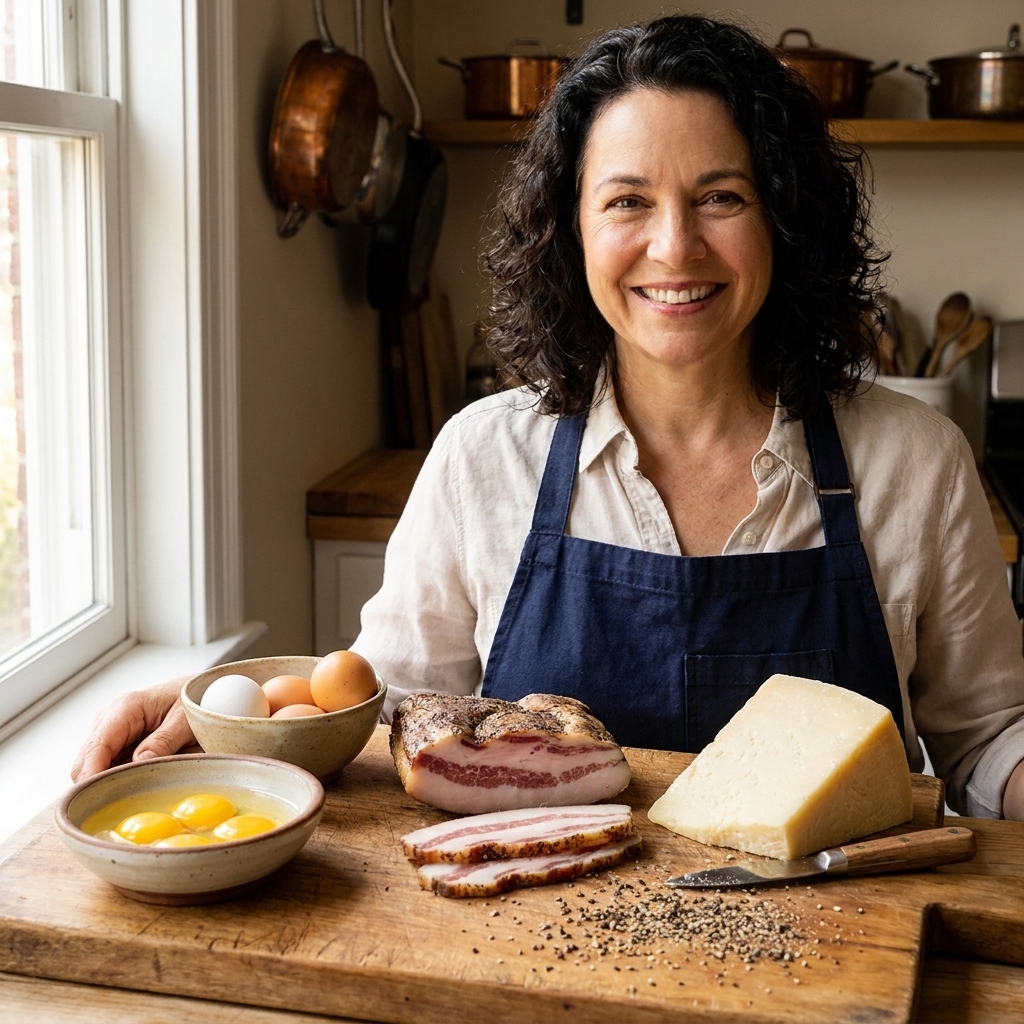
This is one of those recipes where the list is short, so each choice matters. The core carbonara flavors are guanciale, eggs, Pecorino Romano, and black pepper. From there you also need pasta, pasta water, and a careful hand with salt.
- Pasta: Spaghetti is classic, but rigatoni is also very Roman and very forgiving.
- Guanciale: Traditional and deeply flavorful. Pancetta can work in a pinch, but guanciale is the soul of the dish.
- Eggs: I like 2 whole eggs plus 2 yolks for 1 pound (450 g) pasta. Whole eggs give structure, yolks give silkiness. Some Roman cooks use only yolks, others use only whole eggs. All roads lead to delicious if your heat is right.
- Pecorino Romano: Finely grated, not shredded. Shredded cheese can clump.
- Black pepper: Lots of it. Carbonara should have a gentle heat and perfume from pepper.
- Salt: For the pasta water, but go lighter than usual because Pecorino and guanciale are salty.
Step by step
Carbonara moves fast at the end, so I like to set the sequence first: put your pasta water on to boil, start rendering the guanciale, and mix the eggs and cheese while the pasta cooks.
1) Render guanciale slowly
Cut guanciale into lardons, about 1/4-inch (6 mm) thick. Put it in a cold pan, then set over medium-low heat. You want the fat to melt out slowly, turning the pieces crisp while the pan fills with clear, flavorful fat.
When the guanciale is golden and crisp, spoon out a small handful and set it aside for topping later.
My cue: The fat should smell sweet and porky, not burnt. If it smells sharp or looks dark, your heat is too high.
2) Mix eggs and Pecorino into a thick paste
In a bowl, whisk together your eggs (or eggs and yolks), then add finely grated Pecorino and a very generous amount of black pepper. You are aiming for a thick, spoonable mixture, almost like wet sand that can be stirred smooth.
Why thick matters: If your eggs are too loose and your cheese is not integrated, the cheese can seize into little pearls when it hits heat.
3) Boil pasta and reserve plenty of water
Cook pasta in generously boiling water. Salt it, but not as aggressively as you would for a plain tomato sauce. Before draining, scoop out at least 1 1/2 cups (about 350 ml) of pasta water. You probably will not use it all, but you will be glad to have it.
My cue: Good pasta water looks slightly cloudy, like it has a soft haze. That is your sauce insurance.
4) Toss pasta with guanciale off the heat
When the pasta is al dente, transfer it into the pan with the guanciale and its fat. Toss to coat. Turn the heat off and let the pan cool for about 30 to 60 seconds.
This pause is the difference between creamy and scrambled. You want the pan warm, not sizzling.
5) Emulsify with eggs and pasta water
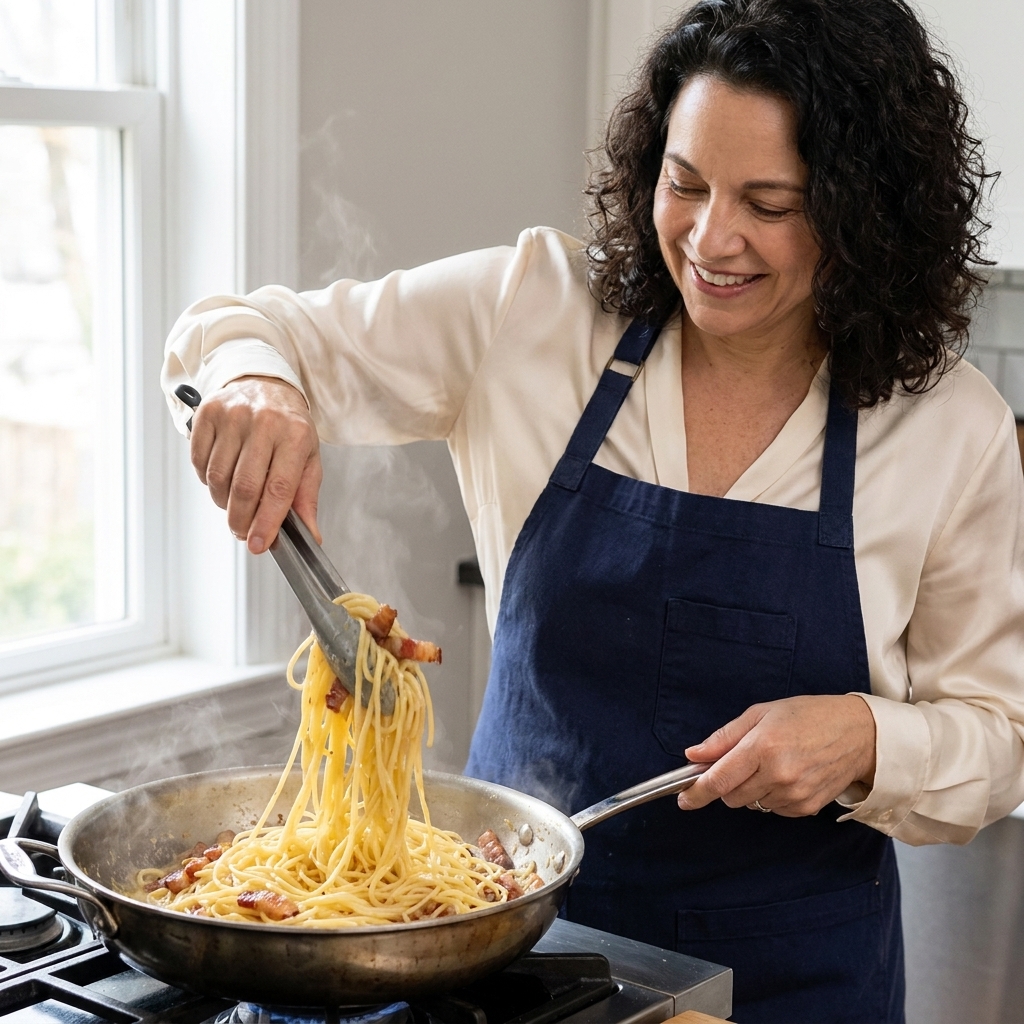
Pour the egg and Pecorino mixture over the pasta. Toss vigorously, lifting and turning, so the egg mixture meets warm pasta gradually.
Then add hot pasta water a little at a time, tossing between each addition. For most pans, I start with 2 to 4 tablespoons and go from there. The sauce will go from thick and sticky to glossy and fluid.
My cue: The finished sauce should coat the pasta like satin. If you drag tongs through it, it should leave a trail that fills back in slowly, not puddle like soup and not sit like glue.
6) Finish and serve
Taste first, because Pecorino and guanciale are salty. Then add more black pepper and a final sprinkle of Pecorino right before serving. Top with the guanciale you set aside.
Ratios I use
For 1 pound (450 g) pasta:
- Guanciale: 150 to 200 g (about 5 to 7 oz)
- Eggs: 2 whole eggs + 2 yolks
- Pecorino Romano: 80 to 100 g (about 3 to 3 1/2 oz), finely grated, plus more to serve
- Black pepper: 1 to 2 teaspoons freshly cracked, plus more to finish
- Pasta water: as needed, usually 1/2 to 1 cup to reach the texture you like
If you want it richer, add one extra yolk. If you want it lighter, use more whole egg and slightly less cheese. Carbonara is forgiving once you understand the heat.
Heat control
The eggs should thicken from residual heat, not direct flame. Here is the simple rule I follow:
- If the pan is audibly sizzling when you add the egg mixture, it is too hot.
- If the sauce looks tight and clumpy, add pasta water and keep tossing.
- If the sauce is watery, keep tossing for another 30 seconds. If needed, warm very gently while stirring continuously, or set a bowl over the pot of pasta water for a few seconds and stir.
A great trick is the bowl method: toss pasta, guanciale, and egg mixture in a large heatproof bowl instead of the hot pan. The pasta brings enough heat to thicken the eggs, and you reduce the risk of scrambling.
Common problems
My eggs scrambled
- Cause: Pan too hot, or eggs added while the burner was on.
- Prevention: Turn off heat, wait 30 to 60 seconds, then add eggs.
- Fix: Immediately add a few tablespoons of hot pasta water and toss hard. If it is badly scrambled, you cannot fully undo it, but vigorous tossing can smooth the sauce enough to be tasty.
The sauce is clumpy or grainy
- Cause: Cheese added too coarsely, or not integrated with eggs before hitting heat.
- Prevention: Finely grate Pecorino and mix into a paste with eggs.
- Fix: Add pasta water little by little and stir or toss until glossy.
The sauce is thin and slides off
- Cause: Too much pasta water too fast, or not enough tossing to emulsify.
- Fix: Keep tossing for 30 seconds. If needed, warm very gently while stirring continuously, or use the bowl-over-steam trick for a few seconds.
It tastes too salty
- Cause: Pasta water over-salted, or very salty Pecorino plus salty guanciale.
- Prevention: Salt pasta water moderately, and taste Pecorino first.
- Fix: Add more pasta (best), or loosen with unsalted pasta water and add extra pepper to balance.
Guanciale vs pancetta vs bacon
Romans will tell you: guanciale or nothing, and I understand why. Guanciale is cured pork jowl, with a distinct sweetness and a soft, luxurious fat that renders beautifully.
- Guanciale: Most authentic, best texture and flavor.
- Pancetta: Acceptable substitute if you cannot find guanciale. Choose unsmoked if possible.
- Bacon: Smoky and more assertive. It makes a delicious pasta, but it will taste like bacon carbonara, not Roman carbonara.
No cream, garlic, or onion
No. And honestly, once you nail the emulsion, you will not miss them. Cream dulls the sharp, salty bite of Pecorino and can make the sauce heavy. Garlic and onion can be lovely in many pastas, but carbonara is built around pork fat, egg, cheese, and pepper. Let those sing.
Serving
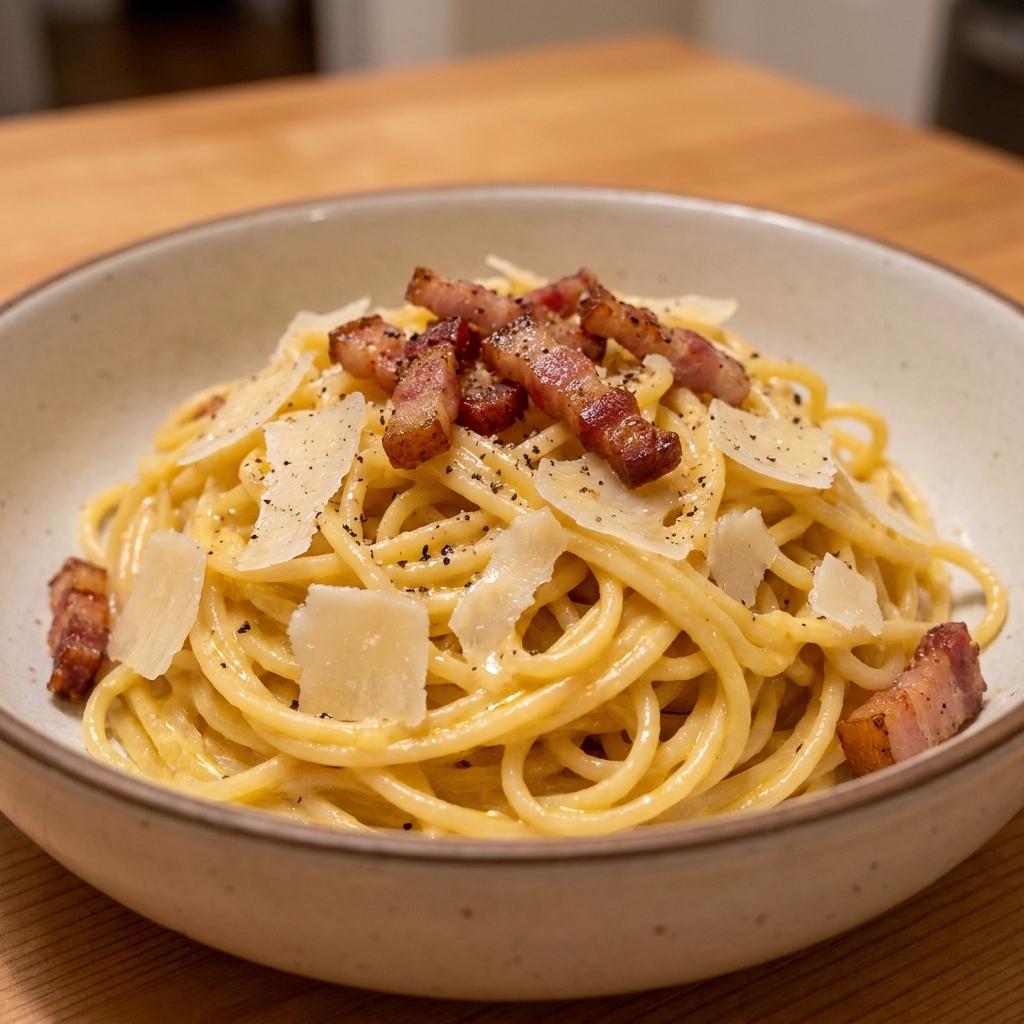
Carbonara waits for no one. Have your plates warm, your table set, and your pepper grinder ready. Serve immediately, finishing each bowl with:
- an extra pinch of Pecorino
- a few turns of black pepper
- a spoonful of crispy guanciale
FAQ
Is it safe to eat eggs in carbonara?
The eggs are gently thickened by hot pasta and hot fat, but carbonara is not cooked like scrambled eggs. If you are pregnant, immunocompromised, elderly, or cooking for someone who is, consider using pasteurized eggs. You can also use the bowl-over-steam method and keep stirring until the sauce is hotter and thicker, without letting it scramble.
Why does my Pecorino clump?
Most often: the cheese is too coarsely grated, or it hits heat before it is fully mixed with the eggs. Finely grate it and whisk into the eggs until it looks like a cohesive paste.
Can I use Parmigiano Reggiano instead of Pecorino?
You can, but the flavor will be milder and less Roman. A common compromise is a blend, like 70% Pecorino and 30% Parmigiano, especially if you are easing into Pecorino’s sharpness.
What pasta shape is best?
Spaghetti is classic, but rigatoni holds the sauce in its ridges and makes it easier to judge consistency. Bucatini is delicious too, just be sure it is cooked al dente so it does not go soft while you toss.
Final tip
Before you add the eggs, take a breath and listen. If the pan is quiet, warm, and your pasta is steaming, you are in the sweet spot. Toss like you mean it, add pasta water slowly, and trust that the shine will appear. The first time you see carbonara turn creamy without cream feels like kitchen magic, but it is really just good ingredients meeting the right heat.