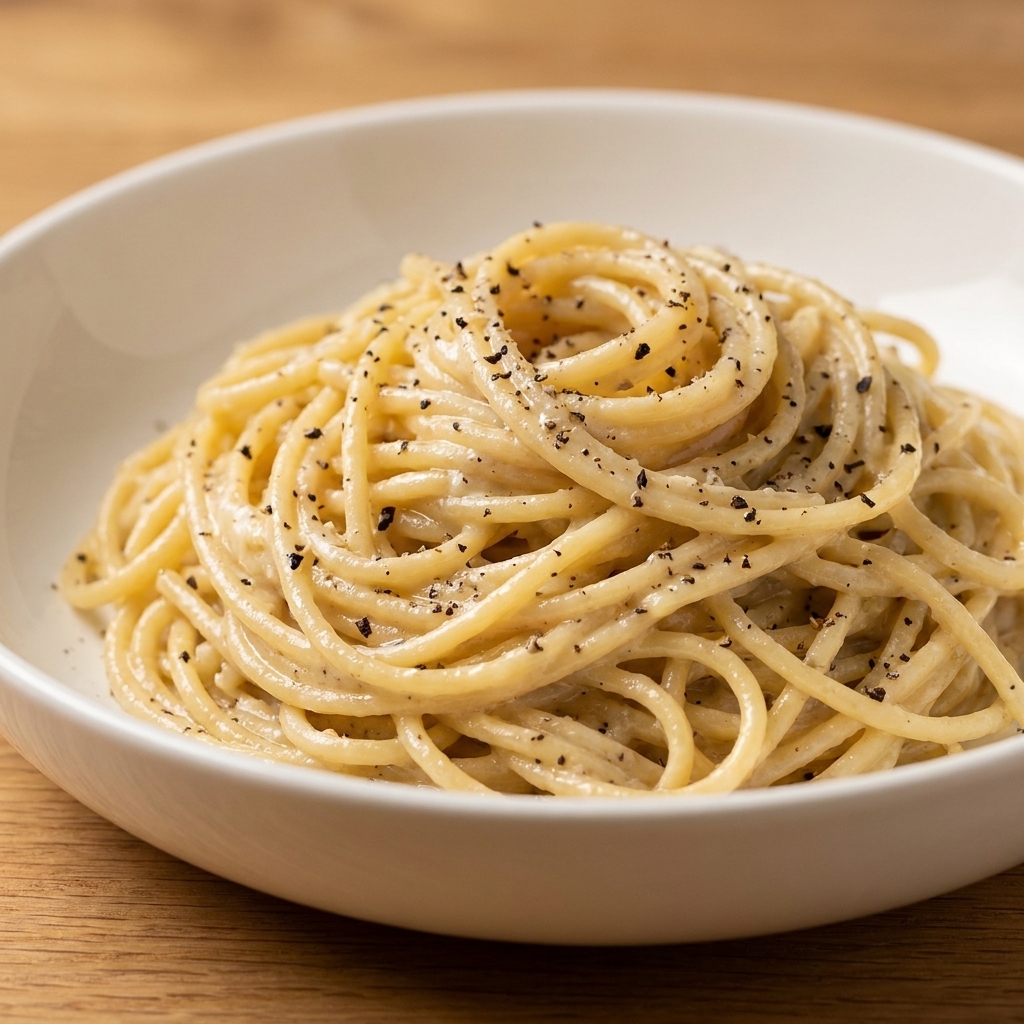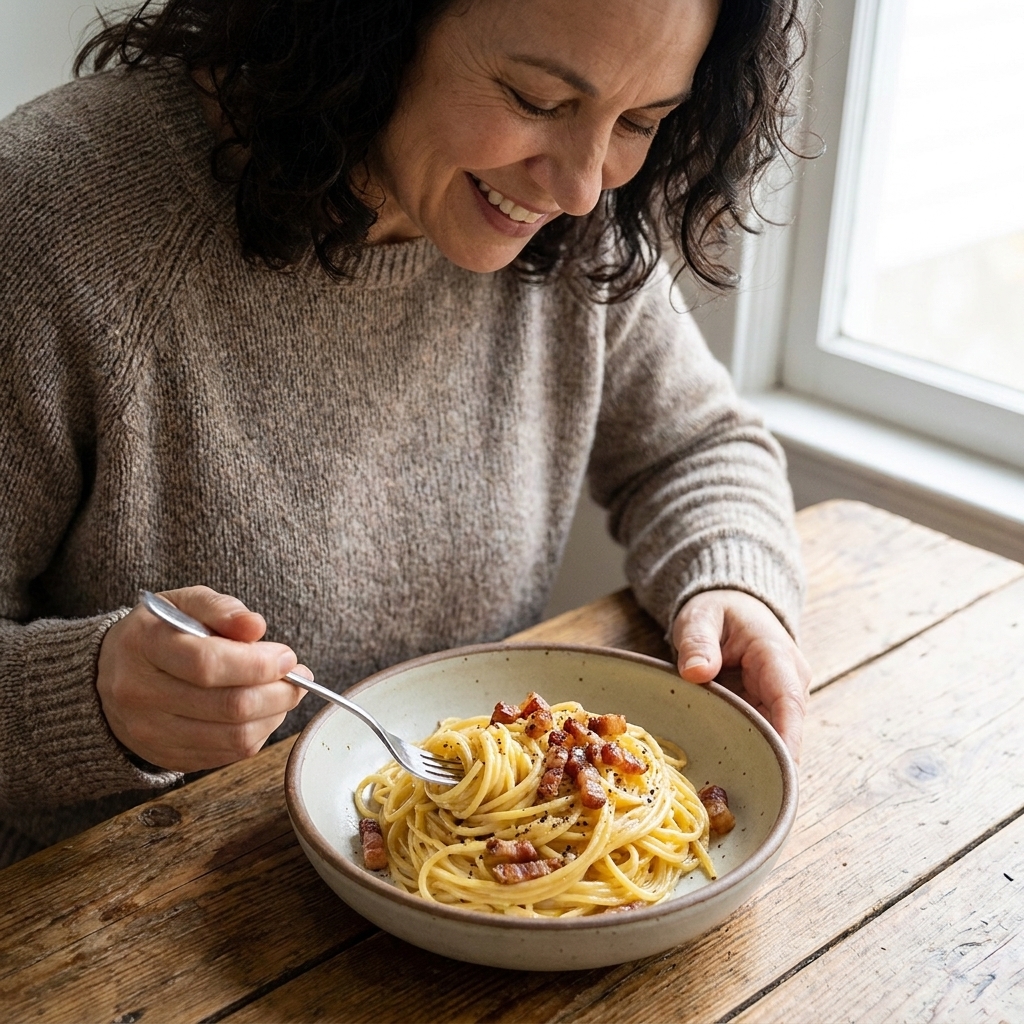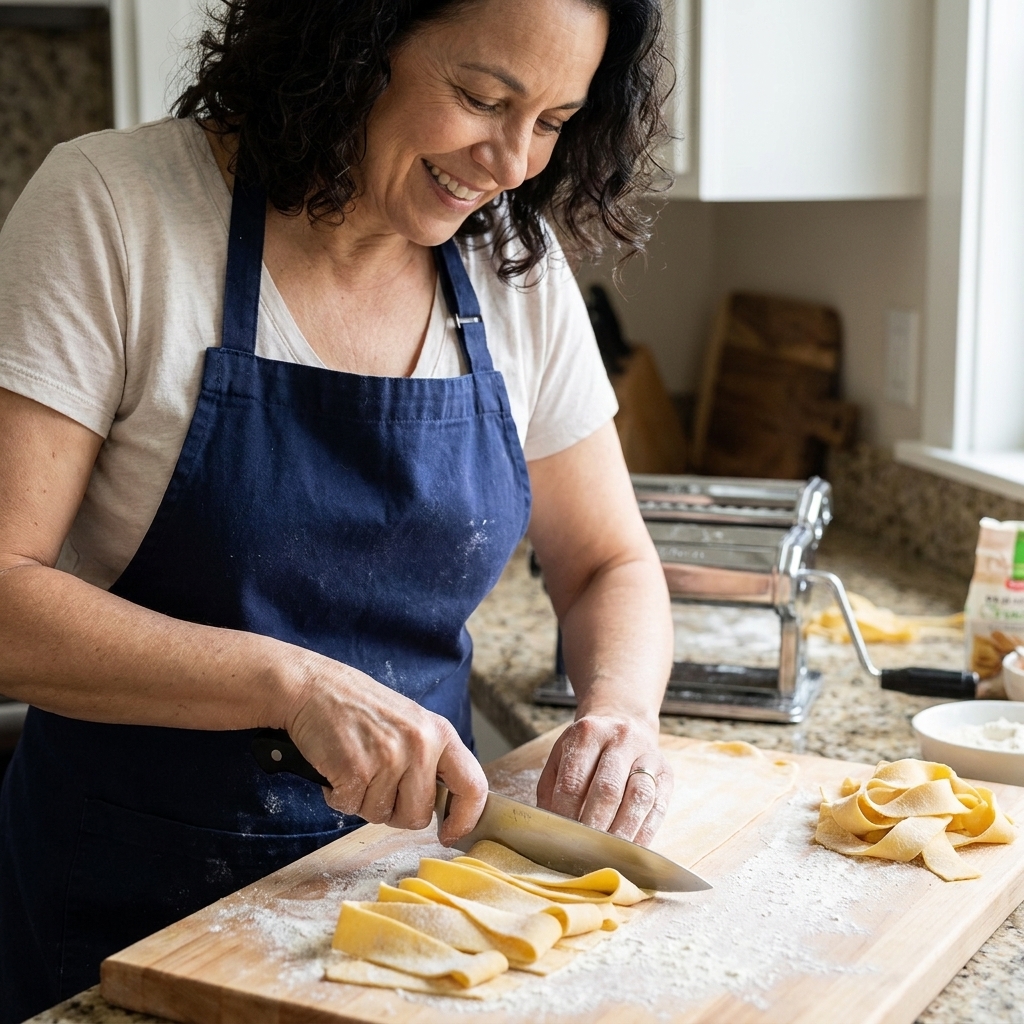
Let me lovingly take the heavy cream out of your Alfredo. Not because cream is “bad” or because I want to be dramatic, but because the real fettuccine Alfredo is one of those magical Italian kitchen lessons where three simple ingredients behave like a whole sauce when you treat them right.
You are going to make a glossy, buttery, cheese-forward coating using only:
- Butter
- Parmigiano-Reggiano
- Starchy pasta water
That is it. No garlic. No cream. No roux. No flour. And when it comes together, it feels like the pasta has put on a soft, warm sweater.

What authentic Alfredo is
In Italy, what many of us call “Alfredo sauce” is closer to a simple burro e Parmigiano pasta. The creaminess comes from an emulsion: butter and finely grated Parmigiano melt and bind with hot, starchy pasta water into a silky coating.
The dish is closely linked to Rome and is often traced back to restaurateur Alfredo Di Lelio in the early 1900s. The creamy, heavy restaurant-style Alfredo many Americans know is a later adaptation.
When people add cream, it is usually to make the sauce more forgiving. The traditional method is a little more hands-on, but it is absolutely doable at home once you know what to look for.
Ingredients (for 2 generous servings)
- 200 g fettuccine (fresh or dried, see notes below)
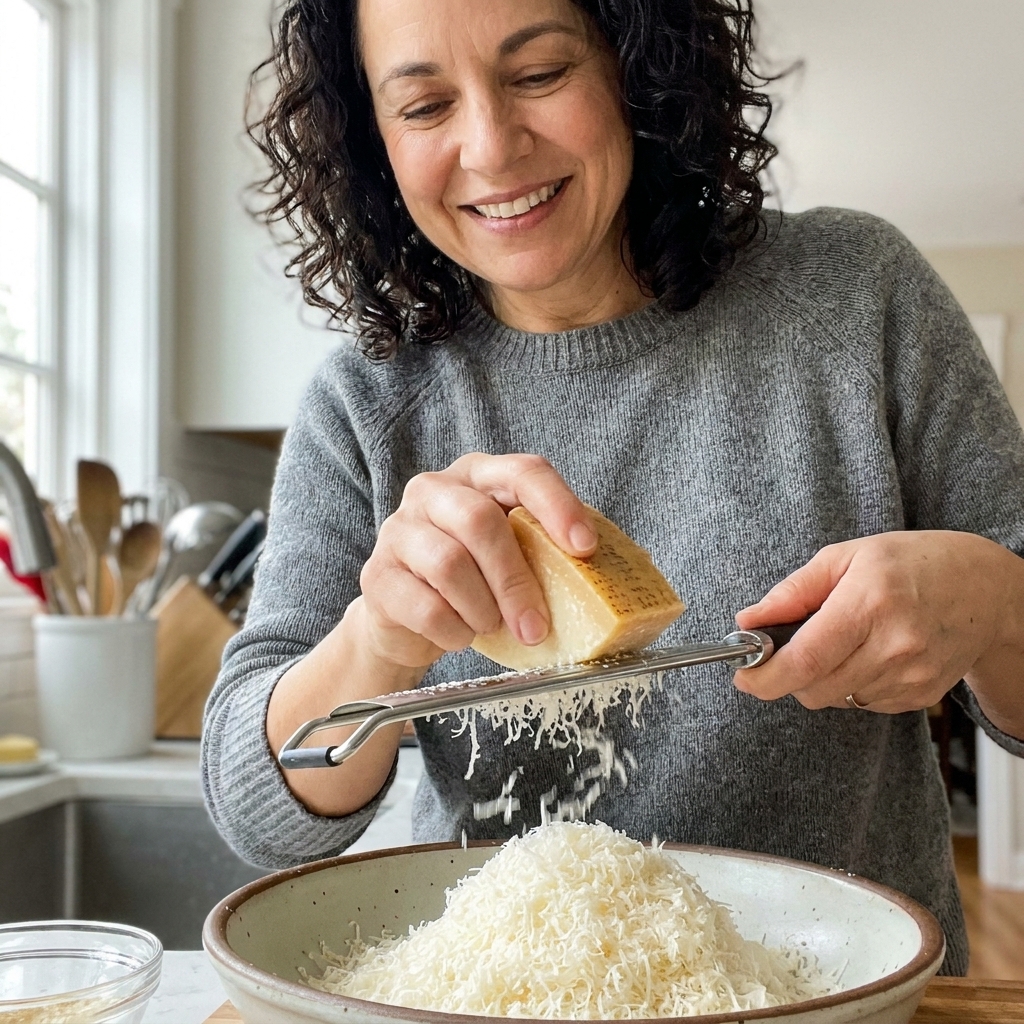
- 70 g Parmigiano-Reggiano, finely grated (about 3/4 packed cup)
- 60 g unsalted butter, cool or cold, cut into cubes
- Kosher salt for the pasta water
- Freshly cracked black pepper (optional, but lovely)
Why these specific choices matter
- Parmigiano-Reggiano: Use the real thing and grate it yourself. Pre-grated cheese often has anti-caking agents that can make the sauce grainy.
- Cool or cold butter: Not a law, just a smart trick. It helps you control temperature so the cheese stays smooth and the sauce does not split.
- Starchy water: This is your “cream.” The starch in the water is what helps everything cling and turn glossy.
One more tiny thing: If you can, let your grated cheese sit at room temperature while the water boils. It melts more willingly than fridge-cold cheese.
How to make Fettuccine Alfredo
1) Boil water, salt lightly
Bring a big pot of water to a boil and salt it, but a touch less aggressively than you would for a red sauce. Parmigiano brings plenty of salt on its own.
2) Cook the pasta just shy of al dente
Boil the pasta until 1 minute before al dente. You want it flexible, not fully finished, because the last minute happens with the sauce.
3) Reserve extra pasta water
Before draining, scoop out at least 1 1/2 cups of pasta water. The temperature and starch level matter, and you will use it in stages.
Clara tip: If you want starchier water, cook your pasta in a slightly smaller amount of water than usual, just enough that it can move freely. More starch in the water means a more reliable emulsion.
4) Start the sauce off the heat
This is the part that makes or breaks Alfredo. Too much heat and the cheese can clump. Use a warm serving bowl, a large skillet, or a sauté pan, but keep the heat low or off while you begin. You can always add a whisper of heat later if the butter is dragging.
Add butter cubes to your bowl or pan.
Add a small splash of hot pasta water, about 1/4 cup.
Add the drained pasta (do not shake it bone-dry, a little water clinging is helpful).
5) Toss hard, then add cheese slowly
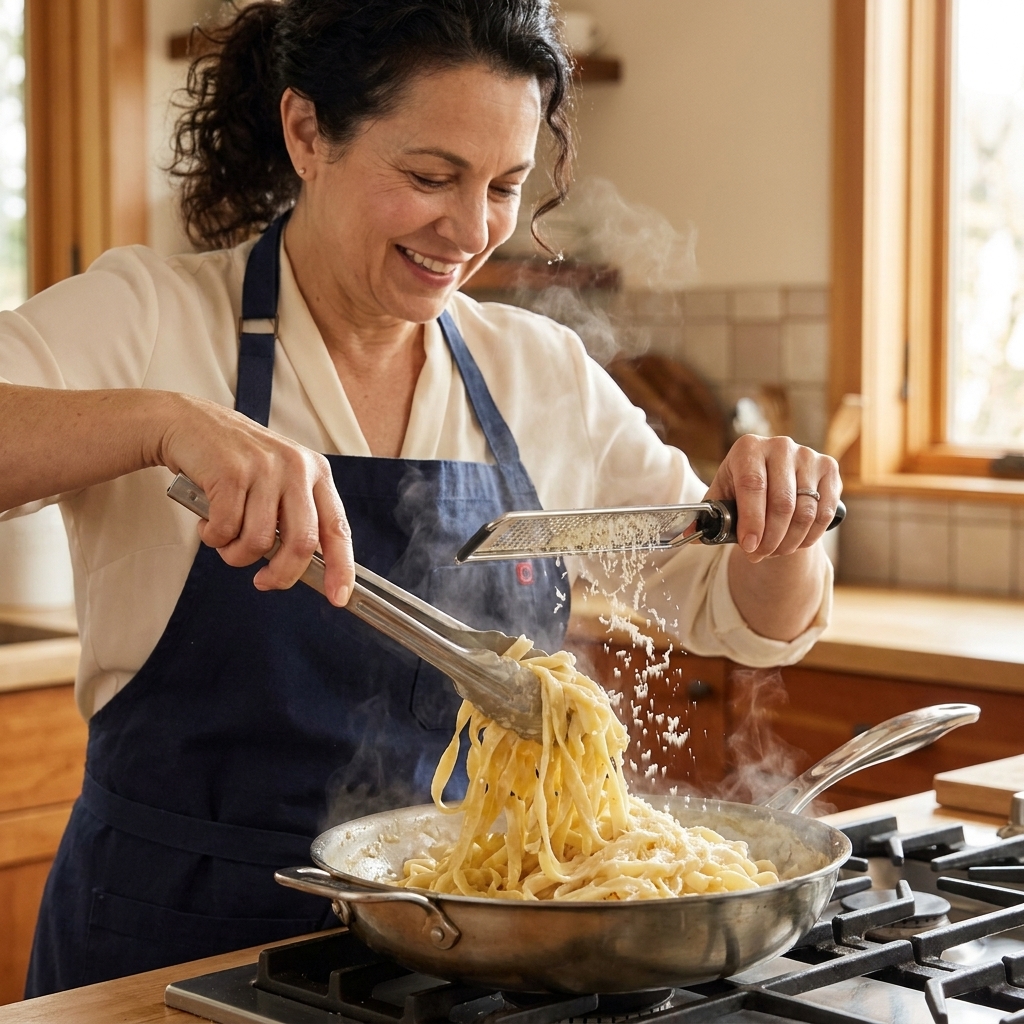
Now you toss like you mean it. Use tongs and keep the pasta moving for 30 to 60 seconds as the butter melts. Then start adding Parmigiano a small handful at a time, tossing constantly between additions.
What you should see: the sauce goes from watery, to creamy, to glossy. If it looks tight or sticky, add another splash of pasta water and toss again.
If the butter is not melting or the cheese is taking too long to smooth out, you can put the pan over the lowest heat for a few seconds while tossing, then take it right back off. Gentle heat, constant motion.
6) Final texture check
When it is right, the noodles look lacquered, not soupy. The sauce should coat the pasta and gather lightly at the bottom of the bowl.
- Too thick? Add 1 to 2 tablespoons pasta water and toss.
- Too thin? Toss for 20 to 30 seconds more, or add a little more Parmigiano.
- Want pepper? Add it at the end so the aroma stays bright.
Fresh vs dried fettuccine
You can make Alfredo with either. Fresh fettuccine gives that soft, tender bite and a more velvety finish. Dried fettuccine gives a slightly firmer chew, and it releases plenty of starch, which is great for emulsifying.
- If using fresh pasta: boil just 2 to 3 minutes, and be ready to move quickly. The window between perfect and overdone is short.
- If using dried pasta: cook to 1 minute shy of al dente, and reserve extra water since dried pasta water tends to be beautifully starchy.
Rules that prevent grainy sauce
Grate the cheese very fine
The finer the grate, the faster it melts, and the less you have to apply heat. A microplane or the small holes on a box grater are perfect.
Use hot pasta water
If your reserved water sits too long, reheat it. Hot water helps the butter melt and the cheese dissolve smoothly.
Do not boil the cheese
This is the big one. High heat can make Parmigiano seize and turn gritty. If you are working in a skillet, keep the burner on the lowest setting or off, and rely on the heat of the pasta and water.
Add cheese gradually
If you dump it all in at once, it is more likely to clump. Think of it like a gentle rain, not a snowstorm.
Troubleshooting
My sauce clumped into little cheese bits
- Take the pan off the heat immediately.
- Add a splash of hot pasta water and toss vigorously.
- If it is very stubborn, switch to a warm bowl and keep tossing. Sometimes the pan stays too hot.
My sauce looks oily or broken
- You likely got it too hot, or there is not enough water to emulsify.
- Add 2 tablespoons hot pasta water and toss until it turns glossy again.
- If needed, add a small pinch more cheese to help it bind.
It tastes bland
- Add a touch more Parmigiano.
- Try a few cracks of black pepper.
- Next time, salt the pasta water slightly more. The pasta itself should be seasoned.
Serve it simply
Alfredo waits for no one. Serve it right away, while the sauce is glossy and loose. If you let it sit, it tightens as it cools. If that happens, loosen with a tablespoon of hot pasta water and toss again.
If you want a little flourish, warm your serving bowls with hot water for 30 seconds, then dry them. That tiny step buys you a few extra minutes of perfect texture at the table.

Variations I approve of
I love tradition, but I also cook dinner on Tuesdays. If you keep the core method, these are fair additions:
- Lemon zest: A tiny pinch right at the end for brightness.
- Nutmeg: One or two microplane passes, classic with butter and cheese.
- Chicken or shrimp: Fine as a topping, but cook separately and add at the end so you do not mess with the emulsion.
- More cheese: Yes, always yes.
What I would skip if you want the true experience: cream, garlic, and flour-thickened “Alfredo.” Delicious in their own ways, but they turn it into a different sauce.
Quick FAQ
Is Alfredo sauce Italian?
The butter, Parmigiano, pasta water version is rooted in Italian cooking and is associated with Rome. The creamy, heavy restaurant-style Alfredo many Americans know is an adaptation.
Can I use Grana Padano or Pecorino Romano?
Grana Padano works, though it is a bit milder. Pecorino Romano is sharper and saltier, and it can seize more easily if the pan is too hot or the mixture is too dry. Add it slowly and be ready with extra hot pasta water.
Do I need a blender or food processor?
No. The “technology” here is your hands, tongs, and a little patience while you toss.
How do I reheat leftovers?
Honestly, Alfredo is best fresh. If you must, reheat gently in a pan with a splash of water. Keep the heat low and stir constantly. Microwaves tend to split it.
A final Clara tip
When Alfredo is coming together, you will hear it. At first it sounds watery and sloshy. Then, as it emulsifies, it gets quieter, silkier, and the pasta starts to move as one glossy mass. That is your cue that you are there.
If you make it once with your full attention, you will be able to make it forever, even on a tight Tuesday. Butter, cheese, water, pasta. A little intuition. A lot of love.