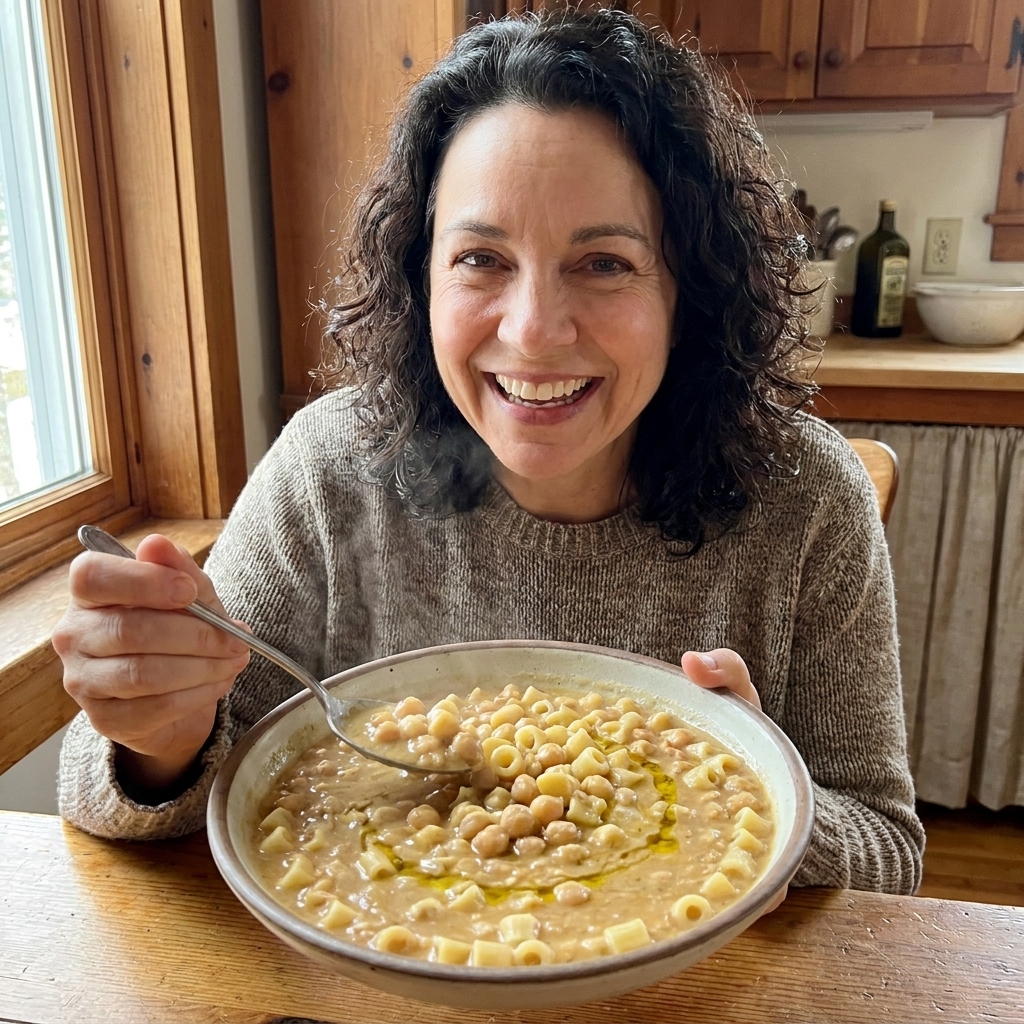
Some nights you do not want a sink full of pans. You want one pot, one wooden spoon, and something that tastes like it has been simmering since lunch. That is exactly what pasta e ceci gives you. It is a Roman classic, halfway between soup and stew, where chickpeas melt into the broth and the pasta cooks right inside, soaking up all that garlicky, rosemary-scented goodness.
This is the version I make on busy weeknights. It is traditional in spirit, forgiving in practice, and it comes together fast with mostly pantry ingredients.
What makes it Roman
In Rome, pasta e ceci is often served thick enough to almost stand a spoon in. The magic is simple: you build flavor with olive oil, garlic, and herbs, then let some of the chickpeas break down to naturally thicken the pot. The pasta finishes cooking right in that broth, which turns starchy and silky.
Think of it as the coziest cross between a bean soup and a pasta dinner, with a texture that feels like a hug.
Ingredients
- Olive oil, generous. This dish loves good oil.
- Garlic, 2 to 3 cloves, smashed or thinly sliced.
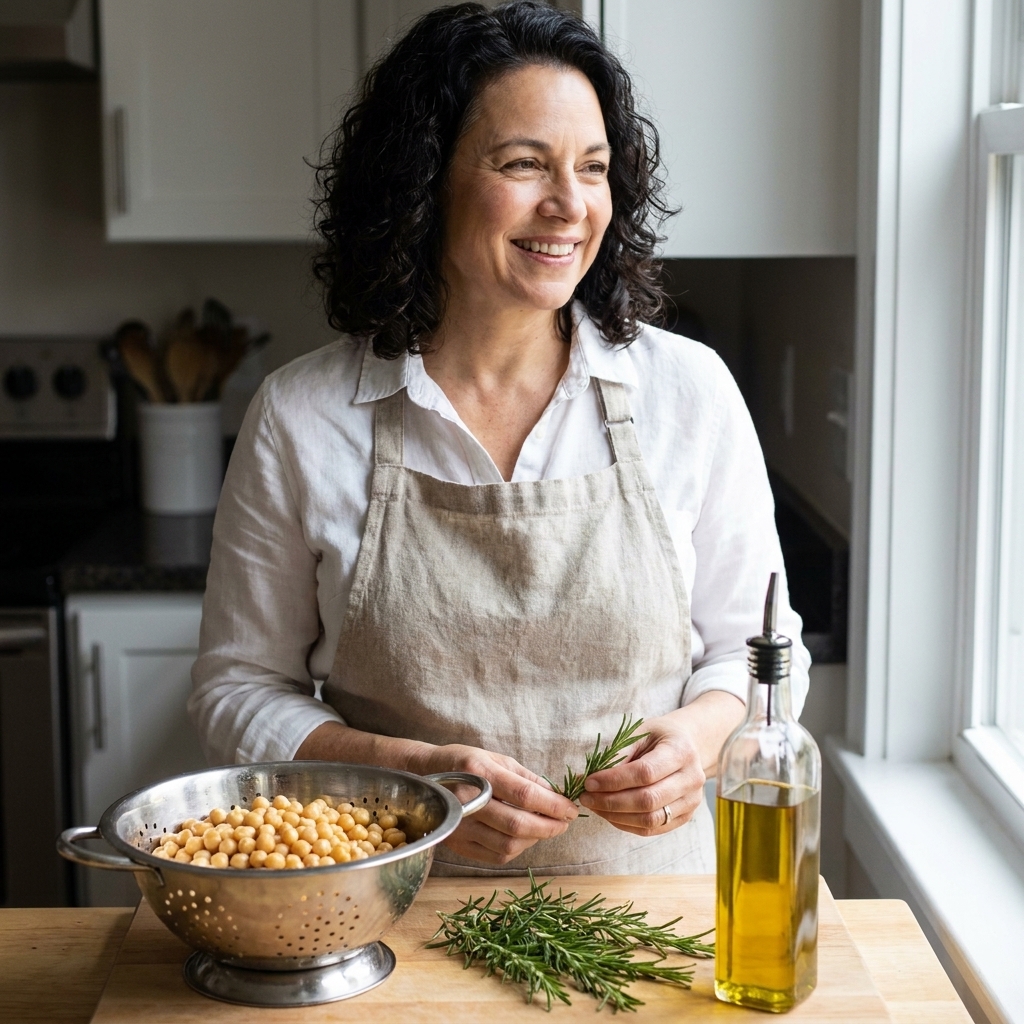
- Rosemary, 1 small sprig (or 1/2 teaspoon dried).
- Tomato paste, 1 to 2 tablespoons for depth.
- Chickpeas, 2 cans (about 15 ounces each), drained and rinsed.
- Broth, 4 to 5 cups vegetable or chicken broth, plus water if needed.
- Short pasta, 8 ounces. Ditalini, tubetti, small shells, or broken spaghetti all work.
- Salt and black pepper.
- Optional but lovely: a pinch of red pepper flakes, grated Pecorino Romano, lemon zest, or chopped parsley.
Tip: If you have it, a little Parmigiano rind simmered in the pot makes the broth taste like it has been simmering all day. Just remember to fish it out at the end.
One-pot method (25 minutes)
Grab a 4 to 5 quart pot and keep your spoon handy. Watch, smell, listen. The pot will tell you what it needs.
1) Start the flavor base
Set the pot over medium heat and add 3 tablespoons olive oil. Add the garlic and rosemary (and red pepper flakes if using). Let it warm gently for about 30 to 60 seconds. You want the garlic to smell sweet and fragrant, not toasted.
2) Bloom the tomato paste
Stir in the tomato paste and cook for 30 to 60 seconds, pressing it into the oil. This takes away the raw taste and builds that deep, savory backbone.
3) Add chickpeas and broth
Add the chickpeas and stir to coat them in the seasoned oil. Pour in 4 cups broth and bring to a lively simmer.
4) Thicken it
Scoop out about 1 cup of chickpeas and mash them with a fork, or blitz the pot with an immersion blender for just a few seconds. You are not making hummus. You are just giving the broth a head start toward creamy.
5) Cook the pasta in the pot
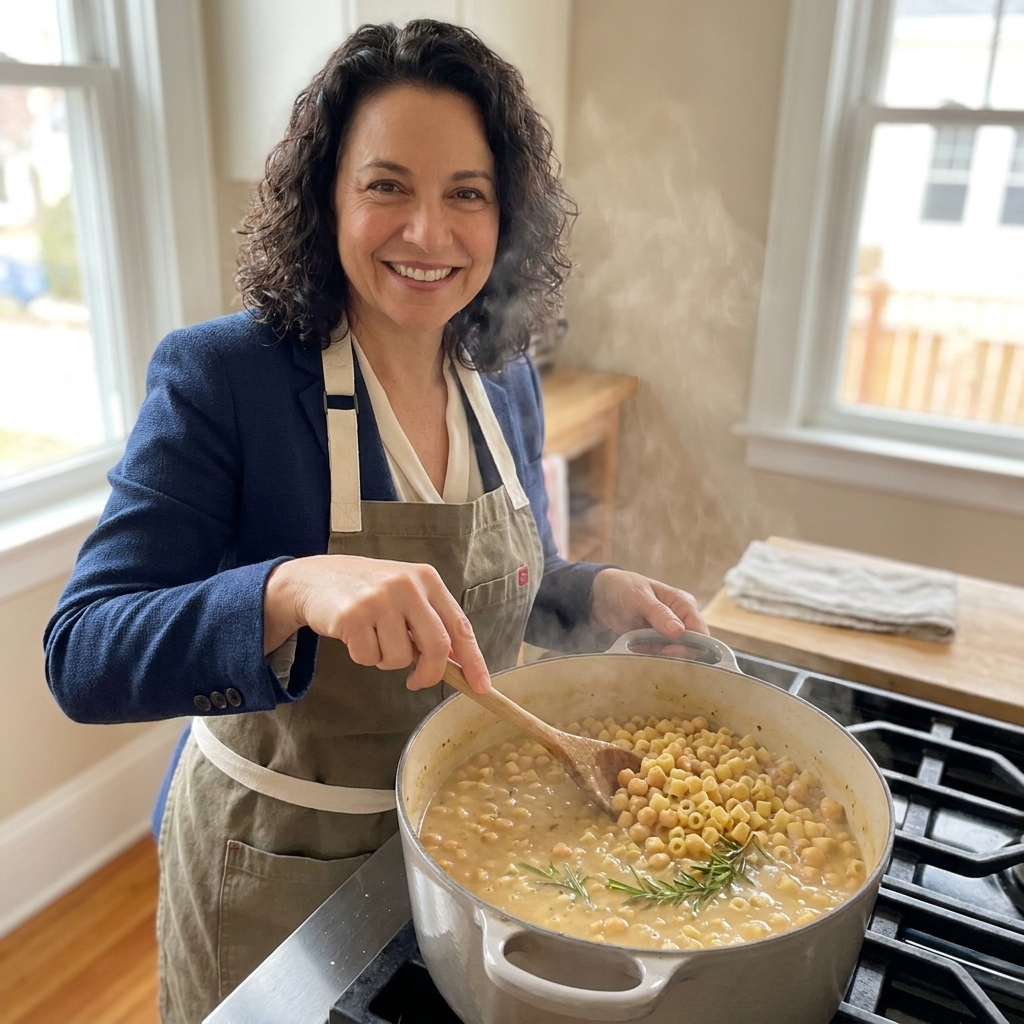
Add the pasta and keep the pot at a steady simmer, stirring often. Small pasta usually takes 8 to 12 minutes, depending on shape.
If the pot starts looking too thick before the pasta is tender, add a splash of broth or water. If it looks too loose at the end, let it simmer 1 to 2 minutes more. The starch will tighten it up quickly.
One more thing: the pasta keeps drinking liquid even after you turn off the heat, so I like it a touch looser in the pot than I want it in the bowl.
6) Finish and serve
Turn off the heat. Taste for salt and pepper. Remove the rosemary sprig if you used fresh. Ladle into bowls and finish with a good drizzle of olive oil. Pecorino on top is very Roman in many kitchens, but always optional.
How thick should it be?
My rule: thick enough to feel hearty, loose enough to spoon. Pasta e ceci keeps thickening as it sits because the pasta continues to drink the broth. If you love it more soup-like, add an extra splash of hot broth right before serving.
Best pasta shapes
- Ditalini or tubetti: classic and cozy, the most Roman trattoria feel.
- Small shells: they catch chickpeas in the curves, great texture.
- Maltagliati: rustic irregular pieces if you want something old-school.
- Spaghetti: break it into 1 to 2 inch pieces before adding. It is not fancy, but it is absolutely delicious.
Make it your own
Add umami
- A Parmesan rind
- A spoonful of miso stirred in at the end (sounds modern, tastes wonderfully savory)
- A few chopped sun-dried tomatoes
Add greens
- Stir in baby spinach at the end until just wilted
- Add chopped escarole for a more Roman winter feel
Make it richer
- Finish with extra olive oil
- Top with Pecorino Romano
- Add a small knob of butter off heat for an extra silky finish
Common mistakes
My pasta soaked up everything
Totally normal. Add hot broth or water a little at a time and stir. It will loosen back up.
It tastes flat
Try one or two of these: more salt, a bigger drizzle of olive oil, a crack of black pepper, a pinch of chili flakes, or a little lemon zest at the end. Often it is salt and oil that make the flavors pop.
The garlic browned
If the garlic went from golden to brown and smells bitter, the most reliable fix is to dilute and rebalance. Add a little more broth and a handful of extra chickpeas (or a spoonful of mashed chickpeas), simmer a few minutes, then finish with fresh olive oil. If it tastes truly burnt, starting over is the only real rescue.
It is not creamy enough
Mash more chickpeas or give the pot a quick 2 to 3 second blend with an immersion blender. The broth will turn velvety right away.
Storage and reheating
Pasta e ceci is fantastic the next day, but it thickens a lot in the fridge.
- Store: airtight container, up to 4 days.
- Reheat: in a pot over medium-low with a splash of water or broth, stirring often until it loosens.
- Freeze: If you want to freeze, I recommend freezing the chickpea base without pasta, then cook pasta fresh when you reheat. The texture stays much nicer.
FAQ
Is pasta e ceci vegetarian?
It can be. Use vegetable broth and skip any meat add-ins. Many home versions are naturally meatless.
Do I have to use tomato paste?
No, but I love what it does here. It adds a gentle sweetness and a deeper, almost roasted flavor. If you skip it, consider finishing with a little extra pepper and olive oil.
Can I use dried chickpeas?
Yes. Cook them until tender first, then proceed with the recipe. Using canned chickpeas is what keeps this weeknight-fast.
What should I serve with it?
Honestly, a bowl of pasta e ceci is dinner. If you want something on the side, go with a simple green salad or a piece of crusty bread to swipe through the last spoonfuls.
Final spoonful
If you are craving comfort but short on time, this is one of those recipes that makes you feel taken care of. The pot gets thick, the kitchen smells like garlic and rosemary, and dinner lands on the table with almost no cleanup. That is my kind of weeknight win.