There is something wonderfully thrifty and a little magical about frittata di maccheroni, the Neapolitan pasta pie that turns yesterday’s spaghetti into today’s best dinner. In my family, it showed up on those nights when the fridge looked “empty” but there was a container of plain pasta tucked in the back and a chunk of cheese waiting to be used. Not long after, the kitchen smelled like toasted pasta and melted pecorino, and somehow everybody wandered in asking, “What are you making?”
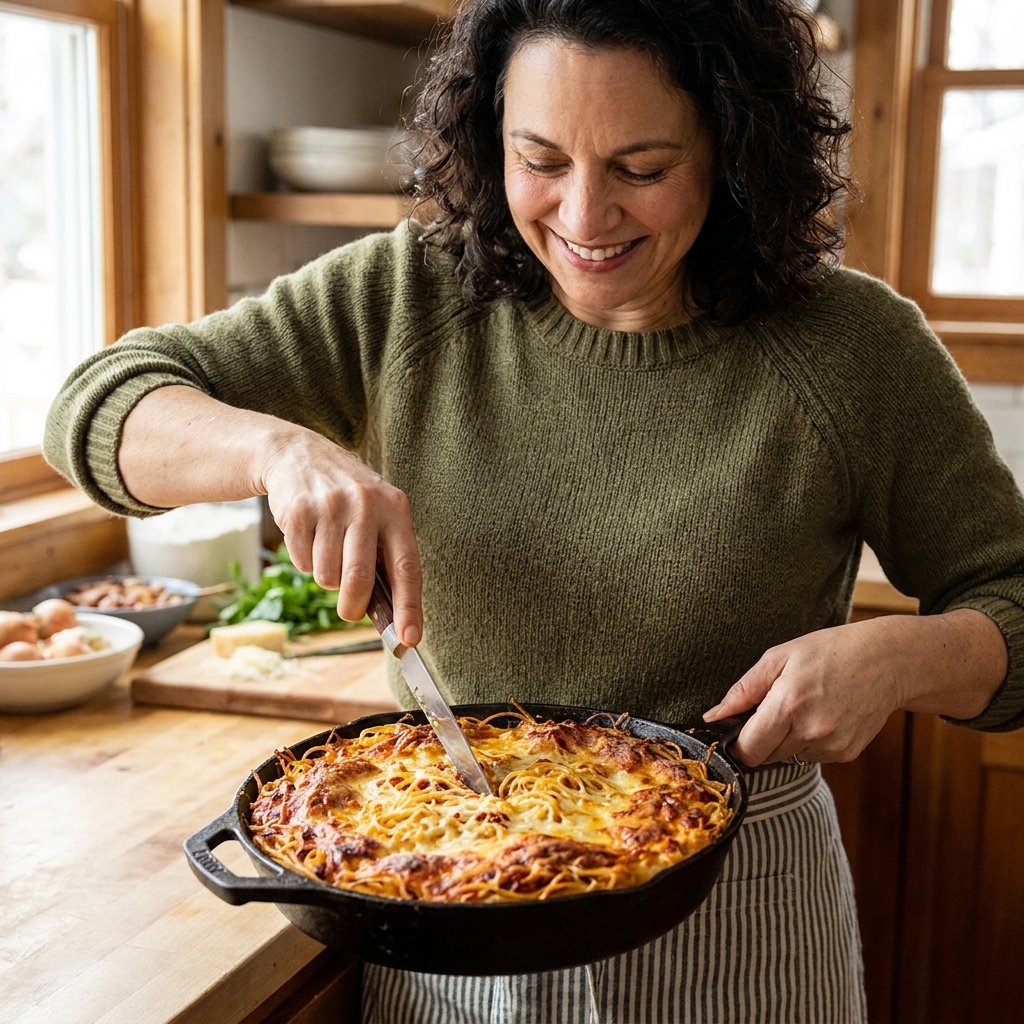
This is a true use-what-you-have recipe. The non-negotiables are: cooked pasta, eggs, and cheese. Everything else is a delicious bonus.
What it is
Despite the name, this dish is not a thin omelet. It is a thick, sliceable pasta frittata that eats like a pie, made by mixing cooked pasta with beaten eggs and cheese, then cooking it until the outside turns deeply golden and crisp. Think of it as a cross between a frittata and baked pasta, with that signature crunchy crust you only get from a hot pan and a good amount of fat.
In Naples, you will see it made with spaghetti most often, but any shape works. It is especially beloved as a next-day lunch, picnic food, and a “feed everyone” solution when you have leftovers that are too good to toss.
Best pasta to use
Leftover spaghetti is the classic choice because it tangles and locks together, which makes the final frittata hold its shape beautifully. That said, I have made wonderful versions with:
- Macaroni, ziti, rigatoni: chunkier, more casserole-like slices.
- Bucatini: extra hearty, very satisfying.
- Short mixed shapes: great for cleaning out containers.
If your leftover pasta has sauce, you can still use it. Tomato sauce, a little meat ragù, or even a light garlic-and-oil situation works. Just keep in mind that very wet pasta can make the center softer. Not a tragedy, just a different vibe.
Clara’s cue: When you pick up a forkful of cold pasta, it should look coated but not swimming. If it looks soupy, let it drain in a colander for 5 to 10 minutes, or blot lightly with paper towel.
Ingredients and swaps
This is the baseline I come back to again and again. It tastes like the pasta frittata I grew up with, and it is easy to adapt.
Ingredients (serves 4 to 6)
- 6 cups cooked leftover pasta (about 600 to 700 g cooked, or roughly 10 to 12 ounces dry worth), cold or room temp
- 6 large eggs
- 1 to 1 1/2 cups grated cheese (Pecorino Romano, Parmigiano Reggiano, or a mix)
- 1/2 cup melty cheese (mozzarella, provolone, scamorza), diced or shredded
- 1/4 cup milk (optional, for a softer interior)
- Fresh black pepper
- Salt, only if your pasta is unsalted and your cheese is mild
- 3 to 4 tablespoons olive oil (or a mix of olive oil and butter) for the pan
Optional add-ins
- Salumi: diced prosciutto cotto, salami, pancetta, or leftover sausage
- Vegetables: sautéed onions, spinach (squeezed dry), peas, mushrooms
- Herbs: chopped parsley or basil
Cheese note: Pecorino gives that salty, sharp Sunday-dinner punch. If you only have mozzarella, add extra black pepper and a little salt to keep the flavor from going flat.
How to make it (skillet)
This is the method that gives you the most dramatic contrast: crunchy outside, tender inside. Use a 10-inch nonstick skillet or a well-seasoned cast iron pan.
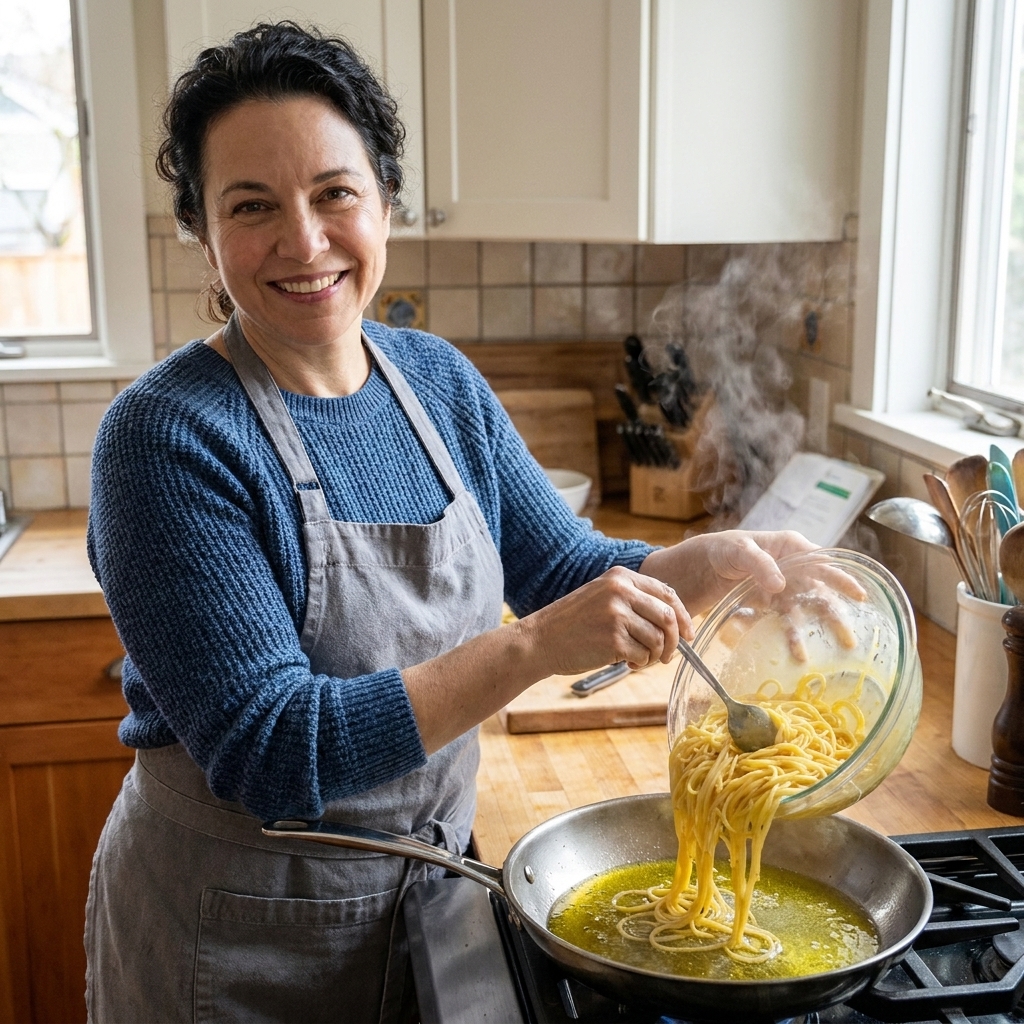
1) Warm the pasta
If your pasta is very cold and clumped, microwave it for 20 to 40 seconds just to loosen it. You do not want it hot, just flexible so the eggs coat evenly.
2) Mix the eggs and cheese
In a large bowl, beat the eggs with grated cheese, milk (if using), and plenty of black pepper. Fold in the pasta. Add diced mozzarella and any extras.
Clara’s cue: The mixture should look glossy and well-coated. If it looks dry, add 1 more egg. If it looks too wet, add a handful of grated cheese.
3) Oil the pan generously
Set the skillet over medium heat and add the olive oil (and butter if using). Let the oil heat until it shimmers. You should hear a lively sizzle when a stray spaghetti strand touches the pan.
4) Pack it in
Pour in the pasta mixture and press it down firmly with a spatula so it compacts. Smooth the top. Cook 6 to 10 minutes, adjusting heat so it sizzles steadily but does not burn.
5) Flip
When the bottom is deeply golden and the edges look set, run a spatula around the sides. Place a large plate over the skillet, then flip the skillet and plate together in one confident motion. Slide the pasta frittata back into the skillet to cook the second side, another 5 to 8 minutes.
Clara’s cue: If you are nervous, use a flat lid instead of a plate. Whatever you choose, make sure it is larger than the skillet and dry.
6) Check doneness, then rest
You want the center to feel set and springy when pressed gently, with no liquid egg visible. If the outside is browning fast but the middle still feels soft, lower the heat and cover the pan for 2 to 3 minutes, then uncover to re-crisp.
Slide onto a cutting board and let it rest 10 minutes. This is what makes clean slices instead of a tumble of hot spaghetti.
Baked option
If flipping feels like a circus act, bake it. You will still get gorgeous browning, especially if you finish under the broiler.
How to bake it
- Heat oven to 400°F (205°C).
- Oil a 10-inch oven-safe skillet or a round cake pan.
- Press in the pasta mixture firmly.
- Bake 20 to 25 minutes, until set and golden at the edges.
- For extra color, broil 1 to 2 minutes, watching closely.
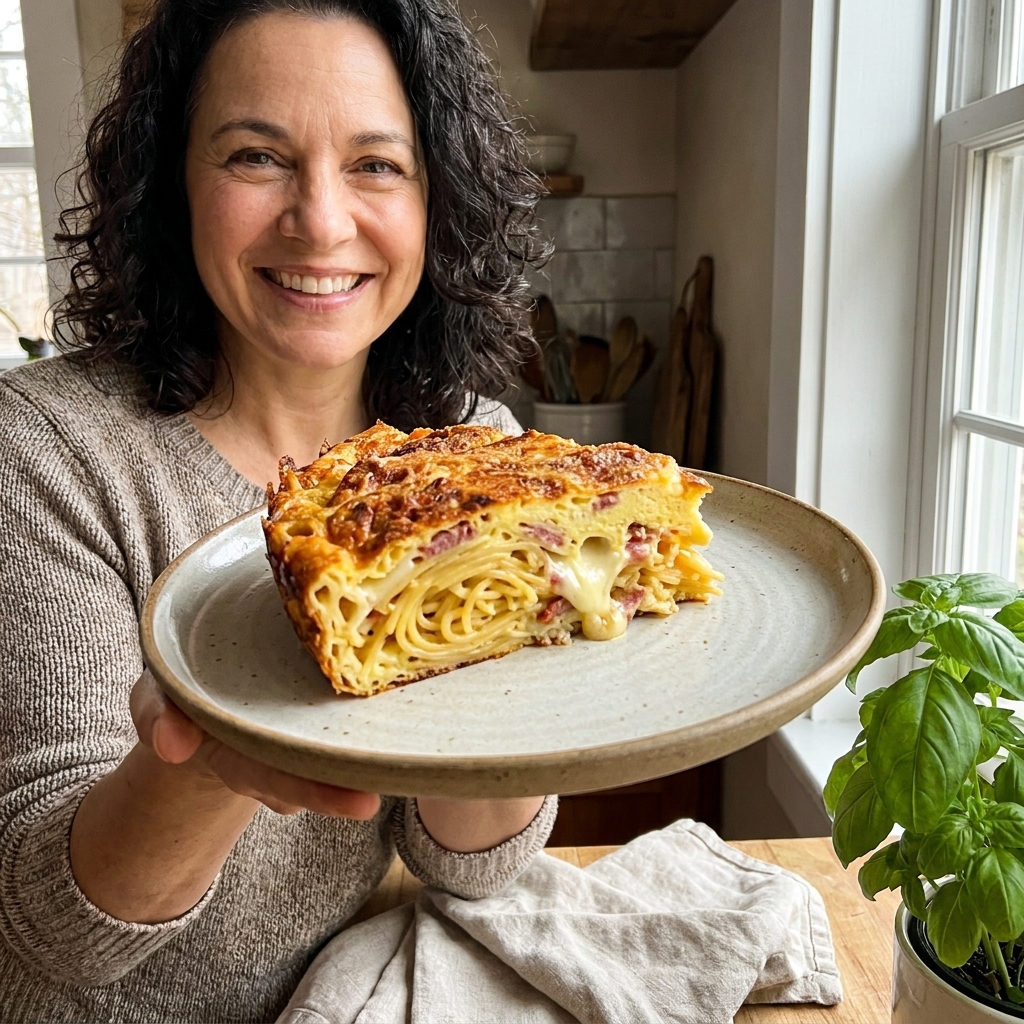
Tip: For a crispier bottom in the oven, preheat the oiled skillet in the oven for 5 minutes, then carefully add the pasta mixture and bake.
Little details
Do not skimp on oil
This dish is supposed to get that crackly, toasted crust. Do not be shy with the oil. If you are trying to go light, you will end up steaming instead of frying.
Press it down
Compacting the pasta helps it slice like a pie. Think firm, even pressure, especially around the edges.
Let it rest
The eggs finish setting as it cools slightly. Ten minutes feels long when you are hungry, but it is the difference between neat wedges and a delicious mess.
Variations
- Marinara pasta frittata: Use sauced pasta, add mozzarella, and a pinch of dried oregano. Go lighter on salt.
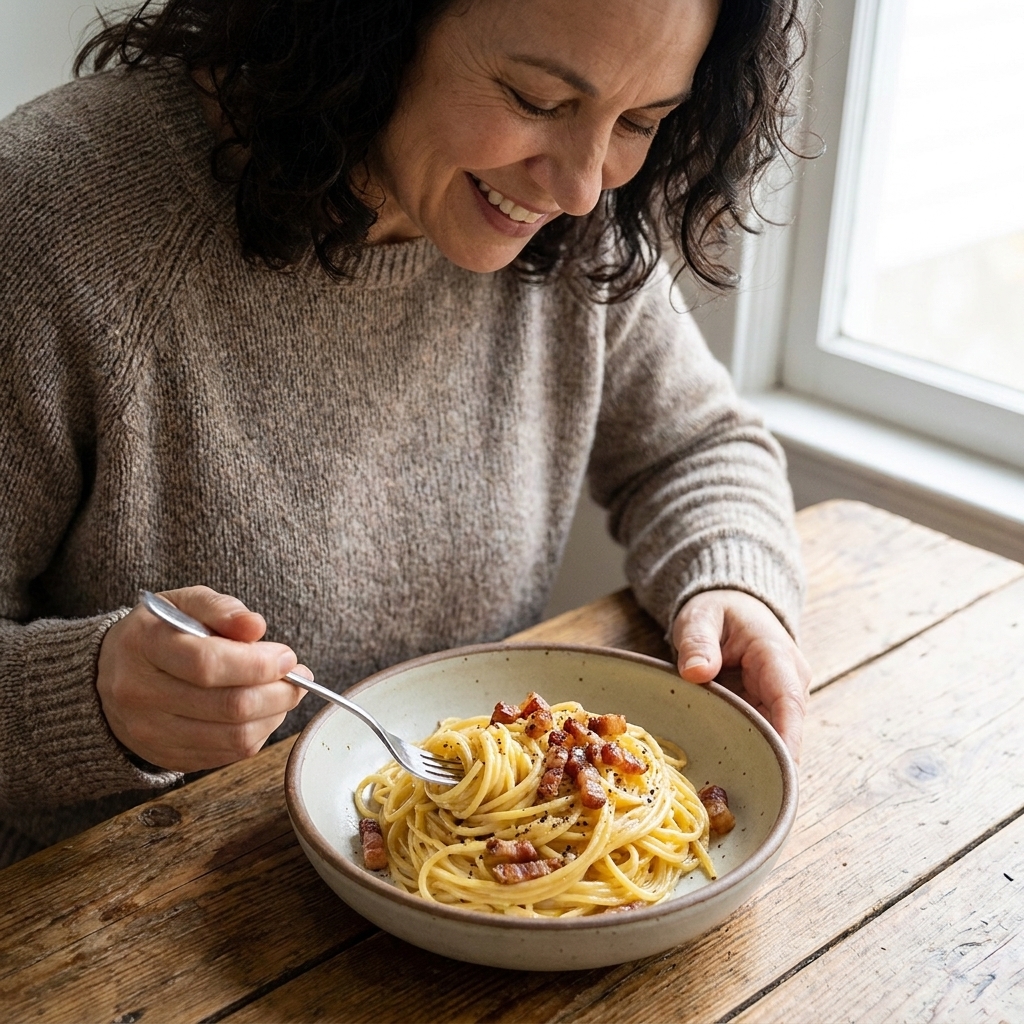
- Carbonara-style: Leftover plain spaghetti plus eggs, pecorino, black pepper, and diced guanciale or pancetta (cooked). Skip milk.
- Vegetable fridge cleanout: Add sautéed onions and mushrooms, or spinach squeezed very dry. A little provolone is wonderful here.
- Meatball-night remix: Chop 2 to 3 cooked meatballs and fold in with mozzarella.
Serving ideas
In my house, pasta frittata is happiest with something fresh on the side.
- Simple green salad with lemon and olive oil
- Warm marinara for dipping (especially for kids)
- Sautéed broccoli rabe if you want a more classic Italian contrast
It is also excellent at room temperature, which is why it makes such a good lunchbox slice.
Storage and reheating
Food safety note
Use pasta that was cooled and refrigerated promptly after cooking. As a general rule, leftovers are best used within a few days. If something smells off or looks questionable, do not try to rescue it with eggs and cheese.
How to store
Cool completely, then refrigerate in an airtight container for up to 4 days.
How to reheat
- Skillet: Medium-low heat with a tiny drizzle of oil, 3 to 5 minutes per side.
- Oven: 350°F (175°C) for 10 to 15 minutes.
- Microwave: Works in a pinch, but you will lose the crisp edges.
Can you freeze it?
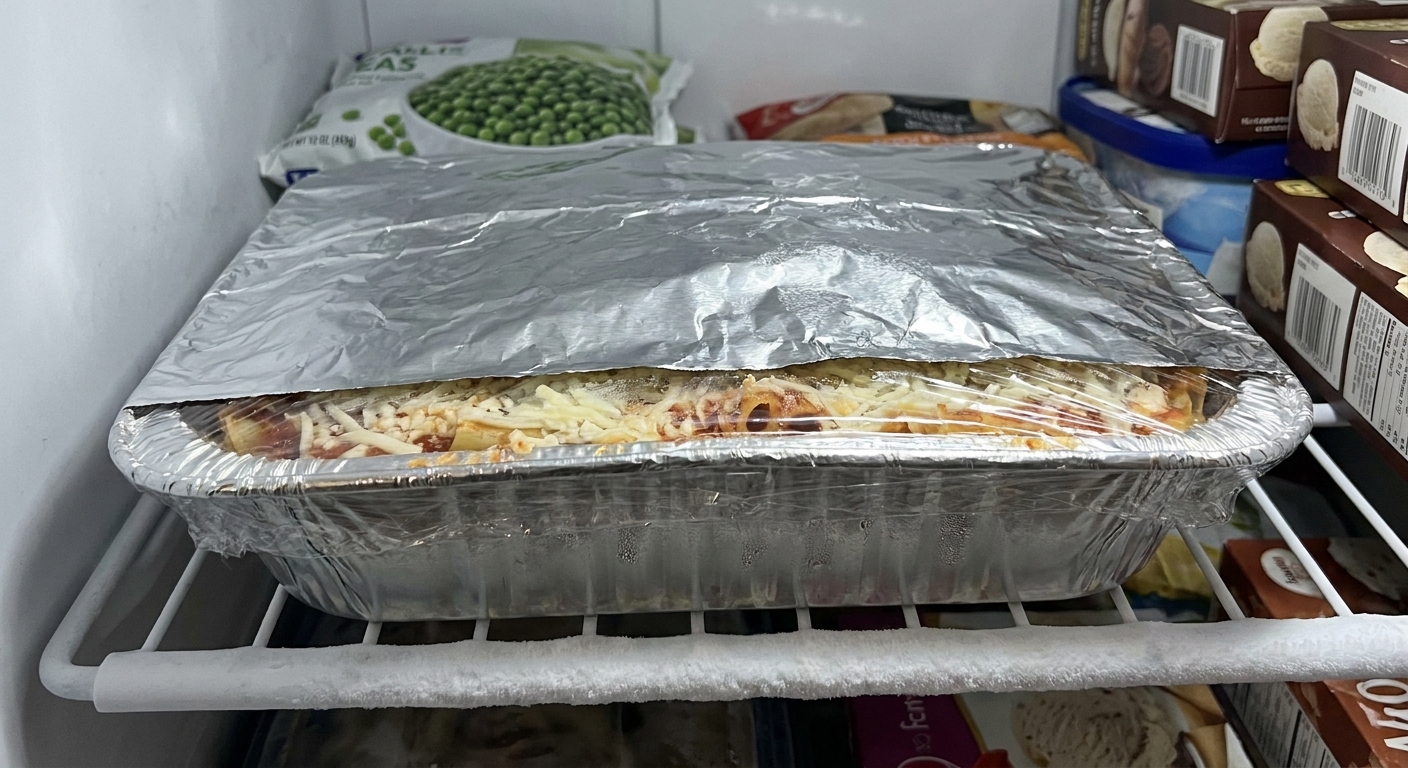
Yes. Wrap individual slices tightly and freeze for best quality up to 2 months. Thaw overnight in the fridge, then reheat in a skillet or oven to bring back the crust.
Troubleshooting
Why is it falling apart?
Usually it needs one of three things: more egg, more resting time, or more compacting. If you used a lot of add-ins (especially vegetables), add an extra egg next time.
Why is it sticking?
Your pan was either not hot enough when the pasta went in, or it needed more oil. Nonstick or well-seasoned cast iron makes this dramatically easier.
Why is the center still wet?
The heat may be too high, browning outside before the inside sets. Lower the heat, cover the pan for 2 to 3 minutes to help the center set, then uncover to re-crisp.
Quick recipe card
Frittata di Maccheroni (Skillet)
- Mix: 6 cups cooked leftover pasta (600 to 700 g) + 6 eggs + 1 to 1 1/2 cups grated cheese + 1/2 cup mozzarella + black pepper (and optional add-ins).
- Cook: 3 to 4 tbsp olive oil in a 10-inch skillet over medium heat. Cook 6 to 10 minutes.
- Flip: Invert onto a plate, slide back in, cook 5 to 8 minutes more.
- Rest: 10 minutes. Slice and serve.
If you make this, I hope you get that moment when you cut the first wedge and hear the crust crackle just a little. That sound is pure comfort.